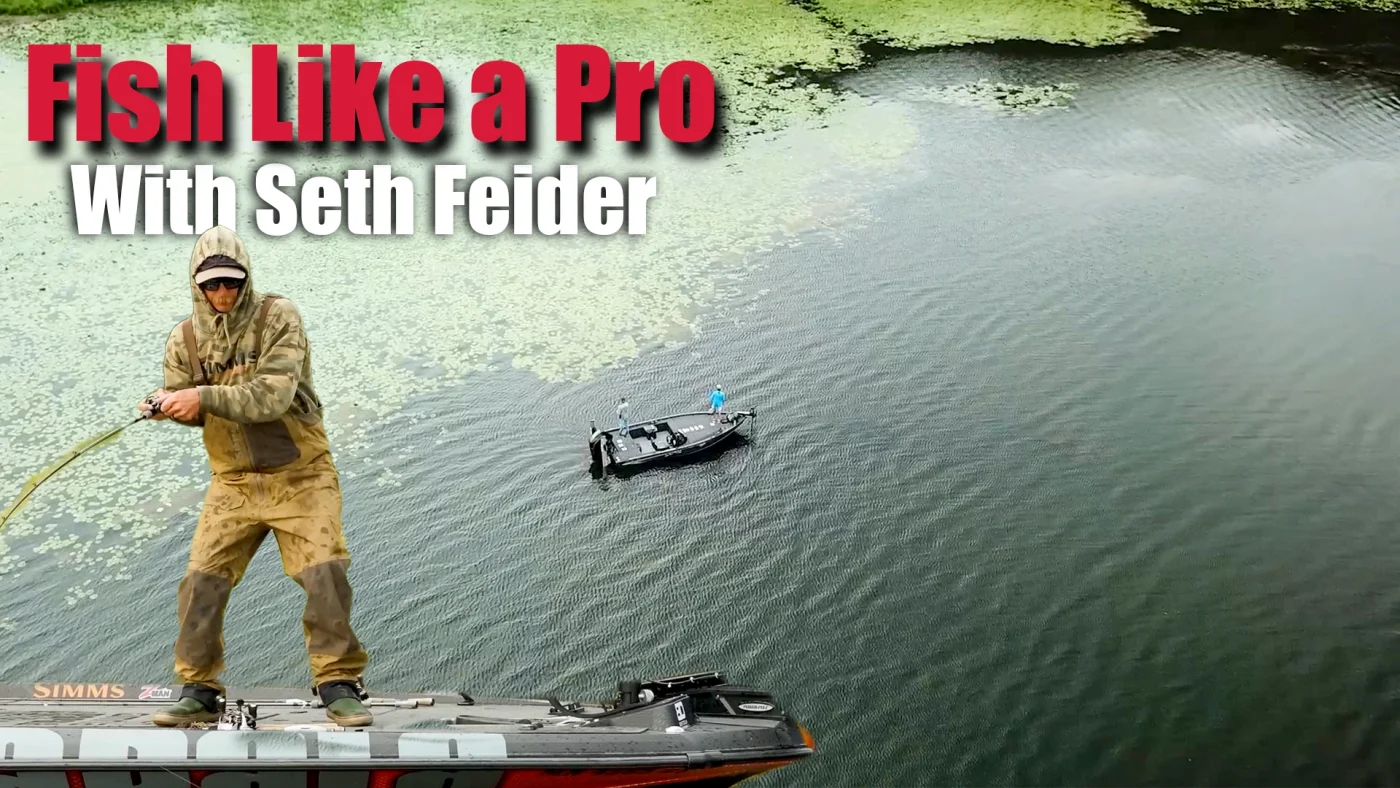

Seth Feider has built his career as one of the most recognizable bass anglers in the country, but at his core, he is still a Minnesota bass fisherman. Long before he was competing on the Bassmaster Elite Series, Feider was fishing natural lakes, grass edges, docks, rocks, and shallow cover across the Upper Midwest.
That background still shapes the way he breaks down water today.
In this conversation, Feider shares insights into life on tour, how northern bass fisheries have changed, what makes Minnesota and other northern states so strong for bass fishing, and how he approaches specific techniques like fluke fishing, tube fishing, crankbait fishing, and flipping grass.
For anglers who want to better understand bass behavior, fishing pressure, gear selection, and presentation details, there is a lot to learn from the way Feider approaches the sport.
From Minnesota Bass Angler to Bassmaster Elite Series Pro
Seth Feider grew up in Minnesota and worked his way through local tournaments, regional events, and eventually onto the Bassmaster Elite Series. While many anglers now associate him with smallmouth success, especially on northern fisheries, Feider still describes himself as a largemouth grass fisherman at heart.
That makes sense when you look at where he came from. Southern Minnesota and many of the state’s natural lakes are loaded with largemouth bass, vegetation, docks, hard-bottom areas, and shallow cover. Those are the places where Feider learned to fish.
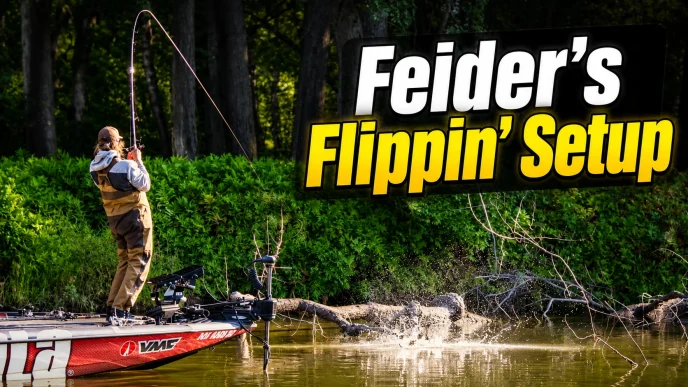
He may have developed a national reputation for catching smallmouth bass, but his foundation was built on shallow-water largemouth bass fishing. Frogging, skipping docks, swimming a jig, and flipping grass are still some of his favorite ways to fish.
That combination of northern smallmouth experience and shallow largemouth instincts is a big part of what makes his approach so effective.
Why Northern Bass Fisheries Are So Good
Northern bass fishing does not always get the same attention as places like Florida, Texas, or other southern trophy destinations, but Feider is quick to point out just how strong the fishing can be across Minnesota and similar northern states.
The biggest difference is not always top-end size. Northern lakes may not produce many 10-pound largemouth bass, but they often make up for it with numbers of quality fish. Many lakes have strong populations of 3-, 4-, and 5-pound bass, and that makes for incredibly consistent fishing.
Minnesota also has a huge variety of bass water. There are shallow grass lakes, dock lakes, deep clear-water smallmouth fisheries, river systems, rocky lakes, and massive bodies of water like Mille Lacs. In areas like the Brainerd Lakes region, anglers are surrounded by options, including Gull Lake, North Long Lake, Mille Lacs, the Mississippi River, and countless smaller lakes that often fly under the radar.
That variety helps anglers become versatile. One day you might be skipping docks for largemouth, and the next you might be chasing smallmouth on rocks, sand, or deep weed edges.
Breaking Down a Northern Natural Lake for Largemouth
When Feider looks at a northern natural lake for largemouth, he starts with the obvious high-percentage areas. If the lake has milfoil, he is immediately interested. Healthy grass is one of the best forms of bass habitat, especially when it intersects with other key features.
Large flats are important because they often hold bigger populations of bass. Points, humps, inside turns, rises, and hard-bottom areas can all help narrow down a massive weed-filled lake.
One of the best combinations is rock or hard bottom touching grass. On many northern lakes, vegetation can feel endless. You might have weeds from 2 feet out to 16 feet or deeper. Finding small hard-bottom spots, gravel, sand, rock, or tiny openings in the weeds can make a huge difference.
Feider also points out that some of the best spots are extremely subtle. A small depression, a tiny sand spot, or a little opening in the grass may not look like much, but it can hold the kind of fish that makes a day.
That is where time on the water matters. Mapping, side imaging, and electronics help, but some of the best places are still found by fishing and paying attention to where bites happen.
Fluke Fishing for Bass: Why the Swivel Matters
One of the more technical gear discussions in the conversation centers around Feider’s fluke-style bait setup.
Historically, many anglers fished a soft jerkbait or fluke with a barrel swivel 12 to 18 inches above the hook. The swivel helped reduce line twist, added a little weight, and kept the bait down. Feider talked about how line twist became a problem when fishing braid to a fluorocarbon leader, especially when working the bait aggressively.
That is where a purpose-built swivel hook comes in. A hook like the VMC RedLine Series Swivel Fluke gives anglers the benefit of the swivel without adding extra knots and unnecessary rigging complications.
Feider likes this style of bait especially from post-spawn through fall. Instead of only fishing it slowly like a weightless stick bait, he often fishes it fast for clear-water bass, bait-chasing fish, schooling bass, smallmouth, largemouth, and spotted bass.
A soft jerkbait like the Rapala CrushCity Freeloader fits that style of fishing well. Paired with light, smooth braid like Sufix Revolve Braided Line, this setup allows for long casts, sharp bait movement, and better control.
Tube Fishing for Smallmouth Bass
Few baits are more proven for northern smallmouth than a tube. In the conversation, Feider talks about how effective small tubes can be because they mimic juvenile crawfish, a key food source for smallmouth bass.
While big crawfish get a lot of attention, smallmouth often feed heavily on smaller craws. A compact tube can do a great job of matching that profile.
The Z-Man Llama TubeZ Soft Bait is a strong option for this style of fishing, especially when paired with the Z-Man Llama TubeZ Jig Head. The durable material is especially useful in places with gobies, panfish, or other bait-stealing fish that can quickly tear apart traditional soft plastics.
That durability also matters when you are catching numbers of fish. On big smallmouth fisheries, having a bait that stays together longer means more time fishing and less time constantly re-rigging.
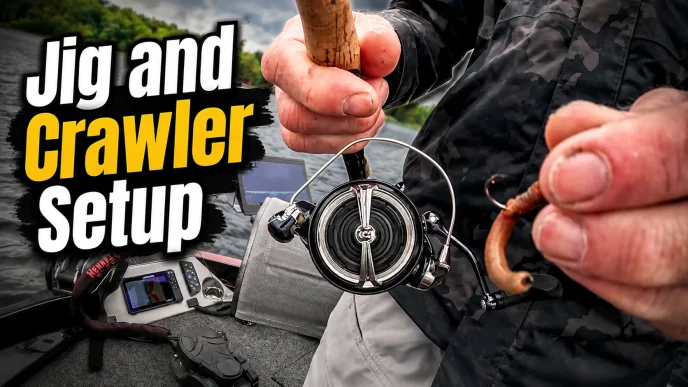
For this setup, Feider likes a longer spinning rod that can launch light baits a long way. The Daiwa Tatula Elite Spinning Rod, paired with the Daiwa Tatula MQ LT Spinning Reel, is well-suited for tubes, hair jigs, Neko rigs, and other finesse smallmouth presentations.
Feider’s Spinning Setup for Light Smallmouth Baits
Feider’s spinning setup is built around casting distance, efficiency, and landing percentage.
For small tubes, hair jigs, Neko rigs, and similar finesse baits, he likes a longer rod, often in that 7’6″ range. A longer rod helps cast small baits farther, control line better, and keep fish pinned during the fight.
That style of setup pairs well with the Daiwa Tatula Elite Spinning Rod, the Daiwa Tatula MQ LT Spinning Reel, and light braid like Sufix Revolve Braided Line.
Feider also mentions hair jigs and Neko-style presentations. For anglers who want to apply this same approach, a VMC Dominator Marabou Jig is a great fit for clear-water smallmouth, while a VMC Redline Series Wacky Neko Hook, paired with a soft plastic like the Z-Man Hula Stickz, is a great fit when bass are relating to deep grass, hard spots, or pressured areas.
The biggest takeaway is that Feider does not automatically believe lighter is always better. He likes light braid for casting distance, but he is not afraid to use a heavier fluorocarbon leader if it helps him land more fish.
What Tournament Anglers Think About That Weekend Anglers Can Use
One of the biggest lessons from Feider’s approach is that tournament anglers think beyond simply getting bites.
They think about efficiency. They think about fatigue. They think about how far they can cast, how fast they can make another presentation, how well a bait comes through cover, and how many fish they actually land.
They also think about how a fish eats the bait.
That is the kind of detail that separates good anglers from great ones. With the crankbait example, Feider is not only thinking about whether a smallmouth will chase the bait. He is thinking about the fish’s angle, the bait’s position, the pause, the hooks, and the odds of landing that fish once it bites.
That same mindset applies to fluke fishing, tube fishing, flipping, topwater fishing, and finesse setups.
Weekend anglers do not need 30 rods on the deck to benefit from this mindset. In fact, Feider points out that a simple medium-heavy baitcasting setup and a good medium spinning setup can cover a large percentage of bass-fishing situations.
But as you fish more, small details start to matter. The right reel speed, rod length, braid size, leader strength, hook design, and bait position can all help you become more efficient and land more fish.