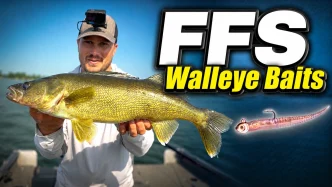


Walleye fishing has changed a lot over the last several years. Classic presentations like slip bobbers, live bait rigs, jigs, and trolling still catch plenty of fish, but forward-facing sonar has added a new level of visibility to the way anglers find and target walleyes.
In this episode, TJ Erickson joins the podcast to talk about modern walleye fishing, forward-facing sonar, slip bobbers, drop shots, plastics, and his move from teaching and guiding into fishing content full-time.
TJ grew up near Lake of the Woods, a place known for incredible walleye fishing. As he explains in the conversation, that meant he caught a lot of walleyes growing up, but it did not necessarily force him to become a highly diverse angler right away. When he later moved to the Park Rapids area, he had to learn new bodies of water, new patterns, and new ways to catch walleyes that did not always behave like the fish he grew up chasing.
That learning curve became a big part of his content. As a teacher, former guide, and now full-time fishing creator, TJ’s focus is not just showing people fish catches. It is helping anglers understand why certain techniques work and how they can apply those lessons on their own lakes.
From Teaching and Guiding to Full-Time Fishing Content
One of the biggest themes of the episode is TJ’s transition from full-time teacher to full-time fishing content creator. After 10 years in education, he made the decision to step away from teaching and put his full energy into fishing media.
That move did not happen overnight. TJ started creating content while guiding and teaching, initially as a way to promote his guide service. Over time, YouTube became more than a side project. It became a way to reach far more anglers than he ever could from the front of a guide boat.
Guiding gave him direct experience teaching people on the water. YouTube allowed him to scale that same style of education to a much larger audience. Instead of helping one boat of anglers at a time, he could create a video that helps thousands of people better understand a presentation, location, or fish behavior pattern.
That educational approach is one of the reasons his content connects with anglers. TJ is not simply saying, “Use this bait.” He is usually explaining what he is seeing, why he is making a decision, and how anglers can think through similar situations.
Why Modern Walleye Fishing Feels More Interactive
For a long time, many anglers thought of walleye fishing as slow, methodical, and sometimes even boring. Dragging live bait rigs, trolling crankbaits, or waiting for a light bite on a leech can be extremely effective, but it does not always feel interactive.
Forward-facing sonar has changed that for a lot of anglers.
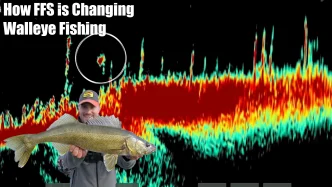
Instead of guessing what fish are doing below the boat, anglers can now see how walleyes react in real time. They can watch fish follow, ignore, chase, or crush a bait. That has made walleye fishing feel more visual, more active, and more engaging.
TJ talks about how this has helped change the perception of walleyes. They are not always slow, finicky fish sitting on the bottom. In the right situations, walleyes can be aggressive predators that chase baits like bass, lake trout, or other open-water species.
That shift has helped pull more anglers into walleye fishing, including bass anglers and younger anglers who enjoy casting, hunting individual fish, and watching fish react on screen.
Forward-Facing Sonar and Walleye Behavior
Forward-facing sonar has done more than help anglers catch fish. It has challenged a lot of old assumptions about where walleyes live and how they behave.
One major example is weed walleyes. TJ talks about moving from Lake of the Woods-style fishing to lakes where walleyes live in and around weeds. That was a completely different world for him at first. But with experience and with the help of sonar, it became clear that weeds can hold a lot of walleyes, including quality fish.
Across Minnesota, Wisconsin, the Dakotas, and other walleye regions, more anglers are realizing that weeds are not just bass and panfish habitat. If a lake has healthy vegetation and forage, there is a good chance walleyes are using it.
Forward-facing sonar has also made suspended walleyes more approachable. Instead of only fishing structure, breaks, flats, or bottom-oriented fish, anglers can now target fish that are roaming over deeper water or relating to baitfish away from structure.
Still, TJ’s approach is not that technology solves everything. In fact, one of the most useful things about sonar is that it shows anglers how often fish do not bite. It reveals follows, refusals, missed opportunities, and small details that help anglers learn faster.
Slip Bobbers Still Belong in Modern Walleye Fishing
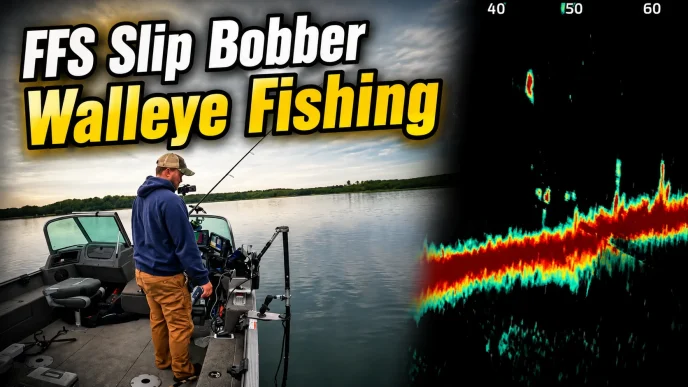
Even with all the attention on forward-facing sonar, one of the best parts of the conversation is that classic presentations still matter. Slip bobbers remain one of the most effective ways to catch walleyes, especially when fish are holding in a specific zone.
TJ talks about using slip bobbers a lot while guiding because they are simple, effective, and fun. There is still something about watching a bobber disappear that makes fishing exciting, whether you are a new angler or an experienced one.
His slip bobber setup can vary, but the general system includes a small jig, fluorocarbon leader, swivel, weight, braid, and a longer spinning rod. He mentions using small tungsten-style jigs or 1/16-ounce short-shank jigs, depending on the situation.
Leader size can change based on water clarity and fish mood. In clear water, TJ may go as light as 4-pound fluorocarbon in specific situations, though 6- to 8-pound test is more of a normal range. He also talks about using natural colors like black, olive, or lighter tones that match the environment.
Another important detail is casting efficiency. Stick-style slip bobbers can cast cleaner and tangle less than some rounder bobber styles. A longer rod, braid, and even a 3000-size spinning reel can help anglers pick up slack faster and drive the hook home more effectively.
Drop Shotting Walleyes: A Controlled Slip Bobber
Another major technique from the episode is drop shotting walleyes. TJ describes the drop shot as almost like a controlled slip bobber. Instead of setting your bait a certain distance below the surface, you are setting it a specific distance above the bottom.
That makes the drop shot extremely useful around weeds, steep breaks, irregular bottom, and structure. Around vegetation, TJ talks about measuring weed height and setting the dropper so the bait rides just above the tops of the weeds. That keeps the bait in the strike zone without constantly burying it in cover.
Drop shots are also efficient. They tangle less than some slip bobber rigs, they are easy to fish, and the hookup percentage can be strong because the angler can often just reel into the fish.
One important detail is line angle. If you cast a drop shot away from the boat, the bait may not be riding as high as you think because the line is angled back toward you. The farther away the rig is, the longer the dropper may need to be to keep the bait at the right height.
TJ also mentions a smart guiding trick: using lighter line for the dropper section. That way, if the weight gets snagged, the angler can break off the weight without losing the entire rig.
Plastics, Paddle Tails and Suspended Walleyes
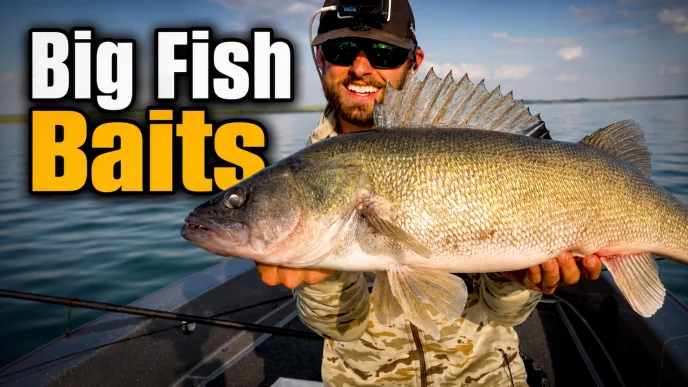
When the conversation turns to forward-facing sonar presentations, plastics become a major topic. TJ talks about using paddle tails, straight-tail minnows, and larger plastic profiles for walleyes, especially when targeting suspended fish.
A 4-inch bait is a common starting point for him, although he notes that “big” is relative. On lakes with cisco, smelt, or larger forage, bigger paddle tails can make a lot of sense. On smaller local lakes, he has sometimes had better success with slimmer, straight-tail minnow-style plastics.
One of the more interesting takeaways is that TJ does not always work these baits with aggressive twitches. In some situations, he has had success simply slow-rolling a bait over the top of a fish’s head. That is a subtle but important point. With forward-facing sonar, anglers often want to shake or hover a bait right in front of a fish, but sometimes a steady retrieve is what triggers the bite.
Jig weight also matters. When fishing deeper fish or making long casts, heavier jig heads help keep the bait down in the strike zone. A light jig may rise too quickly during the retrieve, especially with a paddle tail. TJ often talks in the range of 1/2 ounce, with heavier options sometimes making sense depending on depth, distance, and bait action.
Adaptability Is Still the Best Walleye Skill
Throughout the episode, one of TJ’s strongest messages is adaptability. He is confident in certain techniques, but he is not locked into one exact setup, bait, color, or rule.
That is an important mindset for modern walleye fishing. Forward-facing sonar can speed up the learning process, but it can also show anglers that their assumptions are not always correct. A fish might ignore the bait you thought was perfect. Another fish might chase something you did not expect.
The best anglers are usually the ones who can balance confidence with curiosity. They have presentations they trust, but they are still willing to adjust based on what the fish are showing them.
TJ’s background as a teacher fits perfectly into that style. He is constantly learning, testing, and trying to explain the “why” behind what is happening on the water.
Technology, Stewardship and the Future of Fishing
The episode also gets into a thoughtful conversation about forward-facing sonar, angler efficiency, and fishery management. TJ makes it clear that he loves using forward-facing sonar, but he is also a bigger fan of fishing as a whole.
That is an important distinction.
Technology can make anglers more efficient. That can be exciting, but it also raises fair questions about harvest, pressure, fish behavior, and the long-term health of different fisheries. The answer is not always simple, and it can vary by species, body of water, depth, and management goals.
The conversation around crappies and barotrauma is a good example. When fish are caught from deep water, especially during certain times of year, catch-and-release may not always be as harmless as anglers want it to be. In those situations, the more responsible choice may be to keep a legal harvest and then stop fishing that school.
That balanced approach is one of the strongest parts of the episode. It is not anti-technology, and it is not blindly pro-technology either. It is about learning, paying attention, and being a better steward of the resource.
Final Takeaway
Modern walleye fishing is changing fast, but the core of the sport is still the same. Anglers who stay curious, keep learning, and adapt to what the fish are doing will always have an advantage.
TJ Erickson’s approach is a great example of that. Whether he is talking about slip bobbers, drop shots, paddle tails, forward-facing sonar, or making the jump into fishing content full-time, the message is consistent: learn from every trip, share what works, and help more people enjoy fishing.
Watch the full conversation with TJ Erickson to hear more about modern walleye fishing, forward-facing sonar, and what it takes to turn a passion for teaching and fishing into a full-time career.