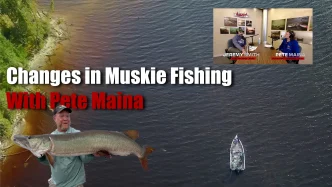


Muskie fishing has always been a game of patience, timing, experience, and a little bit of pain. But today, the sport is changing faster than ever. In this conversation, Pete Maina joins the show to talk through some of the biggest issues facing muskie fishing right now, from increased fishing pressure and modern technology to stocking reductions, fish handling, and the future of fisheries management.
This isn’t just a conversation about catching more muskies. It’s about what it takes to keep quality muskie fishing alive. Anglers today are better, more informed, and better equipped than ever before. That creates opportunity, but it also creates responsibility.
Why Muskie Fishing Pressure Is Different Today
Muskie anglers have always worked hard for their fish, but the tools available today have changed the game. GPS mapping, side imaging, forward-facing sonar, detailed lake data, and instant information sharing have made anglers far more efficient than they were 20 or 30 years ago.
That efficiency matters. Fish that once lived in hard-to-find areas are now easier to locate. Open-water muskies, in particular, are more accessible than ever. Anglers can find bait, identify structure, watch fish react to lures, and repeat patterns with a level of precision that simply did not exist in the past.
The issue is not that technology is bad. The issue is that technology, combined with more anglers, longer seasons, better information, and more fishing pressure, can stack the odds against the fish. When the same fish are being found more often, caught more often, and handled more often, the long-term effects become hard to ignore.
Stocking, Seasons, and the Reality of Managing Muskies
One of the major themes from the conversation is that great muskie fishing does not happen by accident. In many places, it has taken decades of stocking, management, advocacy, and angler support to build quality fisheries.
That is why reductions in stocking are such a concern. When fewer fish are being put into the system while angling pressure continues to increase, it becomes difficult to expect those fisheries to maintain the same level of opportunity. Muskies are not a fast-turnaround resource. They take years to reach quality size, and rebuilding a declining fishery can take a long time.
The same concern applies to season changes and expanded fishing opportunities. Anglers naturally want more time on the water, but more opportunity is not always better if the fishery is already under stress. At some point, the conversation has to shift from simply asking how much access anglers can have to asking how much pressure the resource can realistically handle.
That does not mean the outlook has to be doom and gloom. But it does mean anglers need to stay involved, support strong stocking programs where they make sense, communicate with fisheries managers, and push for decisions that protect the future of the fishery.
Better Muskie Handling Starts at the Net
Proper fish handling is one of the simplest ways muskie anglers can make an immediate difference. Once a muskie is in the net, the goal should be to keep that fish in the water as much as possible and reduce unnecessary handling time.
That starts with being prepared. Have hook cutters, pliers, measuring tools, and camera gear ready before the fish ever gets boatside. If the lure is pinned awkwardly or the fish’s head is stuck out of the water, cut the hooks instead of trying to save a bait. A lure can be replaced. A big muskie cannot.
Warm water makes this even more important. The warmer the water, the shorter the picture session should be. Long in-boat measurements, extended hero shots, and extra handling all add stress to the fish. Anglers should also learn to read the fish. If it is rolling, losing strength, showing redness, or acting stressed in the net, that fish is telling you it needs to go back.
Barbless hooks are another low-hanging-fruit option. They make unhooking faster, safer, and easier on both the angler and the fish. You may not use them in every situation, but they are worth considering, especially during warmer water periods.
Value the Experience More Than the Measurement
One of the best points from the conversation is that muskie fishing should not only be about the number. Whether a fish is 41, 47, or 51 inches, the real memory is usually the moment.
It is the follow. The strike. The figure-eight. The way the fish appeared out of nowhere. The blown opportunity your buddy will never live down. Those are the stories that stick.
As muskie anglers, the culture can keep shifting toward valuing the experience more than the exact measurement. That does not mean big fish are not exciting. Of course they are. But if the choice is between a perfect measurement and a healthier release, the fish should win.
Leech Lake Muskie Fishing and the Importance of Native Fisheries
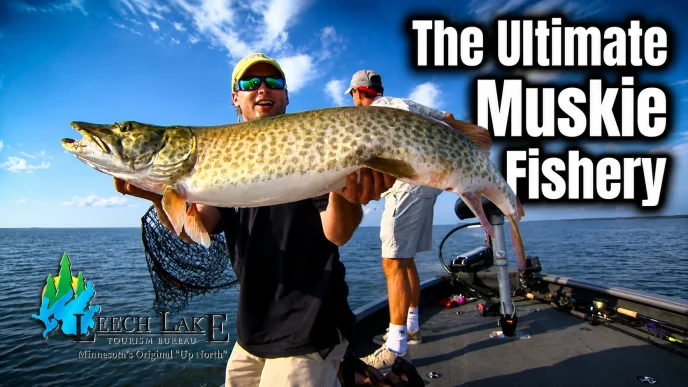
Leech Lake is one of the most important muskie fisheries in Minnesota. It is a native muskie water, a historic fishery, and still one of the places that attracts serious attention from anglers looking for quality fish.
But Leech is also complex. Water clarity has changed. Weed growth has shifted. Cabbage, milfoil, sand grass, rocks, sand, baitfish movement, and wind all play a role. Pete’s approach focuses heavily on weeds and thick cover, especially because those areas create ambush situations where muskies behave more naturally.
Inside weed edges, deeper weedlines, weed transitions, and wind-blown areas can all be key. On a lake like Leech, wind can be especially important, but it is not always as simple as fishing the obvious windy side. Wind direction, return current, and how long the wind has been blowing from one direction can all influence where bait and muskies set up.
Native fisheries like Leech deserve extra attention because they carry so much of the muskie opportunity. As other stocked fisheries fluctuate, these natural systems become even more valuable.
How to Catch Pressured Muskies
Pressured muskies are not impossible to catch, but they demand more thought. Pete’s approach is a good reminder that anglers need to keep experimenting.
Thick weeds and heavy cover are a great place to start because technology gives anglers less of an advantage there. Fish buried in weeds are often ambush-oriented and may be more likely to react when a bait comes through the right lane at the right speed.
Bait selection matters, but so does how the bait is fished. Sometimes the right lure is being worked the wrong way. Change retrieve speeds. Change casting angles. Burn a bait that is usually fished slowly. Slow down a bucktail until the blades barely turn. Pause a jerkbait longer than feels comfortable. Make the fish tell you what they want.
In a multi-angler boat, efficiency matters too. Put the most efficient bait or best pattern up front. Let the back angler experiment with different lures, angles, speeds, and presentations. Some days the person in the back of the boat is not just “washing baits.” They are testing the next adjustment that might unlock the bite.
Old-school baits also deserve a second look. The lures that caught fish 25 years ago did so for a reason. If muskies have not seen them as much lately, they may become fresh again.
The Future of Muskie Fishing Depends on Anglers
Muskie fishing is still one of the most exciting experiences in freshwater fishing, but the future of the sport depends on anglers who are willing to think beyond the next bite.
That means handling fish better. It means supporting smart stocking and management. It means being honest about the effects of technology and pressure. It also means speaking up when fisheries decisions matter.
The goal is not to take the fun out of fishing. The goal is to make sure the next generation gets to experience the same thrill: a big muskie appearing behind a bait, a boatside strike, a fish released strong, and a story that lasts long after the measurement is forgotten.