
Walleye fishing has changed dramatically over the past decade. What was once dominated by live-bait rigs, trolling passes and narrow feeding windows has become a much more active style of fishing built around casting, electronics and real-time adjustments.
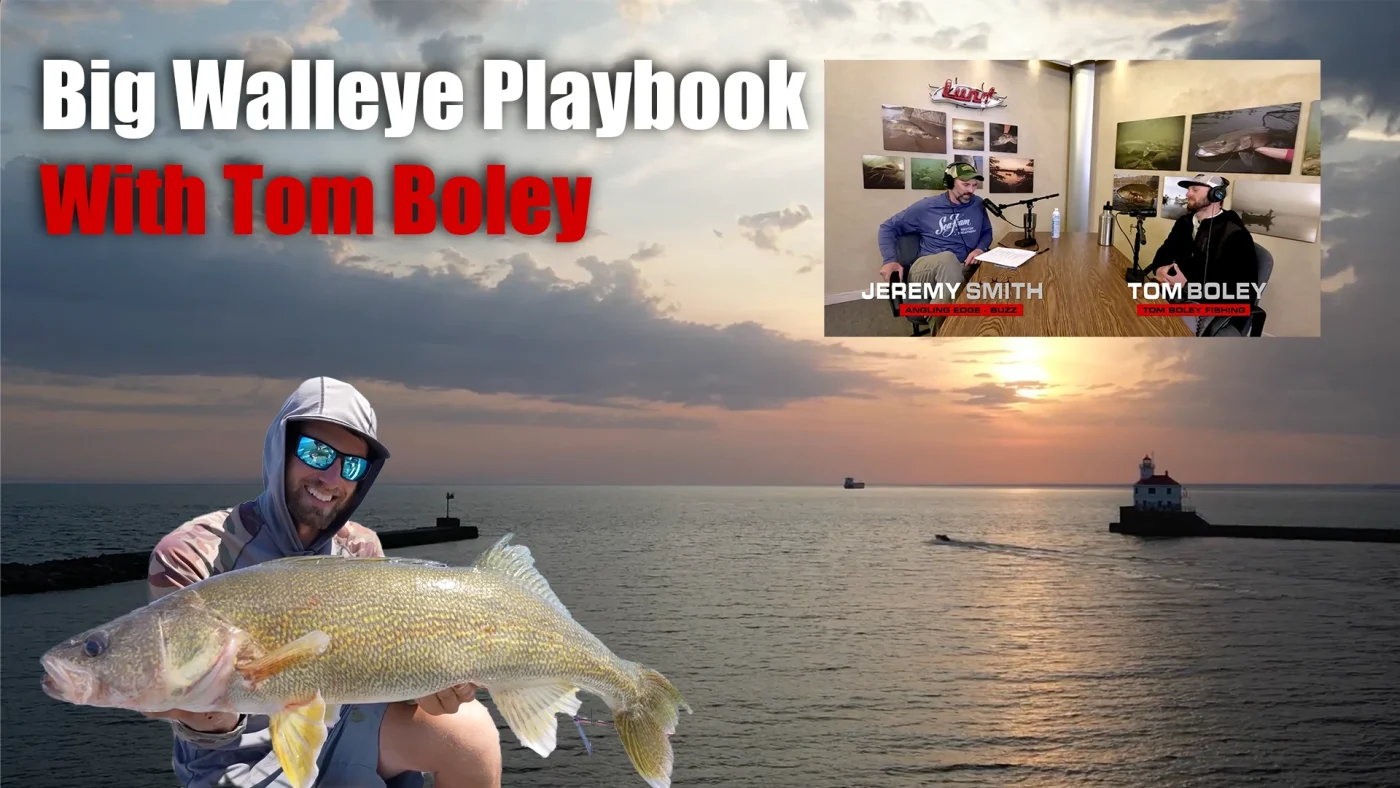
Few anglers have documented that change as thoroughly as Tom Boley. Through his YouTube channel and Walleye Now platform, Boley travels across the Midwest targeting walleyes on everything from small natural lakes to massive reservoirs and Great Lakes fisheries.
His approach combines forward-facing sonar, efficient boat control and a streamlined selection of presentations that can cover the entire water column.
How Forward-Facing Sonar Changed Walleye Fishing
Forward-facing sonar has given anglers a much clearer picture of where walleyes live and how they react to different presentations.
Instead of simply marking fish after passing over them, anglers can now locate individual walleyes, watch them move through the water and place a lure directly in their path. Boley relies heavily on the Humminbird MEGA Live 2 to find suspended fish, track his presentations and learn how walleyes respond to different retrieves.
This technology has also simplified the amount of tackle he carries. Rather than bringing a full collection of trolling rods, planer boards and specialized gear everywhere he travels, Boley can cover much of the season with a finesse rod, a heavier reaction-bait rod and a longer medium-light spinning setup.
Forward-facing sonar does not automatically make fish bite, but it helps anglers eliminate unproductive water and make faster adjustments.
Search Baits for Summer Walleyes
One of Boley’s most dependable summer presentations is a search bait. These lures typically combine a weighted head, blade and nightcrawler to create what is essentially a castable spinner rig.
Traditional spinner rigs have caught walleyes for decades. A search bait delivers many of the same benefits while allowing anglers to target specific fish with forward-facing sonar.
Boley uses search baits from late spring through much of the summer. They can be retrieved quickly to locate aggressive fish, slowed down around reluctant walleyes or counted into deeper water before beginning the retrieve.
For this presentation, he prefers a longer medium-light spinning rod in the 7-foot-3 to 7-foot-6 range. The softer action helps cast a crawler without tearing it from the hook and allows the rod to load gradually as a walleye bites.
A premium rod such as the St. Croix Legend X2 Spinning Rod provides the sensitivity, casting control and responsive action needed for these light but highly effective presentations.
Boley generally uses lighter quarter- and three-eighths-ounce search baits on inland lakes. On larger fisheries such as Lake of the Woods, Green Bay or Missouri River reservoirs, heavier versions can reach deep, roaming walleyes more efficiently.
Choosing Braided Line for Walleye Fishing
Line selection can have a major effect on casting distance, lure control and bite detection.
For light jigs and finesse presentations, Boley favors thin, smooth braid that allows him to make long casts with lightweight tackle. Sufix Revolve Braided Line is especially effective for finesse fishing because its small diameter helps light jigs travel farther while maintaining direct contact with the lure.
For heavier reaction baits, Boley prefers a denser and slightly stiffer braid. Sufix 832 Advanced Superline in 15- or 20-pound test provides the strength and hook-setting power needed when fishing Jigging Raps and other aggressive presentations.
He also favors high-visibility line. Being able to see the angle and movement of the line makes it easier to track a lure, detect slack and recognize subtle bites. A fluorocarbon leader can then be added for abrasion resistance and a less visible connection near the bait.
Reaction Baits for Bigger Walleyes
When Boley is targeting larger walleyes, reaction baits frequently become part of the equation.
The Rapala Jigging Rap is one of his most consistent big-fish presentations. It can be snapped aggressively above suspended walleyes, crashed into the bottom or worked with a slower, sweeping retrieve.
One important lesson from forward-facing sonar is that there is no single correct way to fish a Jigging Rap. Aggressive fish may chase a bait snapped several feet above them, while pressured walleyes may respond better to a subtle pendulum or swimming retrieve.
Jerkbaits are another key part of modern walleye fishing. They can pull walleyes several feet upward, even in cold or dirty water where anglers once believed fish needed a bait placed directly on the bottom.
The Rapala PXR Mavrik 110 provides a modern suspending jerkbait option for targeting walleyes around shallow flats, open water and deeper structure. The classic Rapala Husky Jerk remains another proven choice, especially in natural baitfish patterns such as gold, black, perch and white.
Depth control is often more important than color. The lure must reach the correct level and remain above or near the fish long enough to trigger a response. In cold water, that may require long pauses. During aggressive windows, a faster and more erratic cadence can cause an entire group of walleyes to rise and attack.
Practical MEGA Live 2 Settings
Boley typically keeps his forward range near 90 to 100 feet and his vertical range around 25 to 30 feet.
Maintaining a relatively consistent vertical range helps him judge fish size more accurately. Constantly changing the depth scale can make smaller fish appear much larger than they actually are.
He often runs sensitivity relatively high while lowering contrast enough to reduce clutter. Changes in pollen, debris, shallow water and bottom composition may require additional adjustments. Switching color palettes can also help separate fish from suspended clutter.
Anglers should not expect a perfectly clean sonar image every time. Shallow spring water can be especially challenging. The goal is not always to see every detail of a fish, but to identify targets, track the lure and understand how fish are reacting.
Boat Control Is the Unsung Hero
Forward-facing sonar is only useful when the boat remains in the correct position.
Boley prefers working slowly into the wind, particularly in shallow water. This gives him more time to identify fish and reposition before casting. Whenever possible, he keeps walleyes approximately 70 to 80 feet from the boat to reduce spooking and create a better casting angle.
The Minn Kota Ultrex QUEST gives anglers the precise steering and positioning control needed to maintain that distance, work into the wind and avoid driving directly over fish.
On large, windy fisheries, Boley may drift with the waves or use a large drift sock to slow the boat. Regardless of the conditions, the objective remains the same: present the lure cleanly without allowing the trolling motor or boat to push fish away.
Let the Fish Determine the Presentation
Modern walleye fishing is not simply about watching a sonar screen. Electronics provide information, but anglers still need to interpret fish behavior, control the boat and adjust their presentations.
Search baits, Jigging Raps and jerkbaits can all produce walleyes throughout the season. The key is learning when to speed up, slow down, change depth or show fish something they have not seen repeatedly.
Forward-facing sonar has revealed that walleyes are more aggressive, mobile and willing to chase than many anglers once believed. The anglers who use that information while continuing to develop strong fishing instincts will be the ones who get the most from today’s technology.