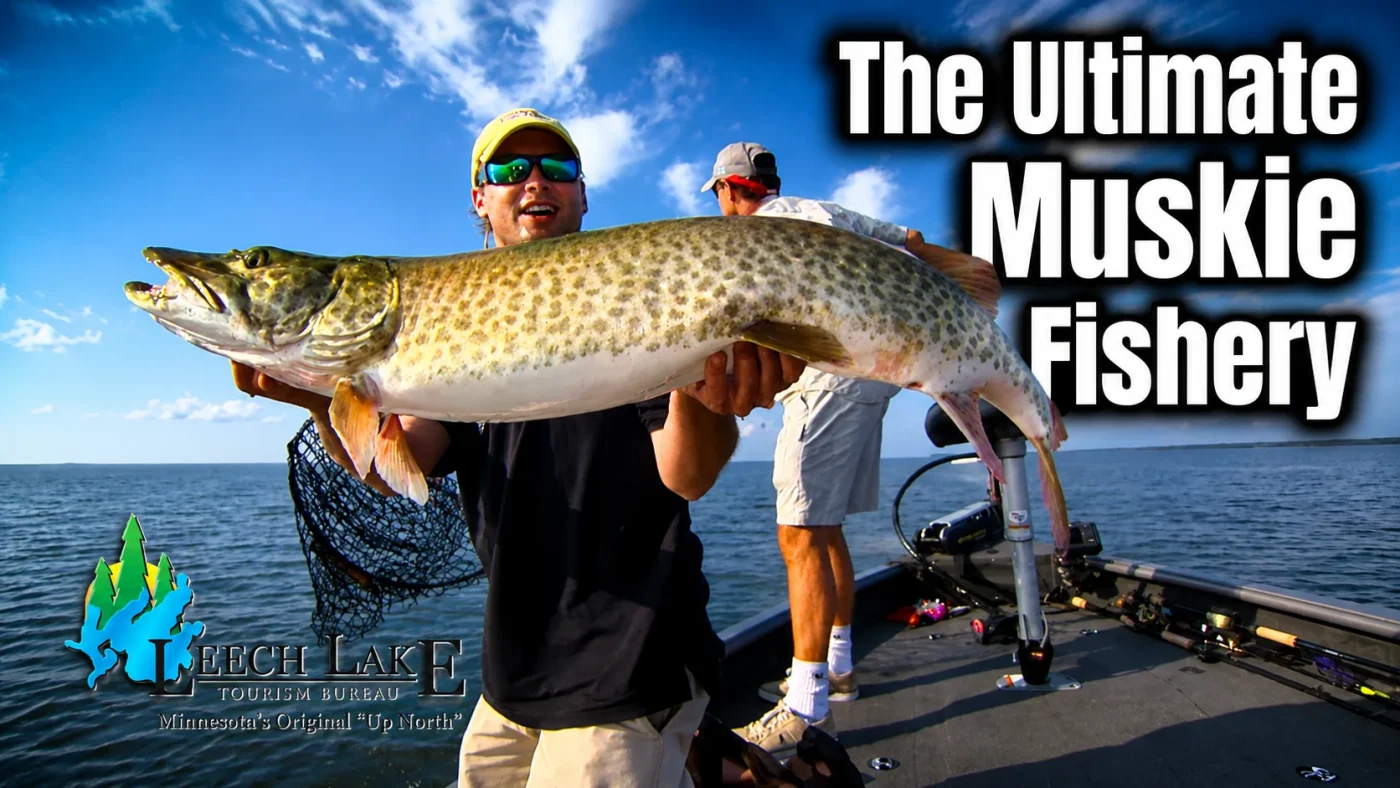

Leech Lake is one of Minnesota’s most legendary muskie fisheries, and for good reason. It is big, complex, and full of history. Unlike some classic shield lakes with obvious rock reefs, points, and deep structure, Leech Lake often forces muskie anglers to think differently. One of the most consistent ways to break down this massive body of water is by focusing on weeds.
For Pete Maina, targeting weeds is one of the main keys to finding muskies on Leech Lake. Depending on the time of year, he looks for specific weed patterns, including depth zones, weedline transitions, and areas where one weed type changes into another. Those subtle transitions can hold fish because they create edges, cover, and ambush points.
Why Weedlines Matter for Leech Lake Muskies
When fishing muskies on Leech Lake, not all weeds are created equal. Some of the best spots are deeper weedlines, while other times the shallow inside edge can be the most important part of the pattern. The key is figuring out where the fish are positioned on that particular day.
Thicker weeds can be especially productive because muskies use them as ambush cover. These fish are not always roaming open water or sitting on obvious structure. Often, they are buried in the weeds, waiting for forage to move through. In those situations, modern technology may not help as much as it does in open-water scenarios. Instead, it becomes a matter of understanding the habitat and fishing the right sections of cover.
How Wind Impacts Muskie Fishing on Leech Lake
Wind plays a major role in Leech Lake muskie fishing. While many anglers immediately think of wind-blown rocks, Pete points out that fish can still be heavily related to weeds when the wind is blowing. In fact, he often prefers fishing Leech Lake with wind.
The most important factor is consistency. If the wind has been switching directions all day, it may not create a dependable pattern. But when the wind blows from the same direction for multiple days, it can move forage and set up predictable feeding areas. That is when muskies may start stacking in certain weedbeds or along specific weed edges.
Protecting a Native Minnesota Muskie Fishery
Leech Lake is more than just a great muskie destination. It is one of Minnesota’s most important native muskie fisheries. As other muskie populations around the state have seen changes or declines, Leech has continued to draw attention from anglers looking for quality fish.
That also makes fish care more important than ever. With more pressure concentrated on key fisheries like Leech Lake, every muskie matters. Proper handling, quick releases, and respect for the resource are critical if anglers want to keep this fishery strong for the future.
For muskie anglers trying to understand Leech Lake, the lesson is clear: focus on the weeds, pay attention to wind direction, and look for the subtle patterns that position both forage and fish.