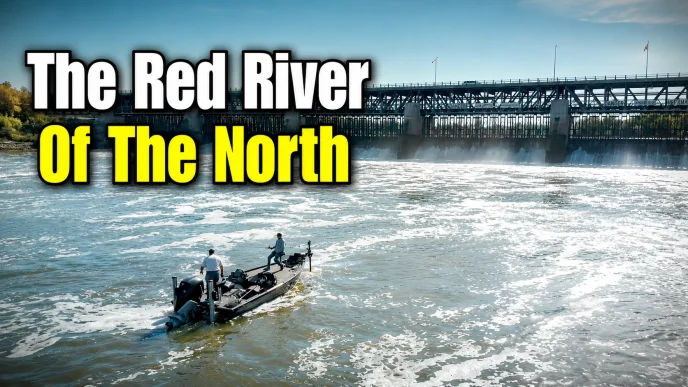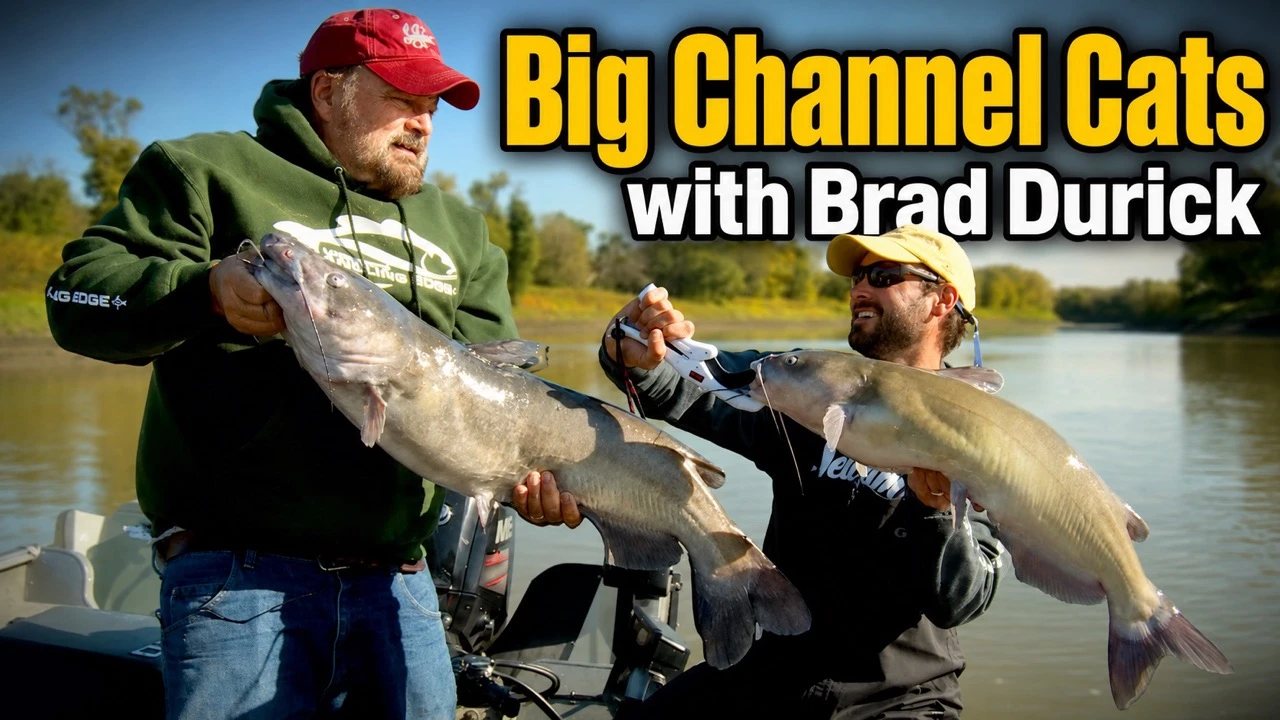

The Red River of the North is one of the most overlooked big-fish destinations in the Midwest. While many anglers travel to North Dakota for walleyes, perch, or Devils Lake, the Red River offers something completely different: hard-pulling channel catfish that routinely reach impressive sizes. This muddy, fertile river may not look flashy from the bank, but beneath the surface, it is one of the most productive channel catfish fisheries in North America.
Longtime Red River guide Brad Durick has spent years learning how these fish move, feed, and react to changing river conditions. His approach is built around simple rigs, smart boat positioning, current seams, bait preparation, and one of the most overlooked tools in catfishing: time management.
Understanding the Red River of the North
The Red River begins where the Otter Tail River and Bois de Sioux River meet near Breckenridge and Wahpeton, then flows north through Fargo, Grand Forks, Drayton, Pembina, Winnipeg, and eventually into Lake Winnipeg. As it moves north, the river widens and the average size of the catfish often increases.
This is not clear-water fishing. The Red is muddy, current-driven, and constantly changing. Fish location is rarely about seeing obvious structure. Instead, success comes from understanding breaklines, current seams, inside bends, outside bends, and small depth changes that create feeding lanes.
How Water Levels Affect Red River Catfish
One of the biggest lessons in Red River catfishing is that water movement matters. Fast-rising or fast-falling water can make catfish harder to predict. When the river rises quickly after heavy rain, fish often slide shallow and tuck out of the strongest current. When the river drops fast, they may also push toward the bank or move into slower water.
In these conditions, the goal is not always to fish the deepest hole or the heaviest current. Often, the best spots are close to current but not directly in it. Inside corners, current breaks, and areas where debris is pushing away from the bank can hold fish because they offer a break from the flow while still keeping food nearby.
When conditions are changing fast, patience becomes more important. Fish may still bite, but they often need more time to find and commit to the bait.
Seasonal Catfish Patterns
Spring fishing often starts getting good when water temperatures reach around 50 degrees and the river has some stability. If the river has been holding steady, catfish can become active quickly. If the water is dropping a foot a day or bouncing around from rain events, the bite may be less predictable.
Spawning usually happens when water temperatures reach roughly 72 degrees, often around mid-June depending on the year. In stable conditions, not every fish spawns at once, so anglers may not notice a dramatic shutdown. But when hot weather pushes water temperatures up quickly, more fish may spawn at the same time, which can make the bite tougher for a stretch.
By late July, August, and into early September, fishing often becomes more consistent but more pattern-based. Instead of sitting on one spot and catching fish after fish, anglers may catch one or two from a location and then need to move. It becomes a hunt: find the current position, catch what is there, and keep repeating the pattern.
Reading Current Seams for Channel Catfish
Current seams are one of the most important pieces of the puzzle. Aggressive catfish often position on the “on-current” side of a break, where food is naturally being pushed toward them. More negative fish may slide just a few feet away into the “off-current” side, where they can rest but still feed when the opportunity is right.
This lateral movement is a key concept. Catfish do not always move far upstream or downstream when conditions change. Sometimes they simply slide from one side of a hole to the other. That means a small change in casting angle, anchor position, or sinker weight can be the difference between getting bit and missing the spot entirely.
Timing Your Spots
One of the best takeaways from Brad’s system is using a timer at every anchor position. Instead of guessing how long to sit, he pays attention to when bites happen.
Some days, the pattern may be fast. If the first fish bites within five minutes and the second comes by eight or ten, there may be no reason to sit for 30 minutes waiting on a third. Other days, especially when fish are sluggish and sitting off-current, it may take 30 or 40 minutes before the first bite happens.
The key is consistency. Start with a set window, track when bites occur, and adjust throughout the day. Good catfish anglers do not just know where to sit. They know when to leave.
Simple Catfish Rigs That Work
Red River catfish fishing does not require complicated rigging. A basic slip sinker rig is hard to beat. The setup usually includes a mainline, no-roll sinker, swivel, short leader, and a circle hook or J hook baited with cut bait.
For anglers building a simple river catfish setup, terminal tackle, mono, hooks, sinkers, rods, reels, bait knives, and storage tools can all be found at FishUSA.
Circle hooks are especially useful when fishing rods in holders or guiding anglers with different experience levels. The rod loads up, the fish turns, and the hook usually catches in the corner of the mouth. A softer rod tip helps give the fish enough room to turn without feeling too much pressure too soon.
J hooks still have a place, especially for anglers holding the rod and fishing by feel. In cold water, light bites, or certain post-spawn situations, a J hook can help turn subtle taps into hooked fish. Both styles work, but the right choice depends on how you are fishing.
Best Catfish Baits
Bait is a huge part of Red River success. Suckers are one of the most dependable options, especially when cut into small chunks. Interestingly, slightly aged suckers packed on ice can sometimes outperform fresh-killed bait. The theory is that after a day or two on ice, the blood and scent settle into the meat instead of washing out immediately on the cutting board, creating a longer-lasting scent trail.
Goldeyes can also be important, especially on certain days when fish key on them. Frogs are another seasonal option, particularly in wet years when there is a lot of frog movement. Prepared baits, dip baits, and dough baits can catch channel cats too, but they tend to be better for smaller fish in ponds, lakes, or slower-water situations.
For big river channel cats, fresh or properly cared-for cut bait is usually the better bet.
Boat Positioning, Anchoring, and Electronics
Boat control matters. Whenever possible, avoid driving directly over the spot you plan to fish. Set up upstream, anchor carefully, and cast back into the seam, hole, or breakline.
Traditional anchors are still extremely effective in river current. Spot-Lock can be helpful, but heavy flow, wind, shallow water, and long days can make a physical anchor more reliable in some situations.
Electronics also play a role, but not always in the way anglers expect. Side imaging is useful for finding structure, breaklines, and subtle holes. Custom mapping tools can be even more valuable because once you understand where the breaklines are, you can repeat productive spots at different water levels.
Why You Should Try Red River Catfishing
The Red River is a special place because it gives anglers a legitimate shot at big channel catfish in a moving-water environment. It is accessible, productive, and different from almost any other freshwater experience in the region.
Whether you book a guide, explore from a public access, or add an extra day to a North Dakota fishing trip, the Red River is worth your time. Learn the current, keep your rig simple, bring good bait, watch the clock, and get ready for one of the hardest-pulling fish in freshwater.