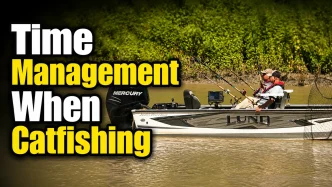


One of the toughest decisions in fishing is knowing when to stay and when to move. Every angler has been there: you pull up to a promising spot, drop lines, and start wondering how long you should wait before picking up and trying somewhere else. Sit too long, and you waste valuable time. Leave too early, and you might miss the bite window completely.
That’s where a simple time-management system can make a big difference. Instead of guessing, use a timer to help track how fish are reacting throughout the day.
A good starting point is a 20-minute timer. When you set up on a spot, start the timer and pay close attention to when the first bite happens. The key is to mark the time of the first fish. Was it one minute in? Five minutes? Seven minutes? That first bite gives you important information.
From there, keep tracking. Mark the time of the second fish, and if there is a third, mark that too. After a few spots, a pattern usually starts to show itself. If the first fish comes within five minutes and the second comes by eight minutes, you can start to understand how active the fish are and how much time each spot deserves.
This can be especially important during spring fishing. With good electronics, anglers can find smaller holes or very specific fish-holding areas. But those spots may only give up one, two, or three fish. If you catch a couple quickly and then nothing happens for the rest of the 20-minute window, it may be time to move instead of waiting around for fish that are no longer active.
Of course, not every day calls for the same timing. Weather, season, current, and fish mood all matter. During a storm front, midsummer pattern, or sluggish bite, fish may need more time before they commit. Some days, a 20-minute sit is not enough. You may need to stretch that timer to 30 or even 40 minutes before the spot starts producing.
This slower bite often happens when fish are positioned out of the main current. They may not be as aggressive, and they may not hit right away. In those situations, patience can pay off. It can be hard to sit that long when you’re eager to get fish in the boat, but if the pattern shows that bites are coming later, the timer helps you stay disciplined.
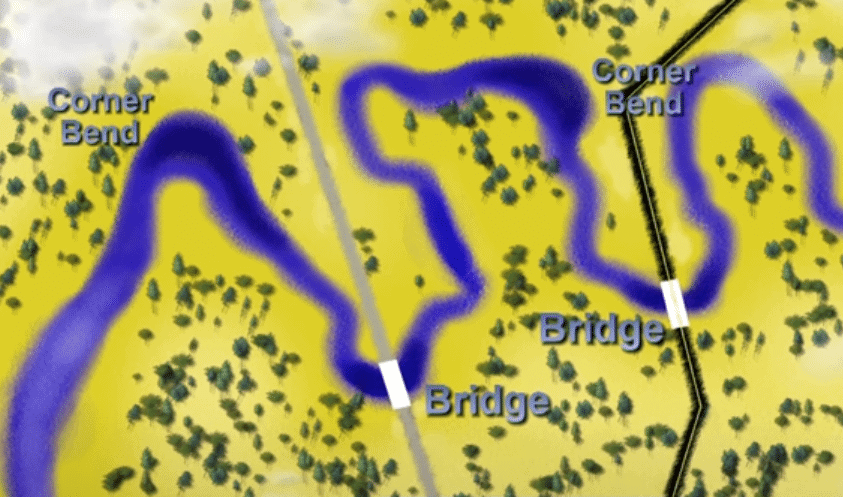
Current speed is another major clue. In faster water, especially outside bend holes or areas with strong current, active fish tend to bite fairly quickly if they are there. In slower water, the bite often takes longer to develop. A simple way to think about it is this: faster water often means faster bites, while slower water may require a slower approach.
The biggest takeaway is to fish with a plan, not a guess. A timer helps you turn each stop into useful information. By tracking when bites happen, how many fish each spot produces, and how conditions affect timing, you can make smarter decisions throughout the day.
The more you pay attention to time, the easier it becomes to know when to stay, when to move, and how to put more fish in the boat.