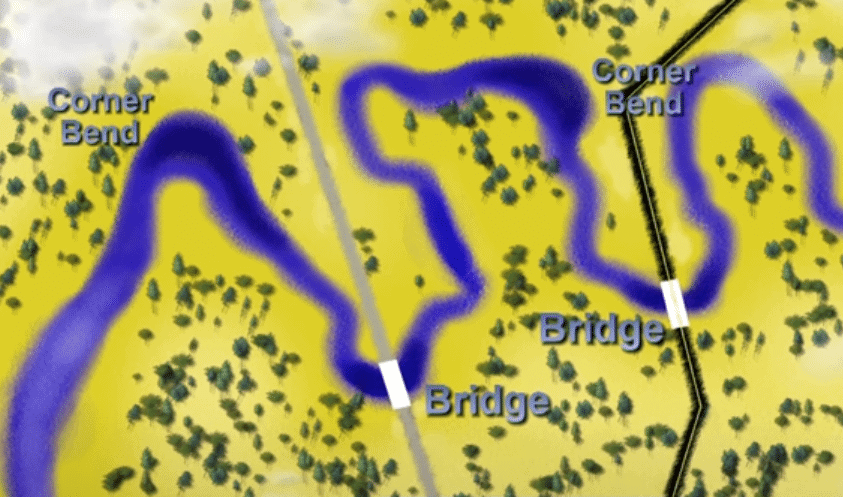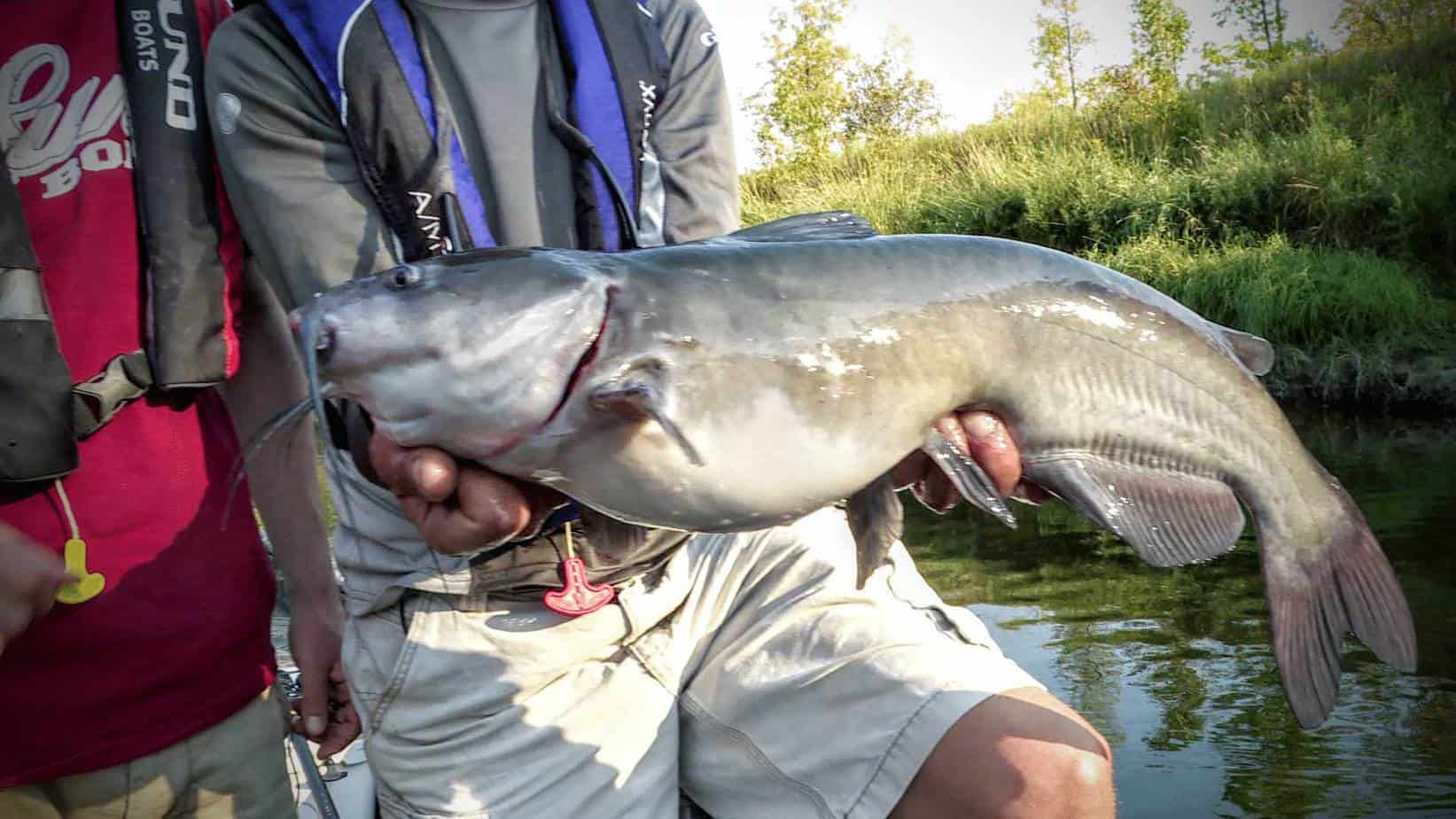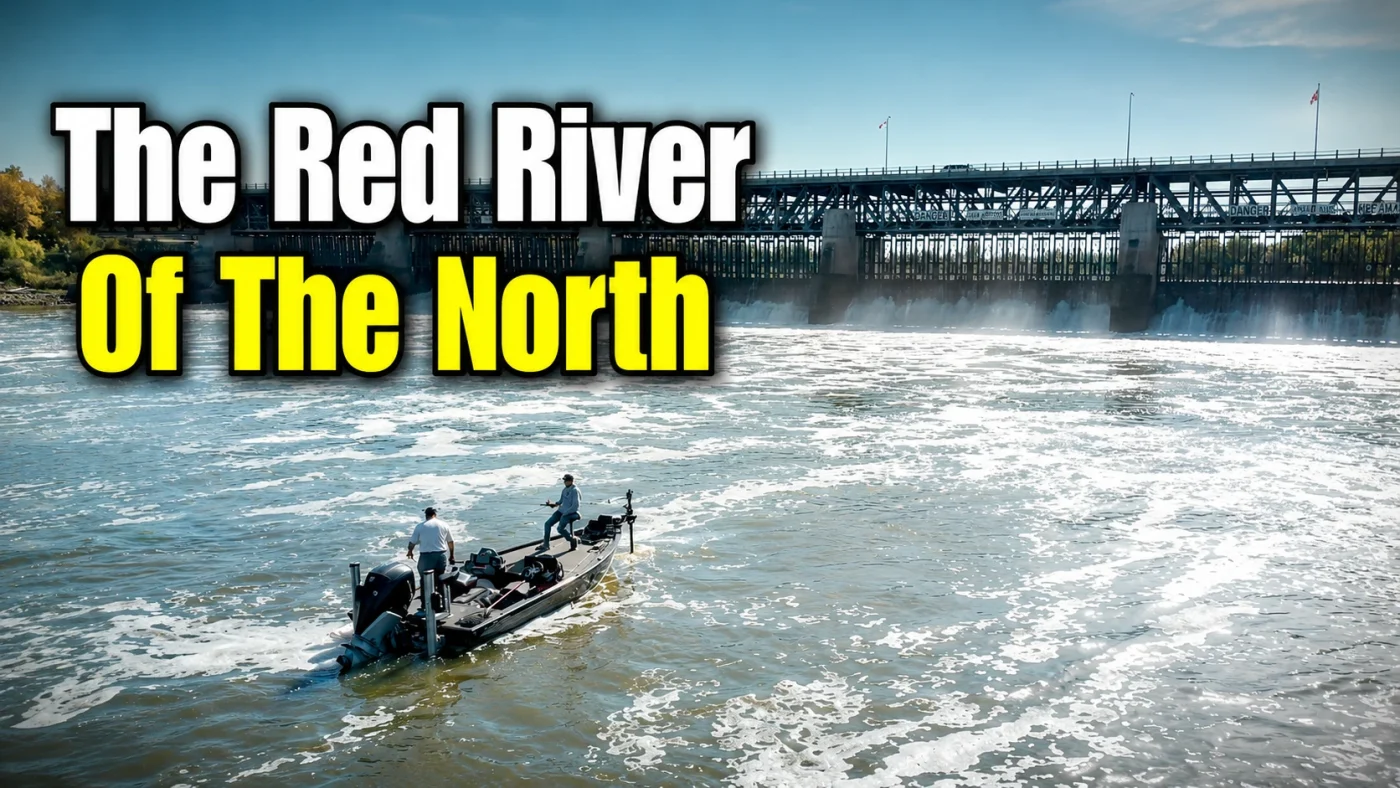

The Red River is one of the most unique catfish fisheries in North America. Unlike most rivers, the Red River flows north, beginning where the Otter Tail River and Bois de Sioux River meet near Breckenridge, Minnesota, and Wahpeton, North Dakota. From there, it winds north through Fargo-Moorhead, Grand Forks, Drayton, Pembina, Winnipeg, and eventually into Lake Winnipeg.
One of the biggest factors that makes the Red River such an interesting catfish system is how much it changes as it moves north. Around Fargo-Moorhead, the river is still fairly narrow and shallow. By the time it reaches Grand Forks and East Grand Forks, it can be roughly three times wider. Farther north near Drayton and Pembina, the river continues to expand before crossing into Canada.
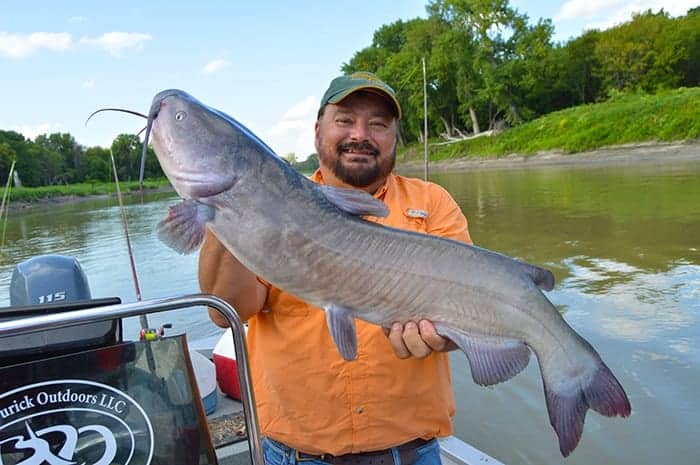
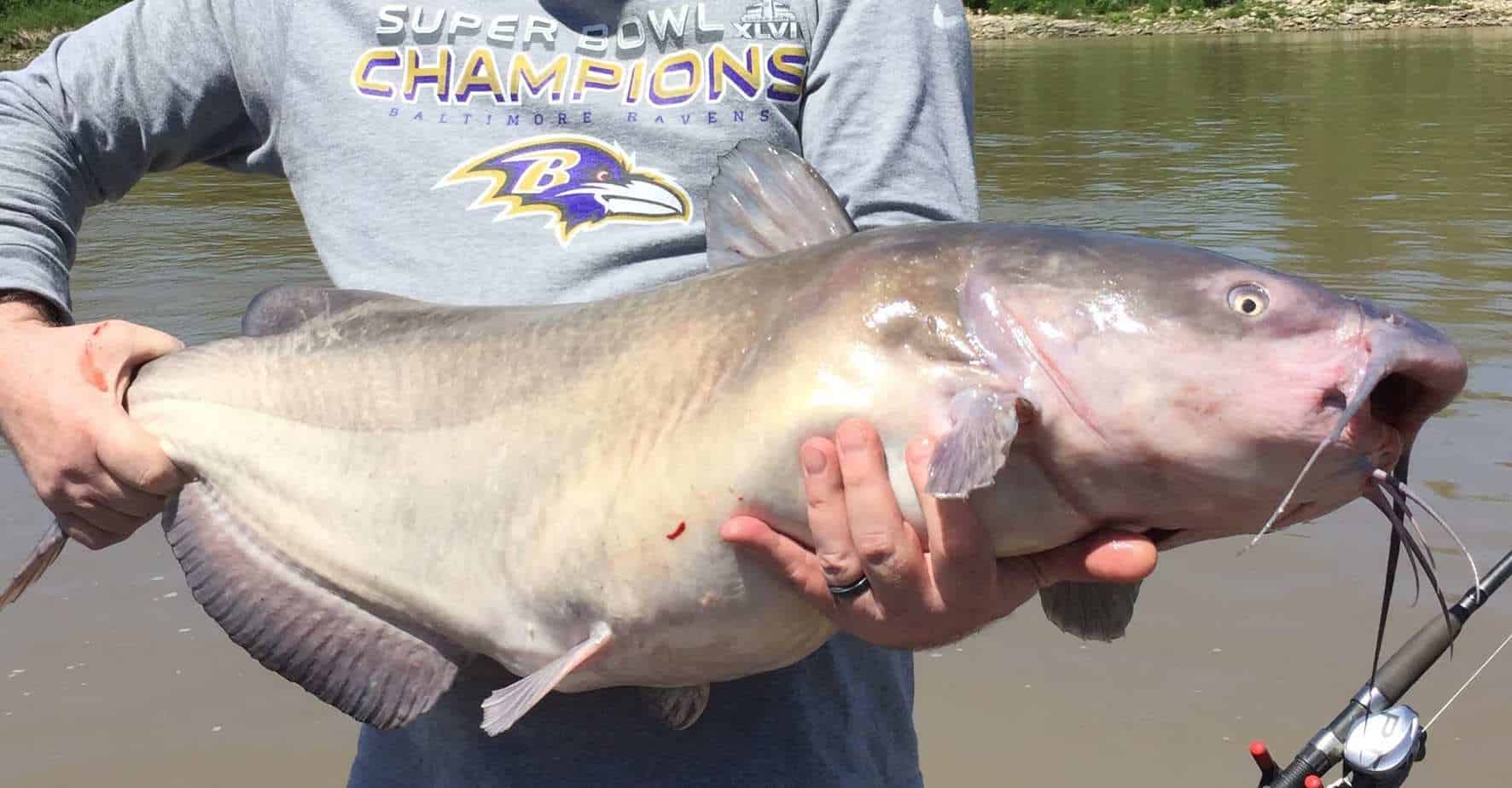
As the river gets larger, the catfish tend to get larger as well. While seasonal conditions, flooding, and fish movement all play a role, anglers often see bigger Red River catfish the farther north they fish. Areas like Lockport, north of Winnipeg, are especially well known because the river becomes dramatically wider and supports a world-class catfish fishery.
For anglers trying to understand the Red River catfish bite, it helps to look at the river as a changing system. Width, depth, current, seasonal movement, and connection to Lake Winnipeg all influence where fish live and how they feed. The farther north the river flows, the more room and habitat it offers for big channel catfish to grow.