


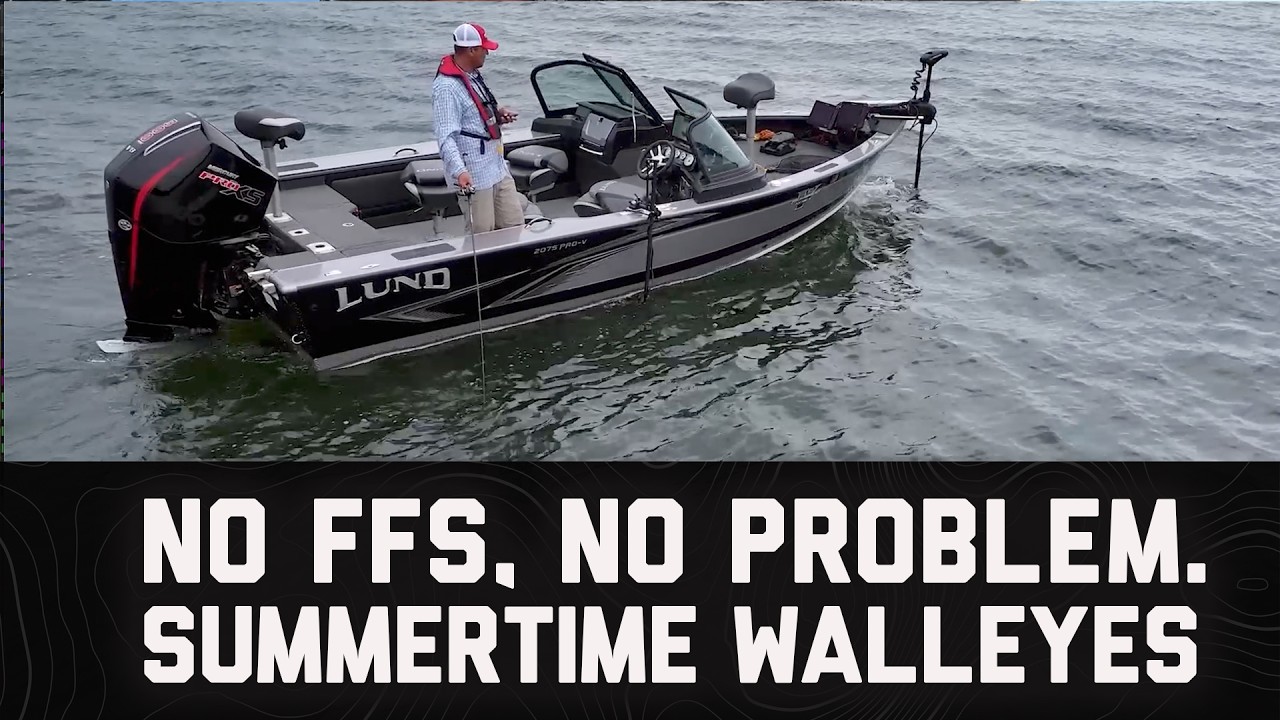

When summer settles in and the weeds get thick, one of my favorite ways to put walleyes in the boat is also one of the simplest: pulling an inline spinner harness with a nightcrawler.
There are all kinds of ways to troll spinners for walleyes. Bottom bouncers, three-way rigs, snap weights—they all have their place. But when I’m fishing lakes with heavy weedlines, scattered rock, or even some timber, I really like going with a lightweight inline setup.
Instead of pounding bottom, you’re suspending that spinner over the cover and bringing the bait right over the top of the fish. It’s extremely snag-resistant, easy to fish, and flat-out catches walleyes all summer long.
Keep the Spinner Rig Simple
There’s really not much to this setup, and that’s part of what makes it so effective.
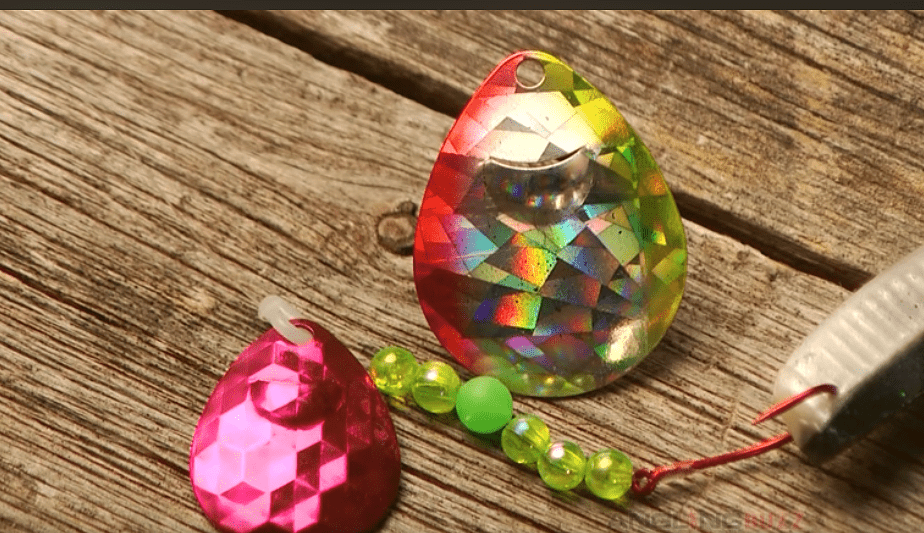
I’ll use a small tungsten worm weight ahead of a barrel swivel. Behind that, I’ll run a spinner with a few beads and a two-hook crawler harness. That’s basically it. You don’t need a big bottom bouncer or a bunch of weight because we’re not trying to keep the bait pinned to the bottom.
I generally like about a four-foot leader on my spinner. You can certainly go longer, but when you’re working around weeds, a longer leader can start dragging down into the vegetation. Four feet keeps everything manageable while still giving that crawler plenty of separation from the weight.
You can tie your own spinner rigs or simply buy pre-rigged harnesses. Either way, the basic presentation remains the same.
Rig Your Nightcrawler So It Runs Straight
How you put the crawler on the hooks is important.
With the first hook, I go through the meaty portion of the crawler’s head, keeping that hook fairly close to the tip. Then I leave a little bow or slack in the crawler before putting it on the second hook. I don’t want that crawler stretched tight between the hooks.
The whole idea is to keep the crawler running naturally rather than spinning wildly behind the blade.
I’ll also usually pinch a little bit off the tail of the nightcrawler. That releases some additional scent into the water, but just as importantly, it reduces the amount of crawler hanging behind that second hook. That helps prevent walleyes from grabbing the very end of the crawler and short-striking the bait.
It’s a little detail, but little details catch fish.
Don’t Overdo the Weight
One of the keys to this entire system is keeping it lightweight.
A quarter-ounce worm weight is plenty in many situations. In fact, you can even use a split shot. Add your swivel, beads, spinner blade, two-hook harness and crawler, and you’re ready to fish.
Remember, we’re not trying to drag this rig along bottom.
We’re trying to suspend the crawler above the weeds, rocks, or other cover where walleyes can see it and move up to eat it.
That’s what makes this presentation so good around summertime vegetation.
Target the Weedline
A lot of the lakes I fish during summer have good weed growth, and those weedlines can hold a pile of walleyes.
In the example we’re talking about here, I’m working approximately 10 to 13 feet of water and simply trolling along the edge of the weeds. The spinner and crawler stay suspended above the vegetation where they’re visible to fish hiding below.
On clear-water lakes especially, walleyes can see that spinner from a surprising distance. They’re also able to detect the vibration of the blade.
Those fish don’t necessarily have to be swimming around out in the open. A walleye can be sitting down in the weeds, sense that spinner coming overhead, and shoot up out of the vegetation to crush the crawler.
That’s exactly what we’re trying to make happen.
Keep Your Trolling Speed Consistent
If there’s one thing you really want to pay attention to with this technique, it’s boat speed.
I’m generally trying to stay around 1.2 to 1.5 mph, with that 1.2 to 1.4 mph range being a really good target.
You can troll straight downwind or quarter the waves depending on the conditions, but whatever direction you’re traveling, concentrate on maintaining that speed.
Why?
Because speed controls the entire presentation. It affects how the spinner blade turns, how high the rig rides in the water column, and how naturally that crawler travels behind the boat.
Once you start catching fish, pay attention to exactly how fast you’re moving and try to duplicate it.
Keep the Bait Close to the Boat
Another mistake anglers can make is thinking they need to let out a tremendous amount of line.
You don’t.
I’ll generally throw the rig out behind the boat and run about 40 to 60 feet of line, with 50 to 60 feet being plenty in most situations.
That’s enough distance to get the bait away from the boat while still giving you good control over the presentation.
Remember, you’re fishing a relatively light weight in fairly shallow water. If you start letting out a huge amount of line, you’re going to lose some of that control and potentially allow the rig to get down into the weeds.
Dealing With Floating Weeds
During midsummer, you’ll often have loose pieces of vegetation floating around on the surface. Those weeds can collect on your fishing line and eventually slide down to your spinner.
There’s an easy fix.
I simply put the rod tip underneath the surface of the water. By keeping the fishing line below the floating debris, most of that junk passes right over the top instead of catching your line and fouling the presentation.
It’s another small adjustment that allows you to spend more time fishing and less time cleaning weeds off your rig.
You Don’t Need Complicated Electronics
Electronics are incredible tools, and I use them all the time, but one of the cool things about this particular technique is that it doesn’t have to be complicated.
If you can visually identify the weedline, you can simply troll along the outside edge.
Find that transition where the vegetation starts dropping away into deeper water, get your spinner running just above the weeds, establish the right speed, and start covering water.
That’s it.
Sometimes summertime walleye fishing really can be that straightforward.
A Great Presentation for the Dog Days of Summer
You hear anglers talk about the “doldrums of summer” all the time. The water is warm, the weeds are thick, and sometimes people assume the walleyes are going to be difficult to catch.
That’s exactly when I like pulling these lightweight inline spinners.
You’ve got a presentation that allows you to cover water efficiently, stay relatively snag-free, and put a spinner and crawler right over the tops of those summertime weeds.
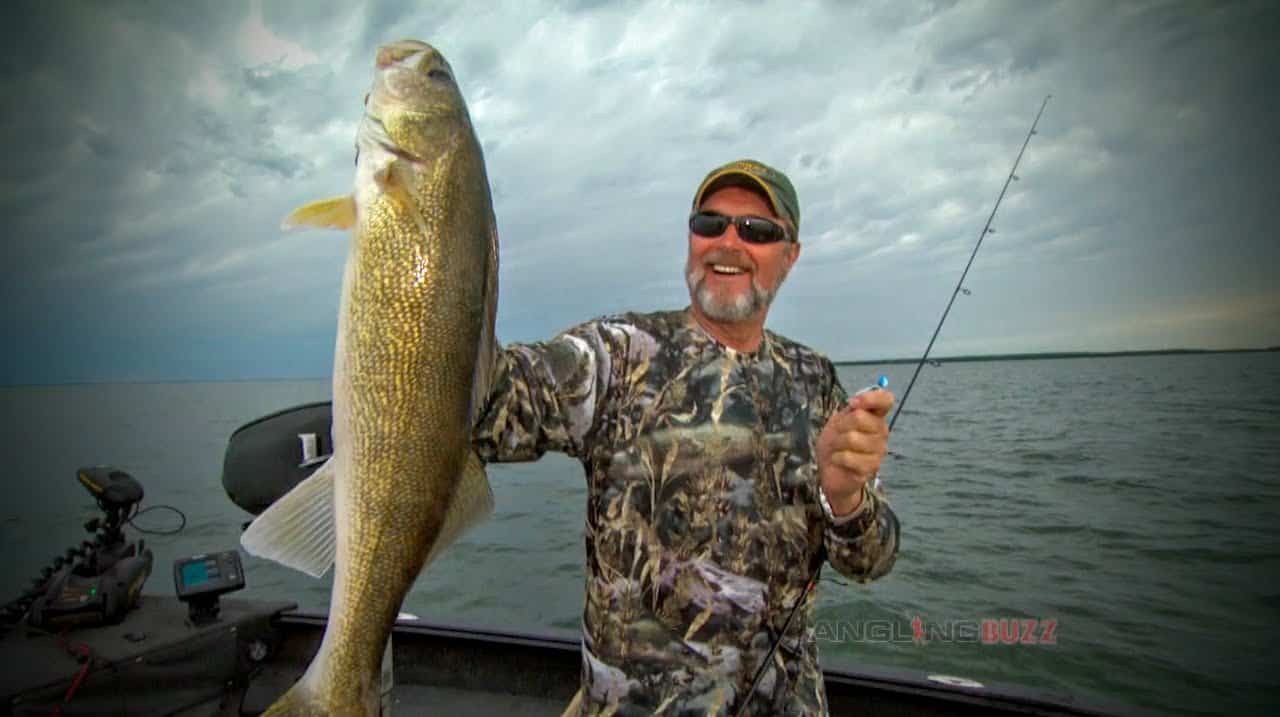
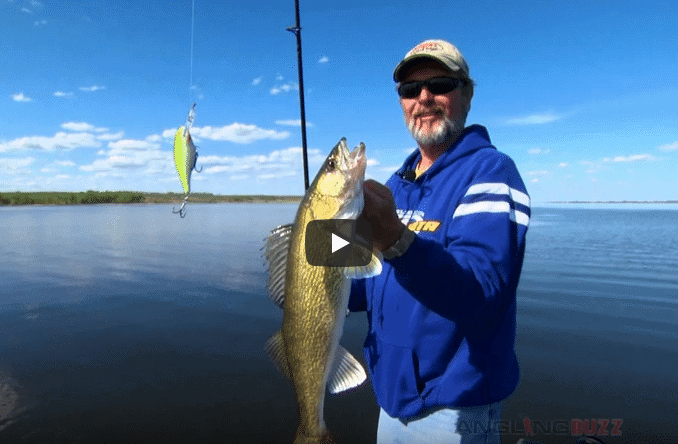
And don’t be surprised by what else eats it. This isn’t exclusively a walleye presentation. A spinner and crawler catches just about everything that swims.
But for summertime walleyes, it’s hard to beat.
Keep the rig simple. Use a lightweight worm weight or split shot, a short spinner harness and a properly rigged nightcrawler. Troll roughly 40 to 60 feet behind the boat, keep your speed around 1.2 to 1.5 mph, and follow the weedline.
When those weeds get thick and other anglers start complaining about the slow days of summer, that’s the time to put on an inline spinner and start catching fish.
- St. Croix Rods → https://stcroixrods.com
- Daiwa Reels → https://alnk.to/8tSErGP
- Sufix Fishing Line → https://alnk.to/7qo6yNP
- VMC Hooks→https://alnk.to/4BJYRKZ
- Lund Boats→https://www.lundboats.com
- Minn Kota→https://alnk.to/ge9ZBBQ
- Humminbird→https://alnk.to/6bYNH7N



Comments are closed.