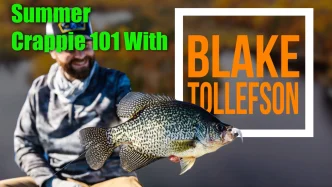


Summer crappie fishing can be one of the most overlooked bites of the year. Crappies get plenty of attention in the spring when they slide shallow to spawn, and they get a lot of attention through the ice. But once the fish leave the shallows and lose that predictable spring pattern, a lot of anglers simply stop chasing them.
That does not mean the fish quit biting. It usually means they moved just enough to make anglers work a little harder.
In this podcast episode with Blake Tollefson, the conversation focused heavily on how to find and catch summer crappies after the spawn. The biggest takeaway is simple: summer crappies are still catchable, but you need to think in terms of weed lines, nearby cover, suspended fish, clean presentations, and depth control.
Where Do Crappies Go in the Summer?
One of the biggest mistakes anglers make is assuming crappies disappear after the spawn. In reality, many of those fish do not move as far as people think.
A good starting point is the closest weed line, dock structure, wood, or deeper cover near where those fish were spawning. Early in the summer, crappies may only slide a short distance from the shallow areas they used in spring. As summer progresses, they often continue working deeper, especially on clear lakes with defined weed edges.
On many natural lakes, the deep weed line becomes one of the most important areas to search. If the weeds top out in 10 to 12 feet of water, fish may be in the weeds, on the edge, or suspended just outside of them. On stained or shallow lakes, the weed line may stop much shallower, which can push fish toward wood, basin edges, or open-water roaming areas.
The key is not to get stuck fishing the exact shoreline spots where crappies were spawning. Once the spawn is over, start sliding out and looking for the next available cover or structure.
Start With the Weed Edge
If you are trying to find summer crappies, the weed edge is usually the first place to check.
Crappies love cover, and during the summer that often means weeds or wood. A deep weed edge gives them shade, ambush cover, and access to food. It also gives anglers a high-percentage place to begin searching.
Modern electronics make this easier. Side imaging and forward-facing sonar can quickly show whether fish are using the weed edge, suspending outside of it, or roaming farther into open water. But even without forward-facing sonar, you can still cover water effectively by casting or slowly trolling along the weed edge until you contact fish.
The important thing is to search, not sit still. Summer crappies can be grouped up, but they can also roam. Once you find one or two, slow down and work the area more carefully.
The Best Summer Crappie Presentation: A Jig and Plastic
For summer crappies, it is hard to beat a simple jig and plastic. Blake’s main confidence presentation is a small jig paired with a paddle tail, straight tail, or similar soft plastic.
A 1/16 oz jig is one of the best all-around starting points. It is heavy enough to cast, light enough to swim naturally, and versatile enough to fish both shallow and moderately deep water. In shallower water or when fish are high in the water column, a 1/32 oz jig can be a better fit. If fish are deeper, the wind is pushing your line around, or you need to fish faster, stepping up to a 1/8 oz jig can make sense.
The biggest key is not the exact jig weight. It is knowing where that jig is in the water column.
Crappies are often suspended. If you are constantly catching bluegills, rock bass, or bottom-oriented fish, you may be fishing underneath the crappies. A better approach is to keep your bait slightly above the fish and swim it through the strike zone.
A bait like the VMC Moon Fly Jig also fits perfectly into this conversation because it brings back the classic hair jig profile in a modern package. Hair jigs are efficient, subtle, and do not require constant re-rigging like soft plastics. When crappies are willing to eat a swimming jig, a small hair jig can be an extremely clean way to catch them.
Less Is More When Swimming Jigs
When people pick up a jig rod, they naturally want to jig it. But for summer crappies, a steady swimming retrieve is often better than constant rod movement. Cast the jig out, count it down to the right depth, hold the rod around the 10 or 11 o’clock position, and slowly reel it back.
That simple retrieve keeps the bait moving naturally and helps it stay in the strike zone. A paddle tail already has built-in action. You do not need to snap it, hop it, or overdo it. Many times, the best thing you can do is keep the bait moving steadily just above the fish.
Forward-facing sonar has made this even more obvious. Anglers can now watch how crappies react to a bait, and many times they respond better to something swimming cleanly past them than something falling, popping, or darting all over the place.
Why Micro Braid Has Changed Panfishing
Light braid has completely changed how anglers fish small jigs for crappies.
Compared to traditional monofilament, ultra-thin braid casts farther, handles better on small spinning reels, and provides much better bite detection. That matters when you are throwing light jigs, especially 1/32 oz or 1/16 oz baits.
A line like Sufix Revolve Ultra Thin Finesse Braid is a strong fit for this style of fishing because it is built around the exact advantages discussed in the episode: long casts, small diameter, sensitivity, and better control with lightweight presentations.
High-vis braid can also help you see bites. Sometimes with crappies, you will not feel a hard thump. Instead, the line may simply jump, tick, or move unnaturally. That visual bite detection is a major advantage.
Most anglers will still want to add a light fluorocarbon leader. A 4 lb leader is a good starting point for jig and plastic fishing. For jerkbaits and hard baits, stepping up to 6 lb, 8 lb, or even heavier fluorocarbon can help prevent the bait from fouling in the hooks.
Panfish Rods Matter
Modern crappie fishing is far more technique-specific than it used to be. Anglers are no longer limited to cheap ultralight rods and basic live bait setups. Today, panfish rods are built with the same level of detail we expect from bass and walleye rods.
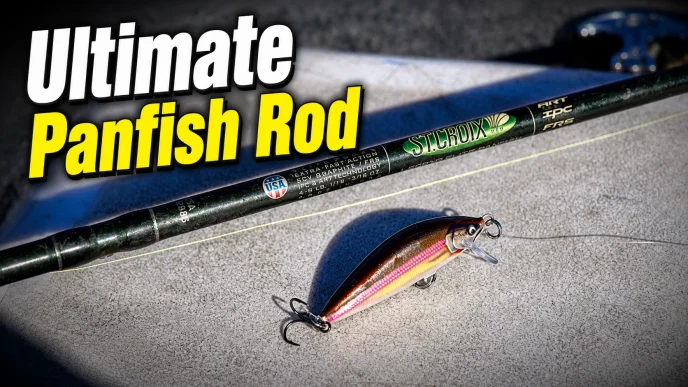
For swimming jigs, casting light plastics, and working small hard baits, a 7’ light extra-fast spinning rod is one of the most versatile options. It gives you casting distance, sensitivity, and enough control to manage light line and small baits.
The St. Croix Legend Elite Panfish is a premium option for anglers who want a high-end panfish rod with excellent sensitivity and responsiveness. For a more approachable but still high-quality option, the St. Croix Avid Series Panfish is a great fit, especially for anglers who want a serious crappie rod without jumping all the way to the top of the lineup.
Pairing one of those rods with a lightweight reel like the Daiwa Luvias ST Spinning Reel creates a very refined setup for small jigs, finesse plastics, and light braid applications.
Do Not Be Afraid of Hard Baits
Crappies are capable of eating much bigger baits than many anglers realize.
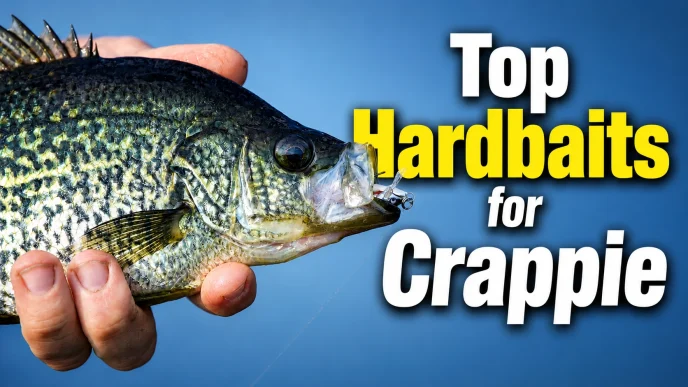
Small plastics are great for numbers, but hard baits can be excellent tools for targeting bigger fish. Jerkbaits, Jigging Raps, and lipless rattle baits all have a place in a serious crappie system.
The Rapala X-Rap is a great example of a bait that can shine when crappies are shallow enough to reach with a suspending jerkbait. This is especially strong in spring, but there are also summer windows where fish are high enough in the water column to eat a jerkbait well.
When fish slide deeper or start using basin areas, a bait like the Rapala Jigging Rap can be a great way to fish faster and trigger bigger crappies. It gets down quickly, fishes efficiently, and has an aggressive darting action that can appeal to larger fish.
A lipless bait like the Rapala Ultra Light Rippin’ Rap is another strong option when you want a compact bait with vibration, flash, and a more aggressive profile. These types of baits may not always catch the most fish, but they can be great tools when you are trying to find better-quality crappies.
A Simple Summer Crappie System
Summer crappie fishing does not need to be complicated. Start near the areas where fish spawned, then work toward the closest weed lines, wood, docks, or deeper cover. As the season progresses, keep checking deeper edges and nearby open-water areas.
Once you find fish, focus on depth control. Keep your jig above them, swim it steadily, and resist the urge to overwork the bait. Use light braid to increase casting distance and bite detection. Match it with a good panfish rod that can cast small baits, protect light line, and still drive hooks home.
Then, when you want to target bigger fish or cover water differently, mix in hard baits like jerkbaits, Jigging Raps, and small lipless crankbaits.
The biggest lesson is that summer crappies are not gone. They are just using different areas than they were in the spring. Once you adjust your search and presentation, summer can become one of the most fun and underrated times of year to catch crappies.