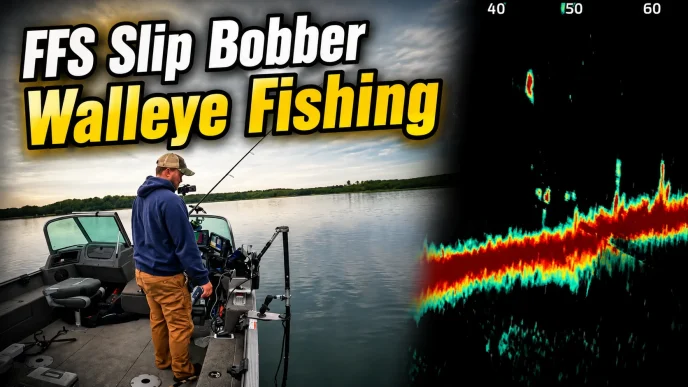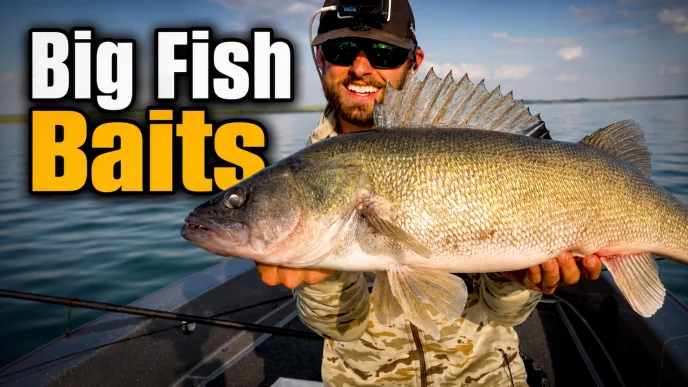
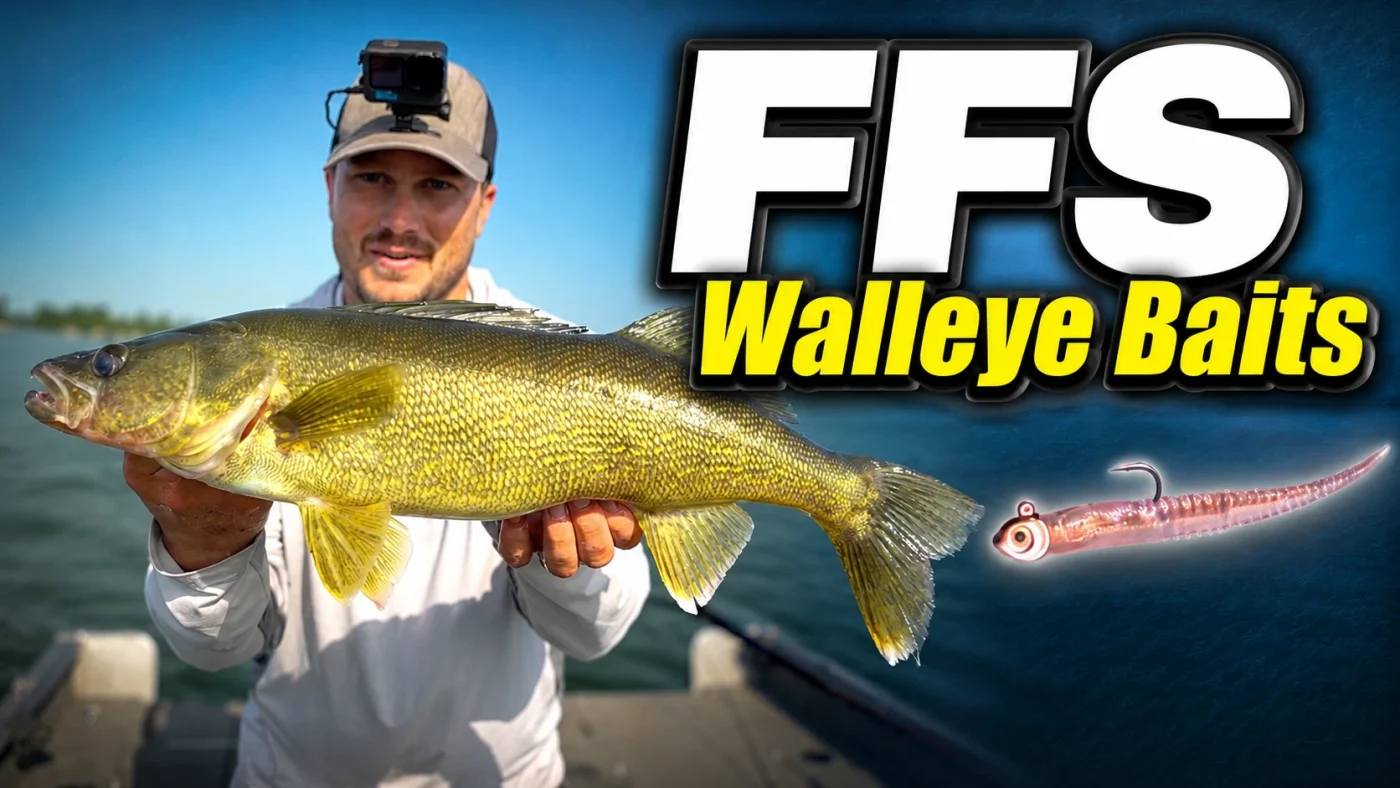

Forward-facing sonar has changed the way a lot of anglers target suspended walleyes. Instead of guessing where fish are positioned in the water column, anglers can now see individual fish, watch how they react, and make small adjustments to get more bites. One of the best presentations for this style of fishing is a larger plastic bait, especially when walleyes are feeding on bigger forage like smelt, ciscoes, shiners, or young-of-the-year baitfish.
Big plastics may sound oversized to some walleye anglers, but “big” is relative. A 4-inch swimbait or minnow-style plastic can feel large compared to traditional jig-and-minnow or finesse plastics, yet it can be the perfect size when walleyes are looking up and chasing larger bait.
Matching Plastics to the Fishery
On bigger bodies of water with smelt or cisco populations, a 4-inch paddle tail can be a great starting point. Paddle tails push water, create vibration, and give off a strong swimming profile that can help suspended walleyes track the bait from a distance. That makes them especially valuable when you are casting to fish you can see on forward-facing sonar or using the bait to search open-water structure.
A bait like the Rapala CrushCity The Mayor Swimbait fits this style well because it has the profile and tail action needed for a steady retrieve. It can be cast past the fish, counted down, and brought through the strike zone with a slow, controlled swim.
On smaller lakes or when fish are more neutral, a straight-tail minnow-style plastic can be a better option. These baits are more subtle and do not always need to be snapped, twitched, or shaken in place. Sometimes the best move is simply to cast beyond the fish and slow roll the bait above its head.
That is where a bait like the Rapala CrushCity Freeloader can be a good fit. It gives you a more natural minnow profile and works well when walleyes are following but not committing to a harder-thumping paddle tail.
The Slow Roll Presentation
One of the biggest takeaways with big plastics for suspended walleyes is that the bait does not always need a lot of extra action. With forward-facing sonar, it is tempting to overwork the bait because you can see the fish reacting in real time. But a slow roll can be one of the most effective ways to trigger a bite.
The key is to cast past the fish, let the bait get to the right depth, and then swim it just above the walleye’s eyes. Walleyes are built to feed upward, so keeping the bait slightly above them often creates a better response than running it too low. If you can tell which direction the fish is moving, try to bring the bait across its path instead of directly at it.
When everything lines up — the right bait, the right angle, and the right retrieve speed — those suspended fish can crush a plastic.
Why Jig Weight Matters
Jig weight is one of the most overlooked parts of fishing big plastics for walleyes. Many anglers think about bait size first, but the jig head controls how deep the bait stays during the retrieve. If you are trying to fish a walleye that is 15 feet down with a light jig, the bait may rise too quickly as soon as you start reeling.
That is why heavier jig heads are so important. A 1/2-ounce jig is often a good starting point, but there are times when a 3/4-ounce or even heavier head is needed to keep the bait down and maintain the right swimming depth.
The VMC Tungsten Moon Eye Jig is a good option when you want a compact, dense jig head that still gets down quickly. Tungsten helps keep the profile smaller while adding weight, which can be useful when fish are deeper or when you need better control of the bait.
For swimbait-style presentations, the Northland Smeltinator Jig is another strong option. It pairs well with larger plastics and is built for fishing minnow-profile baits through open water, around baitfish, and over structure.
Big Plastics as a Search Tool
Even if you do not have forward-facing sonar, a heavy paddle tail can still be a great search bait. Because you can cast it a long way, keep it deeper in the water column, and move quickly, it allows you to cover humps, points, edges, and open-water areas without slowing down too much.
This is especially helpful for anglers who like fishing reaction baits. Instead of sitting on one spot for a long time, you can make a few casts, work the bait through the most likely zone, and move on if nothing reacts. When walleyes are aggressive or chasing bait, this can be a very efficient way to find active fish.
It’a About Control
Fishing big plastics for suspended walleyes is all about control. The plastic needs to match the forage and mood of the fish, but the jig weight and retrieve speed are what keep that bait in the strike zone.
Start with a 4-inch paddle tail when fish are feeding on larger bait or when you want a stronger reaction presentation. Switch to a straight-tail minnow-style plastic when walleyes are more neutral or need a subtler look. Most importantly, use enough jig weight to keep the bait down and swim it just above the fish.
Whether you are watching fish on forward-facing sonar or using a heavy swimbait to search new water, big plastics can be one of the most exciting and effective ways to catch suspended walleyes.