
When it comes to jig-and-crawler walleye fishing, small gear choices can make a big difference. Line type, reel size, spool speed, and how quickly you can pick up slack all play into how many bites you get… and how many fish you actually land.
For Frank Weeda, one of the most important starting points is simple: always have an 8-pound mono rod ready. While braid with a fluorocarbon leader has its place, especially when fishing deeper water, mono can be a major advantage when walleyes are being picky.
Why 8-Pound Mono Gets More Bites
Frank’s reasoning is straightforward. Braid is incredibly sensitive, but that sensitivity works both ways. It telegraphs the bite to the angler, but it can also telegraph the angler back to the fish. When a walleye grabs the bait, it may feel that direct connection and drop it faster.
With monofilament, there is more stretch and a duller feel. That gives the fish a little more time to hold onto the bait without immediately feeling resistance. For jig and crawler fishing in northern Minnesota, Frank says 8-pound mono is where he starts every time.
A quality mono like Sufix Advance Monofilament Line is a great fit for this presentation. It provides the stretch, manageability, and forgiveness that can help with light-biting walleyes.
When Braid and Fluorocarbon Make Sense
Mono is not always the best choice. If walleyes are in open water and sitting 25 feet down, mono can feel slow because it takes longer to get the bait into the strike zone. In deeper situations, braid with a fluorocarbon leader can help you stay more connected and fish more efficiently.
That is why having both setups ready is so important. Mono shines when fish are shallow, pressured, or finicky. Braid and fluoro shine when depth, feel, and direct contact become more important.
Why Reel Size and Speed Matter
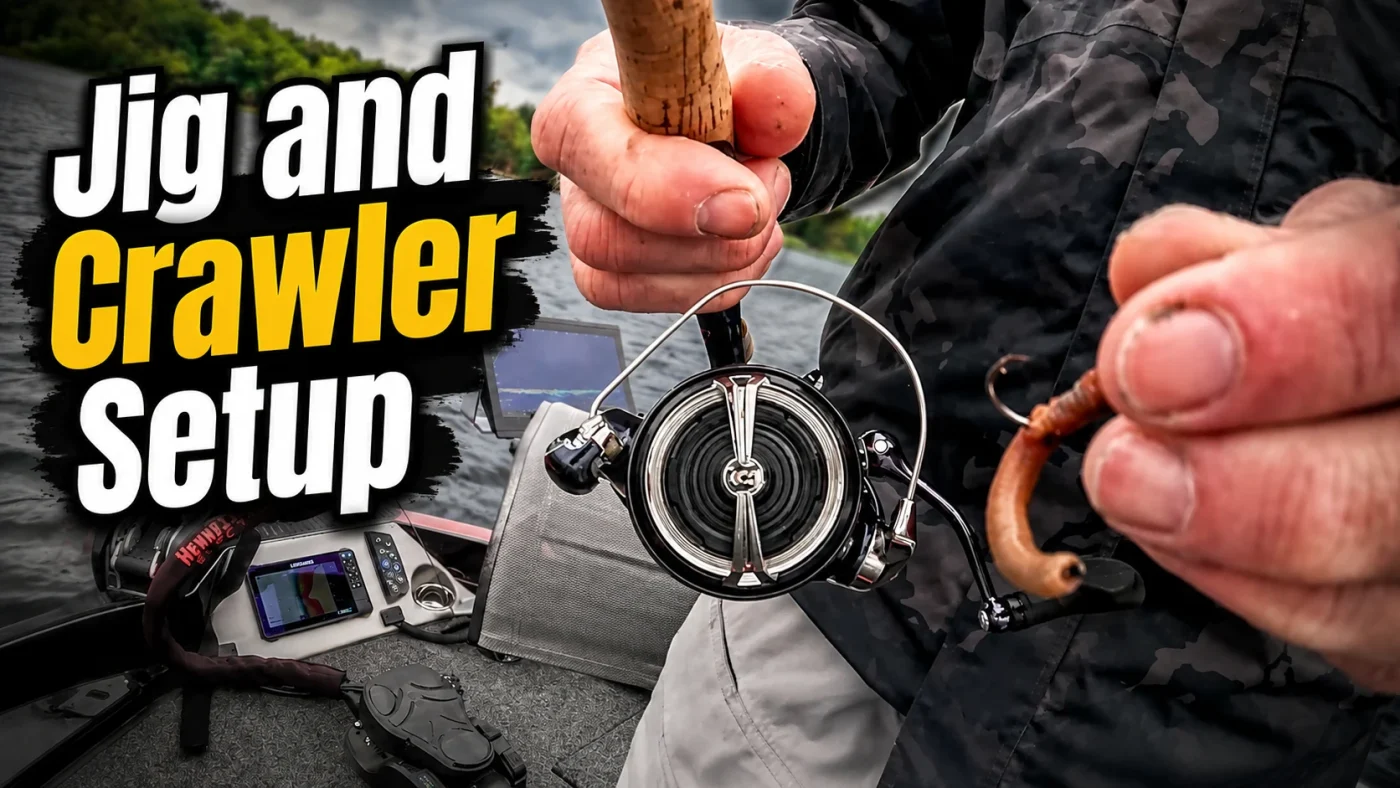
Frank also prefers a larger spinning reel, often a 3000 size, because the larger spool improves casting distance and line management. A faster reel is also important for quickly picking up slack.
This matters for jig and crawler fishing, but it also matters for slack-line techniques like jigging raps. When a fish hits on slack line, a high-speed reel helps you get tight faster and avoid missing the bite.
The Daiwa Tatula MQ LT Spinning Reel is a strong option for anglers who want a lightweight, smooth, high-performance spinning reel. The Daiwa Prorex X LT Spinning Reel is another good choice for anglers looking for a dependable spinning reel setup for walleye fishing.
Don’t Overcomplicate It
The best jig-and-crawler walleye setup is not complicated, but the details matter. Start with an 8-pound mono rod for shallow or neutral fish, keep a braid-to-fluorocarbon setup ready for deeper water, and use a fast 2500 or 3000 size spinning reel to improve casting distance and slack pickup.
Those small adjustments can help you get more bites, stay more efficient, and land more walleyes.