
Rigging a boat with new electronics is one of the biggest investments many anglers will make. Between fish finders, trolling motors, shallow-water anchors, forward-facing sonar, and battery systems, there are many decisions that can affect how well your setup performs on the water. In a recent conversation with Ryan Dechaine, he shared a few key things anglers should think about before buying or upgrading their boat electronics.
Start with the Right Boat Electronics Setup
Selecting an electronics package that aligns with your boat, fishing methods, and financial plan is the essential first step. A massive array of four screens and every possible add-on isn’t necessary for everyone; often, a straightforward, thoughtfully organized configuration proves the most efficient choice for many fishermen.
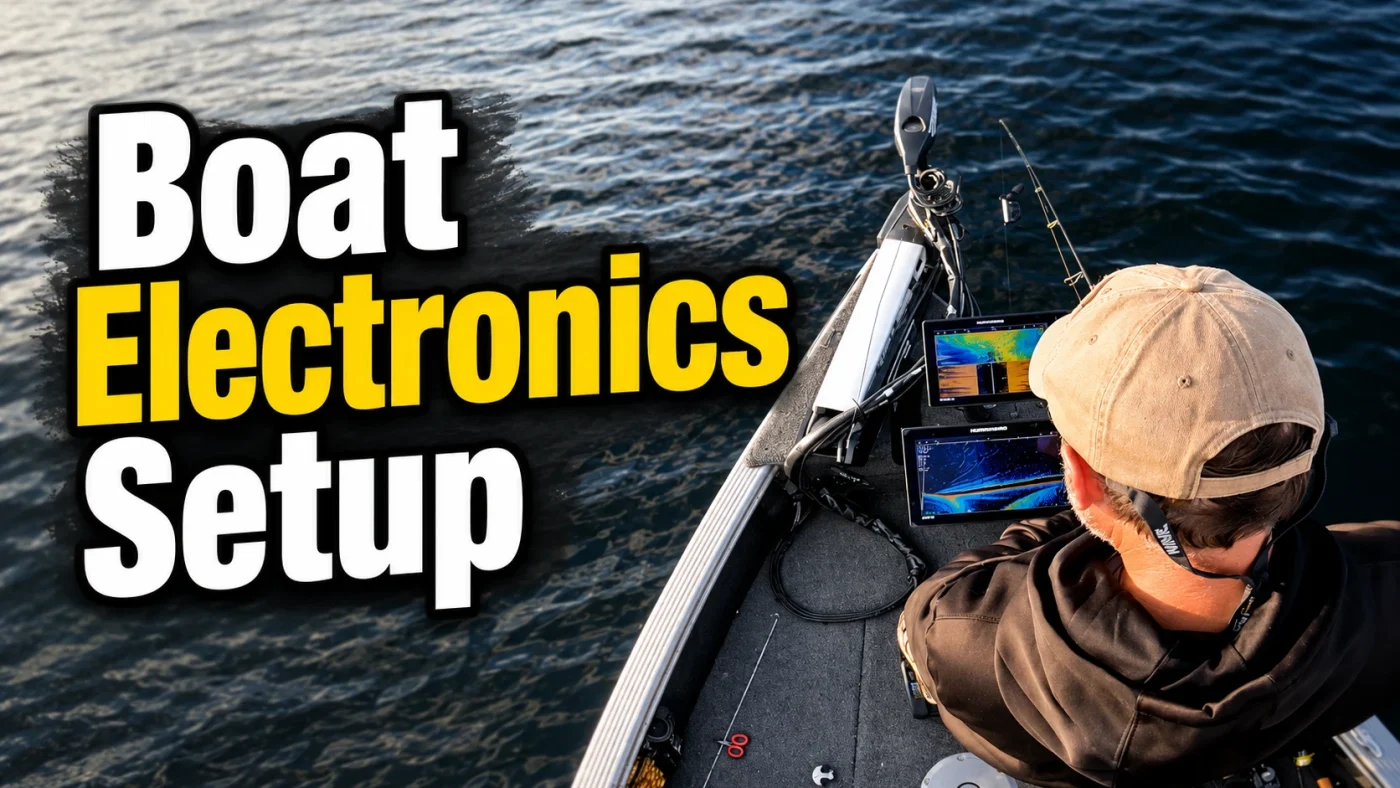
For example, a 10-inch unit at the bow and another 10-inch unit at the console can provide mapping, side imaging, 2D sonar, and networking between screens. This setup gives anglers a strong foundation without overcomplicating the boat-rigging process.
Why Networking Your Fish Finders Matters
Networking is one of the biggest advantages of modern boat electronics. When units are connected properly, anglers can share waypoints between screens, control certain trolling motor features, and make the entire system easier to use.
Pairing electronics with a trolling motor like a Minn Kota Ultrex can allow anglers to mark a spot, hit Spot-Lock, and stay positioned on fish with less effort. For anglers who spend a lot of time moving between structure, waypoints, and specific fishing spots, a connected electronics system can make a big difference.
Plan Ahead for Forward-Facing Sonar
Another important consideration is planning ahead. Even if you are not ready to add forward-facing sonar right away, it may be worth choosing an electronics setup that can support it later.
Buying the biggest screen size you can reasonably afford can also help. Larger screens make it easier to read mapping, sonar, side imaging, and live imaging, especially when multiple views are displayed simultaneously.
Boat Battery Power Is Critical
Power is where many boat rigging problems begin. Today’s electronics draw more power than ever, and anglers need to understand how many amp hours their system requires.
Multiple large screens, live sonar, shallow water anchors, cameras, stereo systems, and other accessories can quickly add up. If the boat does not have enough battery capacity, the system may struggle before the day is over. Taking time to calculate power draw before the install can prevent major headaches later.
Lithium vs. Lead Acid Boat Batteries
Battery choice is also a major part of the conversation. Lead-acid and AGM batteries still work for many setups, especially on the trolling motor side, but lithium batteries have become a popular option because they deliver strong performance in a lighter package.
For smaller boats, lithium can help reduce weight while still offering enough power to run modern electronics. A single lithium battery may also provide more usable capacity in a smaller footprint, which can be helpful when storage space and weight are a concern.
Don’t Overlook Wiring and Fuse Size
Just as important as the battery itself is the wiring. Proper wire gauge, fuse sizing, and clean installation all matter. A system with the wrong wiring or an inadequate power supply can create frustrating issues on the water.
That is why it is often worth listening to experienced boat riggers who understand how electronics, batteries, and accessories work together. Power issues can be difficult to diagnose after the fact, so getting the wiring right during the initial rigging process is important.
Final Thoughts on Rigging Boat Electronics
Whether you are rigging a small tiller boat or upgrading a full tournament-style fishing boat, the main takeaway is simple: plan your boat electronics setup before you start buying gear.
Think through screen size, networking, future upgrades, battery capacity, lithium vs. lead acid options, wire gauge, and fuse sizing. A well-planned boat electronics system will help you get more from your gear and spend more time focused on fishing.