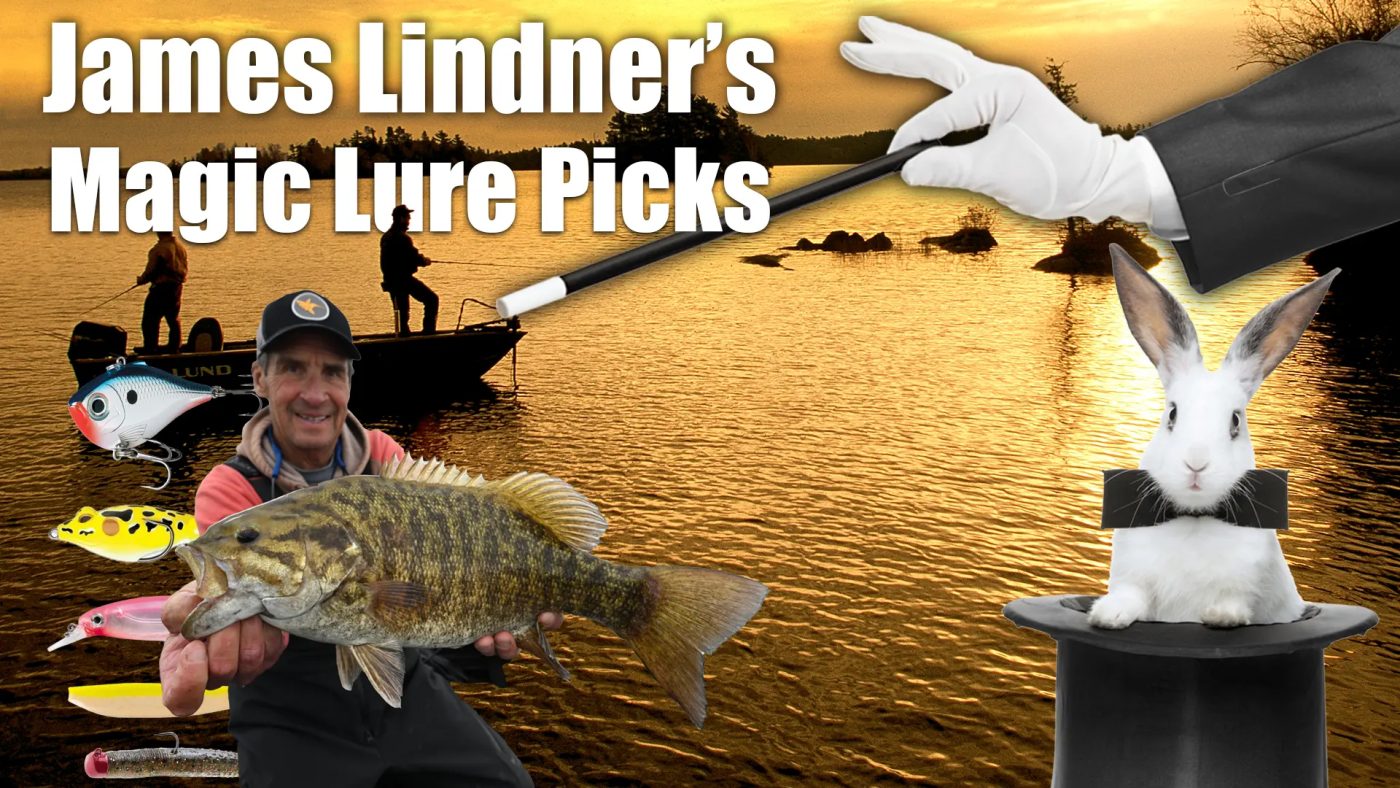

As he continues his path daily for modern angling success, few people can claim a lifetime in fishing quite like James Lindner.
The son of Hall-of-Famer Ron Lindner—and nephew of Al—James grew up fishing on the shores of Grindstone Lake in Wisconsin, where the “electronics” were little more than a rock on a rope. Those early lessons, he recalls, still ground him today, even as he now utilises side-imaging, down-imaging, and forward-facing sonar on a daily basis.
Keys to Modern Angling Success
In just 45 years, the tools of the trade have leapt from the Hummingbird Super 60 flasher to mapping chips that lay every contour in crisp HD. New gear no longer takes a decade to mature; “every year we’ve got new toys,” James says. That acceleration empowers the sport’s younger generation—sometimes dismissed as “flat-brimmers”—who combine hard work with cutting-edge tech to dominate walleye and bass circuits.
Digital Mapping: The Game-Changer You Can Use Before Launch
High-resolution mapping—LakeMaster is James’s benchmark—lets an angler perform seasonal detective work weeks before a trip:
- Identify seasonal zones. Are you fishing post-spawn walleyes on shallow rock points or bug-fed mid-lake humps in midsummer?
- Mark key structures. Use color shading and depth highlights to flag saddles, break-lines, and basins worth a closer look.
- Arrive with a plan. Instead of racing to wet a line, James spends an hour or more cruising the lake, logging waypoints where he sees bait or game-fish arcs. That scouting loop routinely pinpoints “where the majority of the fish are at this point in time.”
“You’re better off to travel around the lake and put down a bunch of coordinates before you start fishing.”
2-D Sonar: The Unsung Hero at 50 mph
Fancy screens aside, James still leans on raw 2-D sonar when running 45–50 mph. It reveals hard bottom, bait schools, and gamefish rises in real time—intel you simply can’t get from stationary forward-facing sonar. Mapping is the scaffolding; 2-D is the radar to cover water fast.
The “Magic-Bait” Mindset
A lure becomes “magic,” James argues, only when you master depth, size, and speed in a specific window:
Frogs—King of Shallow Cover
They shine in lily pads, bulrushes, and emergent grass because no other bait traverses that jungle as cleanly.
Rattle Baits—Wide-Open Water Prospector
From two-foot rock reefs to 30-foot edges, a lipless crank can sweep the entire water column by simply adjusting retrieve speed and rod angle—perfect for locating roaming smallmouth.

Building Confidence: The X-Rap Story
Years of in-field success—from Central American Peacock Bass to Midwestern walleyes—have turned the Rapala X-Rap into James’s Swiss-army-knife. Once you log fish after fish on a lure in multiple scenarios, that confidence snowballs; you fish it better, tweak cadence instinctively, and catch even more.
Jerkbaits at the Bookends
Hard-bodied jerkbaits, shallow or deep-bill, own the shoulder seasons when fish cruise 15 feet or less. As conditions change, new “magic” lures slide in—but only if you understand where they sit on the depth-size-speed triangle.
The Swiss-Army Swimbait
When water temps climb and hard baits fade, James reaches for a 3.5-inch Big Bite Baits Pro Swimmer—and its upsized or downsized cousins: 2″ for crappies, 4″ for walleye or largemouth, 6″ – 8″ when northern pike or muskies prowl. No matter the length, the concept is identical: imitate a vulnerable minnow with a steady, tail-kicking roll. Because predators everywhere eat minnows, a single presentation translates from Lake Vermilion muskies to Ontario crappies to Michigan smallmouth.
Fine-Tuning Weight, Speed, and Drop
The jighead is the steering wheel of a swimbait. A 3⁄16-oz jighead keeps the lure high, perfect for sliding over new weeds or rock spines. Bump up to ½- or 1-oz and it plummets, letting you yo-yo or snap vertically in 30 feet. Last season on a sprawling Michigan flat, simply moving from ¼ oz to 5⁄16 oz transformed “lookers” into biters; the heavier head forced a faster retrieve and tripped the reaction switch.
Conversely, in Sturgeon Bay when bronzebacks were smashing bottom-hugging gobies, James throttled down—ultra-light head, slow roll, the bait ticking sand like a wounded round goby. The same day, walleye anglers on Mille Lacs relied on that cushioned fall to keep a swimbait in a shallow weed window just a heartbeat longer.
Rule of thumb: when the bite stalls, experiment with speed first—sometimes faster is the missing ingredient.
When Faster Beats Slower
Warm-water windows brim with forage, and fish often ignore dawdling meals. High-speed presentations—bucktails for muskies, deep divers ripped across reefs for largemouth, even a lipless crank rocketed over 20-foot boulders for smallmouth—tap a survival instinct that finesse cannot. James reminds: “Depth, size, and speed is a huge aspect in angling.”
The Jigging Rap Revolution
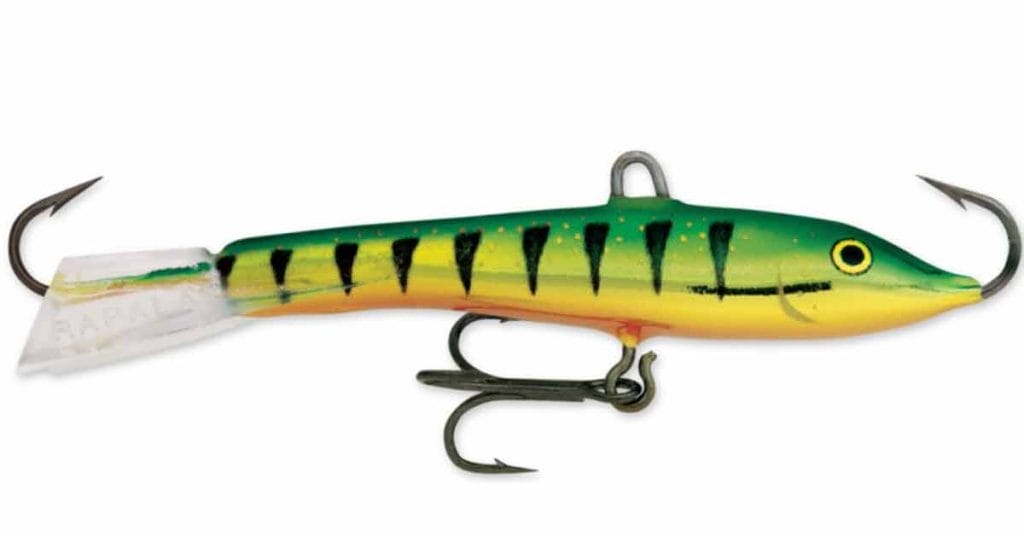
Originally an ice-fishing staple from the 1950s, the Rapala Jigging Rap exploded in open-water popularity about 15 years ago. On mid-lake sand flats 15- to 25 feet deep, Al Lindner described it as “commercial fishing” walleyes: snap hard, drop slack, watch rods load. Its solid-lead body falls fast, making it the ultimate pod-hopping tool—catch one or two fish, mark the spot, and slide to the next school.
And like the X-Rap, species don’t matter: lake trout suspended over 80 feet, whitefish cruising basins, crappies in fall basins, cold-water smallmouth scattered on 35-foot flats—all eat a properly worked Jigging Rap.
A Confidence Finesse for Anyone on Board
Search baits cover water, but when James wants guests to simply catch fish—any fish—he reaches for an ultra-reliable finesse presentation: the Ned Rig
Ned Rig: The “Can’t-Fish-It-Wrong” Finesse Fix
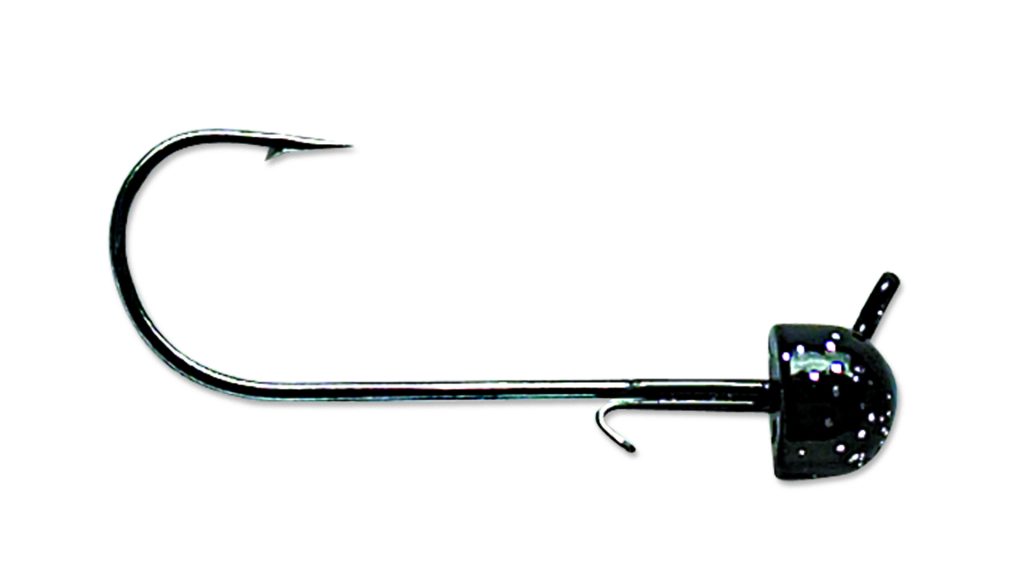
When James wants anyone in the boat—from grandkids to first-timers—to feel a tug, he clips on a 1⁄16–⅛ oz mushroom head and threads up a 2½- to 3-inch buoyant stick worm. Born from Ned Kehde’s Midwest finesse roots, the rig now rides in every tournament pro’s locker, yet its charm is how simple it is:
- Cast, count, and wait. James teaches his grandson to count to ten before the first rod lift; the worm stands tail-up and quivers in place.
- Lighter is better. A too-heavy head lodges in rock and weeds; go just heavy enough to tick bottom in calm conditions, bump up only when wind demands it.
- Universal habitat. Five-foot sand, eight-foot rock, outside weed edges—even deep breaks—all produce because the Ned mimics anything from a scuttling crayfish to a dying minnow.
Speed, again, is the hidden lever. When his wife’s cousins complained that James was catching every largemouth on a Minnesota weed edge, the fix was simple: stop reeling. The bait needed to do nothing and let fish inhale it. The lesson? Dead-stick stillness can be every bit as powerful as high-speed triggers.
Jig-and-Minnow 2.0: Moping, Damiki, and the Forward-Facing Boom
Long before “Damiki rigging” peppered tournament recaps, James and brother Bill were rewriting Rainy Lake record books with a plain soft-plastic minnow on a jig—a technique local guides simply called swimming minnows.
How the Pattern Hatched
- Following the spawn. In practice, the Lindners tracked a school of post-spawn smallmouth that slid daily—from a four-foot bay to 15-foot points to 40-foot basins.
- A vertical eureka. Bill noticed hefty bass four feet under the boat, dropped the jig-minnow straight down, and stuck a 3½-pounder. Four more followed, all suspended well off bottom.
- The forage link. Electronics (flashers back then!) showed clouds of smelt. The smallmouth were pelagic hunters, eyes up, waiting for bait—not bottom-grubbing.
Tournament Domination—and a Fast Fade
For three consecutive seasons the brothers left Day-1 weigh-ins in the lead, simply hovering a minnow-shaped plastic in the strike zone. But when smelt populations crashed, so did the pattern; winning bags shifted overnight to shoreline jig bites as bass raided crawfish and perch instead. The take-away: forage drives everything, and mastering depth-size-speed around what fish eat right now is non-negotiable.
The Technique’s Modern Rebirth
Label it Damiki, hover strolling, moping, or simply minnow-in-their-face: today’s pros pair forward-facing sonar with a ⅜-oz ball head and slim fluke, watch the blip, and let the bait levitate in a fish’s grill. It wins Bassmaster Classics, NWT walleye events, even fuels muskie and crappie guides. The core concept remains identical to that Rainy Lake epiphany:
- Stay above or level with the fish’s eye line.
- Minimal movement—just enough tail shimmy.
- Match the local pelagic forage (smelt, alewives, shad, cisco).
By weaving Ned finesse with high-speed swimbaits and vertical hover tactics, James Lindner shows that depth, size, and speed—not brand names—turn ordinary lures into true “magic baits.”
Ned Rig: The “Can’t-Fish-It-Wrong” Finesse Fix
When James wants anyone in the boat—from grandkids to first-timers—to feel a tug, he clips on a 1⁄16–⅛ oz mushroom head and threads up a 2½- to 3-inch buoyant stick worm. Born from Ned Kehde’s Midwest finesse roots, the rig now rides in every tournament pro’s locker, yet its charm is how simple it is:
- Cast, count, and wait. James teaches his grandson to count to ten before the first rod lift; the worm stands tail-up and quivers in place.
- Lighter is better. A too-heavy head lodges in rock and weeds; go just heavy enough to tick bottom in calm conditions, bump up only when wind demands it.
- Universal habitat. Five-foot sand, eight-foot rock, outside weed edges—even deep breaks—all produce because the Ned mimics anything from a scuttling crayfish to a dying minnow.
Speed, again, is the hidden lever. When his wife’s cousins complained that James was catching every largemouth on a Minnesota weed edge, the fix was simple: stop reeling. The bait needed to do nothing and let fish inhale it. The lesson? Dead-stick stillness can be every bit as powerful as high-speed triggers.
Jig-and-Minnow 2.0: Moping, Damiki, and the Forward-Facing Boom
Long before “Damiki rigging” peppered tournament recaps, James and brother Bill were rewriting Rainy Lake record books with a plain soft-plastic minnow on a jig—a technique local guides simply called swimming minnows.
How the Pattern Hatched
- Following the spawn. In practice, the Lindners tracked a school of post-spawn smallmouth that slid daily—from a four-foot bay to 15-foot points to 40-foot basins.
- A vertical eureka. Bill noticed hefty bass four feet under the boat, dropped the jig-minnow straight down, and stuck a 3½-pounder. Four more followed, all suspended well off bottom.
- The forage link. Electronics (flashers back then!) showed clouds of smelt. The smallmouth were pelagic hunters, eyes up, waiting for bait—not bottom-grubbing.
Tournament Domination—and a Fast Fade
For three consecutive seasons the brothers left Day-1 weigh-ins in the lead, simply hovering a minnow-shaped plastic in the strike zone. But when smelt populations crashed, so did the pattern; winning bags shifted overnight to shoreline jig bites as bass raided crawfish and perch instead. The take-away: forage drives everything, and mastering depth-size-speed around what fish eat right now is non-negotiable.
The Technique’s Modern Rebirth
Label it Damiki, hover strolling, moping, or simply minnow-in-their-face: today’s pros pair forward-facing sonar with a ⅜-oz ball head and slim fluke, watch the blip, and let the bait levitate in a fish’s grill. It wins Bassmaster Classics, NWT walleye events, even fuels muskie and crappie guides. The core concept remains identical to that Rainy Lake epiphany:
- Stay above or level with the fish’s eye line.
- Minimal movement—just enough tail shimmy.
- Match the local pelagic forage (smelt, alewives, shad, cisco).
By weaving Ned finesse with high-speed swimbaits and vertical hover tactics, James Lindner shows that depth, size, and speed—not brand names—turn ordinary lures into true “magic baits.”
Vertical Hovering: When Less Action Triggers More Bites
Early experiments on Lake of the Woods with Jeff “Gussy” Gustafson proved that a perfectly still bait can out-fish an actively jigged one. Hover six feet down in 15–18 ft of water, watch 2-D sonar bloom with rising arcs, and multiples often strike at once. Any shake of the rod tip—or an eager angler’s instinct to “do something”—actually turns fish off. James recalls landing a 12-lb walleye during a smallmouth event by simply dropping the jig-minnow until it vanished from sight, then freezing. The take-away mirrors jerkbait fishing: the pause is the trigger.
Slip-Drifting Beats Spot-Lock
Unlike Al Lindner’s constant trolling-motor adjustments, mopers “walleye drift.” They hover just off a break, lines held half-depth—10 ft down over 20, 14 ft over 28. The boat slides naturally; the lure hangs motionless. Fish rocket up, confirm the silhouette, and commit. Precise depth control (again: depth-size-speed) matters more than rod twitches.
Whiteworming & “Towing a Fluke”
When bass vacate the ledge to chase open-water bait, the crew swaps to a 6–7″ white Culprit worm or fluke on a ¹⁄₁₆-oz head:
- Long line: Cast 60–80 ft behind the boat.
- Ultra-slow troll: 0.3–0.5 mph keeps the bait high, where smelt or cisco roam.
- Big results: Oversized smallmouth, pike, and walleyes inhale the subtle swimmer far from prop wash and hull shadow.
Decoding Fish Suspension—Vertical and Horizontal
Fish suspend two ways:
- Vertical walls. On sheer breaks they line up like soldiers five–eight feet off bottom, using the drop as a reference.
- Horizontal flats. In basins they hover ten feet over 50 ft, often parked above a hard–soft bottom seam invisible to casual sonar scans. Lake Vermilion muskies, for instance, patrol these seams waiting for cisco schools that rise with daily zooplankton migrations. Guides now intercept them year after year on the same GPS dots.
Recognizing these patterns—then placing a bait at the fish’s eye level—separates occasional success from consistent domination.
Forward-Facing Sonar: The Mobility Revelation
Modern live sonar confirmed what the Lindners suspected on flashers: those “static” marks were never static. Walleyes on Mille Lacs, for example, drift five feet under the surface above mid-lake mud, miles from structure. Without forward-facing beams, no angler would drag a leech there. Today, guides like Brad Hawthorne watch the screen, cast to the blip, and boat fish that once went unnoticed.
“Depth, size, and speed never changed—technology just finally let us see how fish move.”
Open-water mysteries keep unraveling, and every new tool rewrites the playbook—but only for anglers willing to experiment, hover, drift, and trust the pause.
One Outfit to Do (Almost) Everything
With sonar shrinking the “hunt” window, the next limiting factor is your rod. James’s pick for a single, go-anywhere combo is:
- Rod: 7-foot, medium-power, fast-action St. Croix Avid (SC-3+ blank, 15-year warranty).
- Reel: 2500-size spinning reel—Daiwa Regal, Revros, or Fuego all balance well.
- Line: 10 lb braid main line to a fluorocarbon leader.
That stick will snap-jig walleyes, skip Ned rigs, bomb swimbaits for lake trout, and twitch jerkbaits for smallmouth—all on one spool.
Why the Avid Tier Makes Sense
The Avid material keeps weight low and sensitivity high without the premium-price sticker of “elite” carbons. Crucially, the blank loads perfectly for both casting distance and fish control; when you lean back to set the hook, it feels like driving a nail with a mallet.
Braid + Fluoro: Durable, Sensitive, Visible
A high-vis braid (white, neon green, yellow) offers three advantages:
- Strike vision. On slack-line presentations—Ned rigs, jerkbaits, pop-jigging—watching the line jump beats “feeling” every time.
- No stretch. Direct contact improves long-distance hook-sets, vital on the ultra-clear, zebra-mussel lakes of the North Country.
- Longevity. One spool of braid can last seasons; add or trim fluorocarbon leaders as needed.
James sprays silicone line conditioner to tame loops, and if twist creeps in he simply runs the braid behind the boat for 30 seconds to straighten it.
The FG Knot Rule
From 150-lb tuna to 8-lb walleye leaders, the FG knot remains James’s go-to braid-to-fluoro connection. Once mastered (cheater glasses optional), it is smaller and stronger than any four-overhand alternative and almost never fails at the knot.
Spinning vs. Baitcasting—Where Each Belongs
Northern anglers often reach for spinning rods to fish jerkbaits—an oddity to southern bass pros—but context matters. Spinning gear excels when:
- Casting into wind with lightweight or wind-resistant lures.
- Slack-line techniques where visual bite detection trumps feel.
- Finesse presentations requiring long leaders and subtle drops.
Modern baitcasters, however, have closed the gap. Daiwa’s SV spool technology, for instance, virtually eliminates backlashes even with big, wind-catching crankbaits. James prefers baitcasters when he needs to:
- “Pull” baits—spinnerbaits, chatterbaits, crankbaits—hour after hour with ergonomic comfort.
- Place pinpoint casts around cover, controlling spool speed by thumb for perfect landings.
In short, let the lure and scenario dictate the tool: spinning for slack-line finesse and distance; baitcasting for power retrieves and surgical accuracy.
Pinpoint Accuracy vs. Depth Control
Bait-casting gear still owns surgical placement. Whether you’re skipping under docks, pitching to submerged wood, or threading gaps in emergent reeds, a thumb-braked spool and short free-fall deliver centimeter-level accuracy that spinning can’t match. James swears by a compact reel and medium-heavy stick when every cast must land tight to cover.
Spinning outfits, by contrast, rule moderate-to-deep water. When precise target casting matters less than dropping a finesse bait 30 feet below—or bombing a long cast over clear flats—the lighter line management of a spinning reel keeps twists low and presentation clean.
Why Today’s Bass Pros Carry Both
Scan any national tour leaderboard and you’ll find spinning rods in every Top-10 boat, even on cover-rich reservoirs like Toledo Bend or Lake Fork. Forward-facing sonar has super-charged this shift: pros now sight-fish individual marks with Neko rigs, Ned rigs, or drop-shots that fall naturally on a spinning outfit. Finesse, stealth, and slack-line bite detection require the controlled drop and bright braid visibility that spinning provides.
Exploring New Water with Digital Scouting
James may live amid Minnesota’s 11,000 lakes, but he rarely launches without a plan. His current shortcut is the OnX Fish™ app, which overlays:
- Stocking and survey data (size structure, trophy ratings).
- Public landings with turn-by-turn navigation to CarPlay.
- Wind overlays, weather, and “best-spot” waypoints.
On weekend “triple-headers,” he can hop from a trophy bluegill pothole to a sleeper bass lake, then finish on a walleye reef—each selected in minutes, not hours of map flipping.
Information: The Newest Piece of Electronics
Mapping chips, 2-D flashers, side-imaging, and live sonar are just layers in a bigger puzzle: information flow. Apps now preload lake composition, key structures, and species densities before you leave the driveway. Once on the water, sonar reveals exactly where fish are—and if they’re willing to bite.
Depth, Size & Speed—The Unbreakable Triangle
Every lure in your box can become a magic bait when you dial in three variables:
- Depth – Is the lure above, below, or level with the fish’s eyes?
- Size – Does it match what they’re eating—minnows, gobies, smelt?
- Speed – Do they want a dead-stick hover or blistering burn?
James’s drill: when fish are already biting, change baits and retrieves. You’ll learn which part of the triangle matters and build confidence for slow days. Forward-facing sonar makes the lesson visual—watch the school react when you alter head weight or cadence.
“It’s easy to fish through a lot of fish and not catch them until you flick the right switch.” —James Lindner
A Final Cast
The blueprint for fishing success has not changed: locate fish efficiently, then match depth, size, and speed until the bite ignites. Pair a versatile 7′ medium spinning combo with bright braid and a fluoro leader, keep a baitcaster ready for pinpoint power casts, and stock your deck with confidence lures—from Ned rigs to swimbaits, Jigging Raps to whiteworms.
Armed with modern electronics, rich data apps, and a willingness to experiment, you’ll turn any lure into a magic bait—and every outing into a master class and fishing experience.