

There’s something special about that first boat ride of the year.
After a long winter, just getting back on the water feels like a win. But when you pair that with warming temperatures, rising water, and fish that are finally starting to move, it turns into one of the best opportunities of the entire season.
That’s exactly what early spring river fishing offers, especially for walleyes.
On this trip, we found water temperatures already pushing into the mid-40s in March, which is more than enough to get fish sliding out of winter patterns and into early spring mode. They’re not locked into one spot yet, but they’re active, feeding, and setting up in predictable areas. And when that happens, a simple, controlled presentation like a Dubuque rig can be incredibly effective.
Why Rivers Shine in Early Spring
Rivers are naturally built to position fish, and that becomes a huge advantage this time of year.
Unlike lakes where walleyes can roam freely or suspend over deep water, current does a lot of the work for you in a river system. Fish relate to it constantly. They use it to feed, conserve energy, and position themselves around structure.
As water temperatures climb into that low-to-mid 40-degree range, walleyes begin transitioning toward pre-spawn behavior. They’re moving more, feeding more consistently, and starting to group up in areas where the current brings food to them.
But not all river conditions are created equal.
Low, stable water might seem ideal at first glance, but it often spreads fish out. Without a strong current to position them, walleyes can be anywhere, which makes them harder to target consistently. On the other hand, rising or higher water levels tend to concentrate fish. Increased flow pushes them toward current breaks, seams, and protected areas where they can hold comfortably while still feeding.
That concentration is what makes river fishing so good when conditions line up.
The Dubuque Rig: A Simple System That Works
When fish are relating to the bottom, and current is a factor, the Dubuque rig, also known as the Wolf River rig, is hard to beat.
At its core, the setup is designed to do one thing really well: maintain bottom contact while presenting a bait naturally just above it. A heavier jig or weight keeps you pinned to the river floor, while a leader line trails behind with a hook, fly, or minnow that moves freely in the current.
It’s not flashy, and it’s not complicated. But it allows you to stay in the strike zone longer than most other presentations, which is exactly what you want when fish aren’t chasing aggressively.
What makes this rig so effective isn’t just the components, it’s how you fish it.
Boat Control and Line Angle: The Real Difference Maker
If there’s one thing that determines success in river fishing, it’s not your bait. It’s not your rod. It’s boat control.
Everything revolves around how your boat moves in relation to the current.
When fishing a Dubuque rig, the goal is to slowly work upstream while maintaining consistent bottom contact. Most of the time, that means moving at a controlled pace, usually somewhere around 0.3 to 0.5 miles per hour. But speed alone doesn’t tell the full story.
The real indicator is your line angle.
A proper presentation typically puts your line at about a 45-degree angle into the water. That angle tells you that your weight is making contact with the bottom while your bait is trailing naturally behind it.
If your line starts flattening out, you’re either moving too fast or not using enough weight. In that case, you’re likely losing bottom contact, which takes your bait out of the strike zone. On the flip side, if your line is going straight down, you’re not moving enough, and your presentation loses that natural drift that triggers bites.
Dialing in that balance is what separates average days from consistent success.
Keeping It Simple with Baits and Presentations
One of the biggest takeaways from early spring river fishing is how little you actually need.
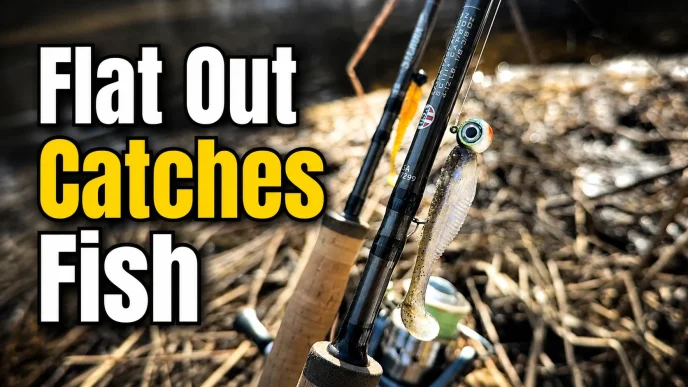
A jig and a plastic, like a Disc Worm, can produce just as well as live bait in many situations. There’s something about that subtle movement in current that walleyes respond to, especially when they’re in a feeding mood. At the same time, a simple hook and minnow on a Dubuque rig is still one of the most reliable ways to catch fish, particularly when conditions are tougher or fish are less aggressive.
The key isn’t having a dozen different options; it’s being willing to adjust based on what the fish are telling you.
Sometimes they’ll thump a plastic hard. Other times, they’ll barely commit unless it’s live bait. Running different presentations or switching things up throughout the day can help you quickly figure out what’s working.
A Practical Setup That Covers Everything
You don’t need specialized gear to fish this way effectively.
A 7-foot medium power, fast action spinning rod is about as versatile as it gets for river walleyes. It gives you enough sensitivity to detect subtle bites, but still has the backbone needed to handle current and heavier weights. Pair that with a 3000-size spinning reel, and you’ve got a setup that offers smooth drag, better line management, and plenty of control without adding extra weight.
For line, a 10-pound braided mainline with a mono leader is a solid choice. High-visibility braid can actually be a big advantage in river fishing, allowing you to see your line angle clearly and make quick adjustments on the fly.
It’s a simple system, but it works across a wide range of conditions.
Why You Should Be Fishing Rivers This Spring
If you’re looking for a reliable way to catch walleyes early in the season, river systems offer one of the best opportunities out there.
The combination of moving water, predictable fish positioning, and simple, effective techniques makes it approachable for just about any angler. You don’t need a complicated setup, and you don’t need to overthink it.
Focus on current. Pay attention to your line angle. Keep your presentation in the strike zone.