

Most anglers judge a fishery by what they catch… or don’t catch. But what happens behind the scenes is far more complex. From hatchery production to habitat limitations, fisheries management is a constant balancing act.
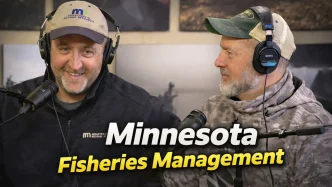
Minnesota DNR fisheries supervisor Scott MacKenthun pulls back the curtain on that process, offering a clear look at how hatcheries, stocking strategies, and lake conditions all work together. With the state investing heavily in the new Waterville hatchery, it’s a good time to understand what actually goes into building better fishing.
The key takeaway? Better fishing isn’t about stocking more fish; it’s about making smarter decisions.
Why the Waterville Hatchery Matters
Minnesota’s new Waterville hatchery represents a major step forward. Backed by roughly $24 million, the facility is designed to modernize fish production with better water control, improved biosecurity, and more flexible rearing space.
Older hatcheries often relied on surface water and outdated systems, making them vulnerable to disease and inconsistent production. Waterville changes that. With groundwater systems and tighter controls, the DNR can produce healthier fish more efficiently.
Just as important, the facility includes a public education component, giving anglers a chance to better understand how fisheries are actually managed.
How Modern Hatcheries Improve Fish Survival
Today’s hatcheries are less about quantity and more about precision. Water quality, temperature, and disease prevention are all tightly controlled, giving fish a better start before they’re stocked.
That control matters. Healthier fish entering the system means better survival rates and stronger returns for anglers down the road. It also allows biologists to adapt production strategies to specific lake needs rather than relying on a one-size-fits-all approach.
What Species Are Being Raised
The Waterville hatchery focuses on three key species: northern pike, walleyes, and muskies.
Pike production is especially important in southern Minnesota, where natural reproduction can be inconsistent. In some lakes, pike are even used to help control rough fish populations.
Walleyes remain the centerpiece, but stocking them effectively requires more than just numbers. Matching fish to the right lakes is critical.
Muskies round out the program, with an increasing focus on raising larger fish that have better survival rates once stocked.
Why Local Walleye Strains Matter
One of the biggest shifts in fisheries management has been the move toward local genetics.
MacKenthun points out that southern Minnesota lakes often perform better when stocked with local strains, like those tied to the lower Mississippi River. In some cases, these fish don’t just survive; they reproduce and sustain populations over the long term.
That’s changed how the DNR approaches stocking. It’s no longer just about sourcing the most eggs. It’s about using fish that are best adapted to the environment they’re going into.
Fry vs. Fingerlings: The Stocking Tradeoff
Not all stocked fish are the same. Fry are tiny and inexpensive, allowing large numbers to be stocked, but survival is low. Fingerlings are bigger, cost more to produce, and survive at much higher rates.
Some lakes respond well to fry stocking, while others require larger fish to overcome predation and environmental challenges. That’s why managers often adjust stocking strategies based on past results and lake conditions.
There’s no universal answer, just different tools for different situations.
Why Some Lakes Will Never Be Great Walleye Lakes
This is one of the hardest truths in fisheries management: not every lake is built for walleyes.
Walleyes need specific conditions, such as cooler water, appropriate light levels, suitable spawning habitat, and structural diversity. If those elements aren’t there, stocking alone won’t fix it.
That’s where expectations can clash with reality. Anglers may want walleyes in their lake, but biology ultimately decides what’s possible.
The Challenge of Managing Expectations
Fisheries management isn’t just science. It’s people.
Every lake has stakeholders with different goals, and not all of them align with what the lake can realistically support. Meanwhile, DNR staff are managing hundreds of lakes with limited resources.
MacKenthun emphasizes transparency. Understanding lake data, management plans, and past stocking results helps anglers see the bigger picture and why certain decisions are made.
Habitat Still Comes First
No matter how advanced hatcheries become, habitat remains the foundation of good fishing.
Stocking can supplement a fishery, but it can’t replace the conditions fish need to survive and reproduce naturally. The best fisheries are still the ones where habitat does most of the work.
Hatcheries are a tool, but not a cure-all.
The Bottom Line
Minnesota’s investment in modern hatcheries like Waterville is a big step forward. It gives fisheries managers better tools, more flexibility, and improved efficiency.
But the real lesson is bigger than that. Great fishing comes from the right combination of habitat, science, and smart decision-making. Not just stocking more fish.
For anglers, understanding that process leads to better expectations and ultimately, better fishing.