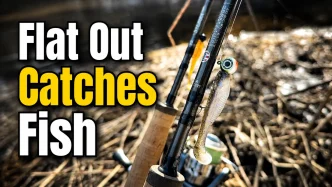


If you could walk into a tackle shop and buy one simple setup that gives you a chance to catch bass, walleye, crappies, pike, trout, and even salmon, a small swimbait rig would be hard to beat.
That is what makes this setup so valuable. It’s not overly complicated. It does not require a pile of specialty gear. It is a straightforward spinning rod, braid-to-fluorocarbon setup, a few jigheads, and a pack of proven paddle-tail swimbaits.
Whether you are new to swimbait fishing or just want a confidence setup that can stay rigged all season, this is one of the most versatile options an angler can own.
The Best All-Around Swimbait Rod Setup
For an all-purpose swimbait setup, start with a medium-light to medium fast-action spinning rod in the 7-foot range.
A medium-light fast-action rod is a great choice for lighter jig heads, smaller swimbaits, and species like crappies, trout, smallmouth, and walleye. It gives you enough tip to cast small baits well, but still has the backbone to handle bigger fish.
If you plan to fish heavier jig heads, deeper water, or larger swimbaits more often, stepping up to a medium-power spinning rod makes sense. That extra power helps when you are fishing 3/8-ounce or 1/2-ounce jig heads, making long casts, or dealing with larger bass, pike, and walleyes.
The goal is to choose a rod that can handle a wide range of bait sizes without being too heavy or too soft.
Line Setup: Braid to Fluorocarbon Leader
A great swimbait setup starts with 10–15 lb braid as your main line.
Braid casts well, has very little stretch, and gives you excellent feel. That matters when you are swimming a jig over rock, grass, sand, or through open water. You can feel the bait working, detect light bites, and drive the hook home with confidence.
From there, add about a six-foot 6–10 lb fluorocarbon leader. Fluorocarbon helps keep the presentation more natural, especially in clear water. It also adds a little abrasion resistance when fish are around rock, wood, weeds, or zebra mussels.
For clearer water or smaller species, lean toward 6-pound fluorocarbon. For dirtier water, heavier cover, or bigger fish, 8- to 10-pound fluorocarbon is a smart choice.
Best Jig Head Sizes for Swimbaits
For this style of fishing, pill-shaped jig heads are a reliable option. A few sizes of pill-shaped jig heads can cover most situations.
For shallow water or slower presentations, a 1/8-ounce or 1/4-ounce jig head is a good place to start. If you are fishing deeper water, current, wind, or need to keep the bait down, move up to a 3/8-ounce. For very deep situations, having a few 1/2-ounce jig heads is helpful too.
The key is matching your jig head to the depth and speed you want to fish. You want the swimbait to stay in the strike zone without dragging too hard or riding too high in the water column.
Why the CrushCity Mayor Is a Go-To Swimbait
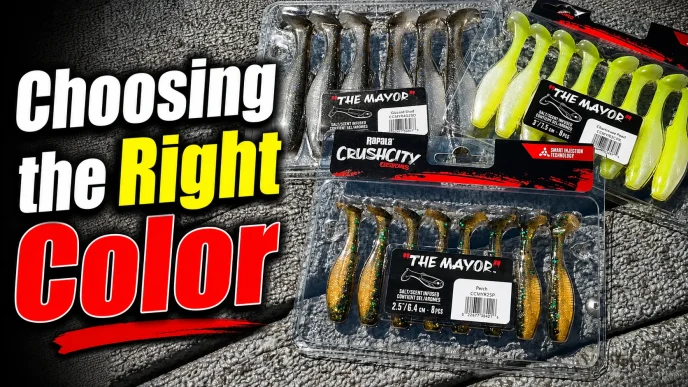
When it comes to the actual bait, the CrushCity Mayor swimbait is a strong all-around choice.
Caleb calls it his favorite all-around swimbait, and for good reason. It has the right profile, action, and size range to catch a wide variety of fish. The 2.5-inch size is especially versatile because almost everything will eat it.
That smaller profile can catch big crappies, bass, walleyes, trout, brown trout, salmon, pike, and more. It may look small compared to some traditional bass or walleye swimbaits, but it is often the perfect bite-sized meal for multiple species.
The 3-inch and 3.5-inch sizes are also great options when you want a slightly bigger profile or are targeting larger fish. For most anglers, carrying a few packs in the 2.5- to 3.5-inch range will cover a lot of water and a lot of species.
Do Crappies Really Eat Swimbaits This Big?
Absolutely.
A lot of anglers think a 2.5- or 3-inch swimbait looks too big for crappies, but crappies are far more aggressive than many people give them credit for. Big crappies will eat larger minnows, small baitfish, and compact swimbaits without hesitation.
That is one of the biggest advantages of this setup. It is not limited to one species. You can be fishing for walleye or bass and still catch crappies, trout, pike, and other fish on the same bait.
A small swimbait on an 1/8- or 1/4-ounce jig head can be a deadly crappie presentation, especially when fish are feeding on minnows or roaming outside of shallow cover.
Best Swimbait Colors to Start With
Color does not have to be complicated. In the video, two standout colors are mentioned: Perch and Electric Shad.
Perch is a great natural option. Even when it does not perfectly match a perch, it can resemble a bluegill or other small baitfish, making it effective in many lakes and rivers.
Electric Shad is another strong choice, especially with its flash and purple flake. It gives fish a little extra target without being too wild or unnatural.
If you are building a simple swimbait box, start with one natural color and one brighter baitfish color. That gives you options for clear water, stained water, sunny days, cloudy days, and different forage types.
A Simple Setup Every Angler Should Own
The beauty of this swimbait setup is its simplicity.
A 7-foot medium-light or medium fast-action spinning rod, 10–15 lb braid, a fluorocarbon leader, a few pill-shaped jig heads, and a couple packs of CrushCity Mayor swimbaits can catch fish almost anywhere.
It is a setup you can use from spring through fall. It works from creeks to lakes to big water. It catches panfish, bass, walleyes, trout, salmon, and pike.
For anglers who want one confidence rig that can do a little bit of everything, this swimbait setup is tough to beat.