The St. Louis River Estuary is one of the most unique and overlooked walleye fisheries in the Midwest. It has shallow flats, shipping channels, dirty water, current, wood, mud, sand, rock, vegetation, and direct influence from Lake Superior. That combination makes it different from a typical inland lake or classic river system.
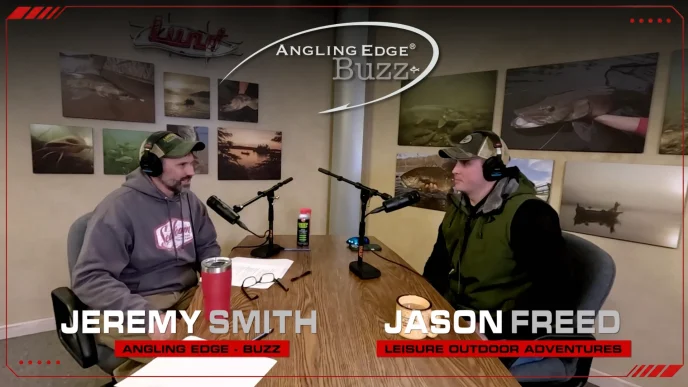
In this Angling Buzz podcast episode, guide Jarrid Houston of Houston’s Guide Service breaks down how he approaches the St. Louis River, Lake Superior’s South Shore, and the wide range of fish that live there. From shallow-water walleyes to cohos, sturgeon, muskies, and big-water trolling, this system has a little bit of everything.
What Makes the St. Louis River Estuary Special?
The St. Louis River Estuary is a massive freshwater system with around 13,000 acres of water on average, though water levels can change depending on wind, weather, and Lake Superior’s influence. Jarrid describes it as almost like the “bayou” of the Great Lakes because of its shallow, marshy, braided layout.
For anglers, that means there are a lot of ways to catch fish. You can troll shallow flats, jig channel edges, cast shorelines, drag baits through current, or fish deeper areas connected to the shipping lanes. The system is constantly changing, which is part of what makes it so productive.
Seasonal Walleye Patterns on the St. Louis River
Spring is one of the best times to catch walleyes in the river. Fish move into the system, and anglers can run into strong numbers and bigger fish. As the season progresses into summer, trolling becomes more important because walleyes spread out and often use large shallow areas.
In the fall, the bite picks back up as fish follow bait back into river areas. Jarrid mentions jigging, casting, dragging soft plastics, and trolling crankbaits as all being part of the program. First ice can also be excellent, especially on shallow flats where even a one-foot depth change can matter.
Shallow-Water Trolling for River Walleyes
One of the most interesting parts of the conversation is Jarrid’s approach to shallow-water trolling. He often fishes in just a few feet of water with long rods, short leads, and baits running close to the boat. In dirty water, walleyes may not spook the same way they would in clear water.
Bottom bouncers and crawler harnesses are a major part of the program. Jarrid likes shorter leaders because the river has wood, weeds, rocks, and other snaggy areas. He also points out that fish will sometimes attack the bottom bouncer itself, which is why keeping the bait tight to the setup can be so effective.
Crankbaits and Wobble Matter
In dirty water, vibration and action can matter more than color. Jarrid talks about wanting a bait with a strong wobble that fish can feel. Jointed minnow baits are a great fit for this style of fishing because they create a lot of movement without needing to run extremely deep.
For anglers looking to match that style, the Rapala Original Jointed Minnow is a classic option. A more modern jointed profile, like the Rapala Balsa Xtreme BX Jointed Minnow, also fits the shallow-water, high-action approach discussed in the episode.
For covering water with a proven walleye crankbait profile, the Rapala Shad Rap is another strong option.
Fishing Lake Superior’s South Shore
Lake Superior can seem intimidating, but Jarrid explains that the South Shore walleye bite is more approachable than many anglers think. In some areas, the depth and structure can fish more like Mille Lacs or Lake of the Woods than people expect.
Early in the season, walleyes may be in 15 to 25 feet of water. Later in summer, they may slide deeper into the 25- to 45-foot range. Water color and temperature changes are key. Dirty water, mud lines, and warmer water can all help concentrate fish.
Long-lining crankbaits can be effective, and planer boards are optional depending on how many lines you want to run. Jarrid’s approach is simple: find fish, make clean passes, and pay attention to how the bait is running.
Coho, Sturgeon, Muskies, and More
The St. Louis River and Lake Superior area is not just a walleye destination. The system also has muskies, pike, perch, crappies, smallmouth, sturgeon, cohos, lake trout, and brown trout.
For spring cohos, Jarrid talks about trolling shallow-running stickbaits and Scatter Rap-style baits. Options like the Rapala Scatter Rap Tail Dancer and Rapala Scatter Rap Glass Shad fit that type of near-surface trolling program when fish are high in the water column.
Boat Control and Safety Matter
Whether you are fishing the river or Lake Superior, boat control is critical. In current, Jarrid likes to face upstream and work baits naturally past fish. On Lake Superior, he stresses picking the right days, watching the wind, and not forcing a trip when conditions do not feel right.
The St. Louis River can also be shallow and hazardous if you do not know where you are going. That is one reason hiring a guide can shorten the learning curve. A good guide helps with navigation, seasonal patterns, and understanding how the system sets up.
A Diverse Fishery
The St. Louis River Estuary and Lake Superior’s South Shore offer one of the most diverse fishing experiences in the upper Midwest. You can catch walleyes in shallow dirty water, troll crankbaits on big water, chase spring cohos, or run into sturgeon and muskies along the way.
For anglers willing to learn the system, it is a fishery worth exploring. Start with simple presentations, pay attention to current and water color, and do not be afraid to cover water.