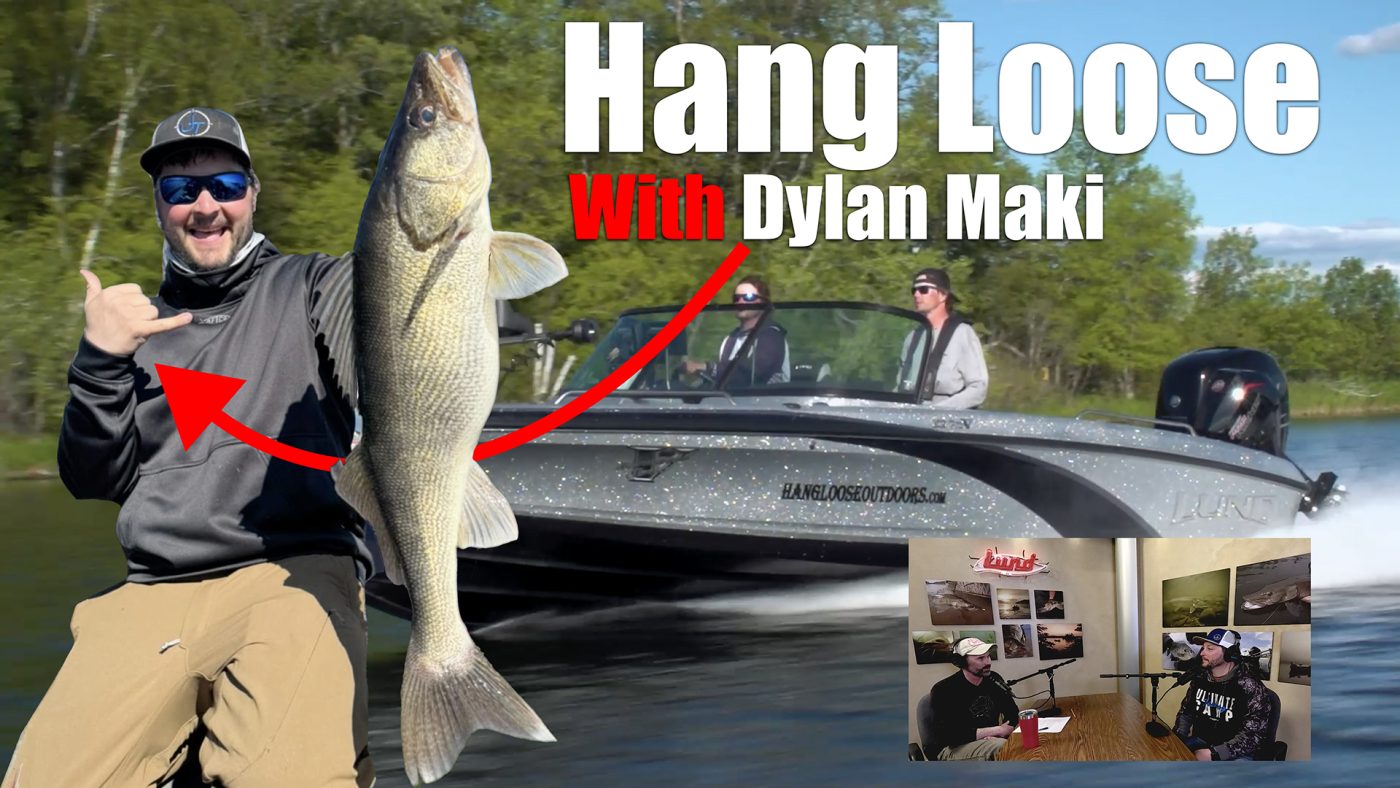

Dylan Maki is a well-known angler from Grand Rapids, Minnesota, who started his fishing career about 10 to 11 years ago after trading in his motocross bike for a fishing rod. Initially a novice, Dylan quickly fell in love with the competitive side of tournament fishing. Under the mentorship of seasoned anglers, he rapidly developed his skills and now stands as a respected figure in Minnesota’s fishing community.

Expert Insights on Walleye Fishing with Dylan Maki
As Dylan highlighted, advancements in technology, particularly forward-facing sonar like LiveScope, have fundamentally changed fishing techniques—especially in clear-water scenarios. In high-pressure fisheries, the key is maintaining distance to avoid spooking the fish. Dylan typically stays at least 30-40 feet from marked fish, adjusting presentations accordingly.
For distant fish—say, around 70 feet—lighter jigs aren’t practical. Instead, Dylan opts for heavier jigging presentations, such as jig wraps, which allow effective casting and control even at greater distances. Conversely, in some less pressured lakes, fish can be approached directly, allowing vertical presentations right beneath the boat.
Essential Walleye Gear and Presentations for Mid-Summer
During the consistent mid-summer bite, Dylan typically keeps several rigs ready to maximize versatility:
- Slip bobber setups: At least two rods prepared, accounting for inevitable tangles.
- Quarter-ounce jigs: Ideal for various live bait presentations.
- Jigging Rapalas (sizes #7 and #9): Highly effective for reactive fish.
- Berkley Finishers: A newer presentation that’s proven successful lately.
Detailed Breakdown: Slip Bobber Technique and Gear
Dylan emphasizes the importance of using specialized gear for effective slip bobber fishing. Initially, he utilized the JT 9’2 Telescoping Snare rod, but he has since switched to the slightly shorter and more manageable 8-foot snare. Its slow action excels in launching lightweight setups smoothly, preventing premature bait loss during casting.
He stresses the importance of gentle casting techniques—rapid casts typically result in bait loss. Dylan recommends heavier tungsten weights (1/4 to 3/8 ounces) to achieve quicker sink rates in deeper water, allowing for efficient presentations. Adjustments are made based on depth, with lighter sinkers (1/8 ounce) suited for shallower scenarios.

Maximizing Efficiency and Versatility in Tournaments
In tournament settings, efficiency is crucial. Dylan emphasizes quick decision-making and rapid bait presentations. If a targeted fish doesn’t bite within 10 seconds, he quickly moves to another target. Slip bobber setups are versatile, effectively delivering leeches, crawlers, or even chubs, depending on fish behavior and lake preferences.
Leader Length and Preventing Tangling Issues
Leader length is critical for avoiding tangles—Dylan prefers approximately two-foot leaders. Longer leaders frequently create tangling issues. To reduce tangling, particularly when using a plain hook, Dylan suggests adding split-shot weights every six to eight inches along the leader line.
Precision Depth Adjustment Using Forward-Facing Sonar
When targeting fish with forward-facing sonar, Dylan carefully tracks the depth of each presentation. He mentally notes the precise depth adjustments required between casts. Depending on fish activity, the bait might need to be presented precisely at, slightly above, or occasionally even below the fish. Dylan shared a striking example from Leech Lake where a fish rose over 16 feet from the bottom to take a bait set much shallower than its location, emphasizing the variability of fish behavior and the advantage of modern sonar technology.
Seasonal Changes in Techniques and Baits
Slip bobber fishing, once less favored, has resurged prominently in recent years. Dylan notes that while slip bobbers excel earlier in the season, their effectiveness tapers off post-mayfly hatch when water temperatures rise to around 70°F or higher, prompting a shift towards more active presentations.
At this stage, Dylan prefers more aggressive jigging techniques. Both plastics and crawlers can be effective. He mentions a preference for Zoom split-tail plastics, which offer significant action and attraction. Although he enjoys the Keitech Easy Shiner paddle tail, Dylan observes mixed success and speculates that retrieving speeds required for optimal paddle-tail action might influence fish responses.
Nuance and Precision: Fine-Tuning Jigs, Plastics, and Line
As Dylan Mackey explains, jig and plastic presentations may appear simple, but there’s far more nuance involved than many anglers realize. It’s not just about slapping on a jig and tossing it out—details like the line tie angle (such as a 60-degree line tie) can dramatically affect how much “rock” or erratic movement a bait gets. Pair that with the shape of the plastic, such as a split tail, and you have a highly customizable, precision setup for tempting pressured fish.
Line Choice: A Return to Monofilament
Perhaps one of Dylan’s most unconventional choices in today’s fishing scene is his preference for monofilament over braided line, especially in pressured tournament environments.
“I hate braid,” Dylan says bluntly.
He believes mono is less visible and intrusive, particularly under clear water and heavy fishing pressure. For slip bobbers and finesse applications, he sticks with 6 to 8 lb clear mono, avoiding even high-visibility monofilament that some anglers prefer. The floating nature of mono also lends itself well to snap-jigging techniques—lifting a jig vertically rather than pulling it at a 45-degree angle like braid tends to do. This subtle difference in lure action can be a game-changer.
Adapting to Fishing Pressure on Leech Lake
Leech Lake, a popular and heavily pressured fishery, has seen dramatic changes over the years. The days of drifting across deep rock structures are fading—clearer water and more cautious fish demand stealthier approaches.
“You’ve got to get back and pitch your jig and minnow 40, 50, 60 feet from the boat.”
Dylan emphasizes long-distance presentations and staying away from fish-holding areas to avoid spooking them. Even without forward-facing sonar like LiveScope, he encourages the use of side imaging to identify active zones—particularly in shallower flats where fish behavior has shifted. Interestingly, areas once dominated by walleye on deep rocks are now seeing more smallmouth bass, pushing Dylan’s focus further north and west to shallower areas in the 6-8 foot range.
Modern Jigging Rap Techniques: Reaction and Control
While the classic jigging rap technique of bouncing the bait off the bottom still works, Dylan’s approach to suspended fish has evolved significantly. Rather than large, aggressive pops, he uses short, wrist-controlled movements, allowing the bait to swing back toward the boat. Key to this is controlling the fall, giving the bait some slack to maintain a natural hunt, but not so much that the line slams tight and kills the action.
“Hard to do in the wind,” Dylan notes, “but once you get it dialed, it’s deadly.”
A Look Under the Hood: Dylan’s Tournament-Ready Lund 219 Setup
Through Dylan Maki’s guidance, many have found success on the water.
In the world of competitive fishing, the boat is more than just a vessel—it’s a floating command center. Dylan’s rig for the season is the Lund 219 GL paired with a Mercury V10 400hp motor, a high-powered setup tailored for big water and fast transitions.
Trolling Motor and Power
At the bow, Dylan runs the Minn Kota Ultrex Quest, known for its brute power and precise spot-lock capabilities. It’s powered by two 36V Amped Outdoors lithium batteries, which provide all-day power—even at full throttle.
Electronics Suite
For electronics, Dylan’s system is built around a Garmin 8616 up front and a Garmin 8612 + Humminbird Explorer 12 at the helm. These are powered independently by an Amped Outdoors 12V 160Ah lithium battery, which also runs the Garmin LiveScope box. The system draws about 9.6 amps per hour, giving Dylan well over a full day’s runtime on a single charge.
Rear-End Modifications and Drift Control
On the back of the boat, Dylan runs two 10-foot Minn Kota Raptors. For drift control in big water scenarios like Lake Erie, he’s added Power-Pole Drift Paddle adapters. These slow the boat’s drift dramatically—down to 0.5–0.7 mph in three- to four-footers—and keep the boat facing straight downwind for optimal control.
Dual Battery Strategy
Interestingly, Dylan doesn’t run lithium for starting his outboard or powering his accessories like livewells and radio. Instead, he relies on traditional lead-acid deep cycles, which continue to serve him reliably in tournament conditions. The lithium battery is reserved solely for electronics, ensuring maximum runtime without interference.
“After an eight-hour tournament day, I still have plenty of juice,” Dylan confirms.
He also employs practical energy-saving habits, like putting the console graphs to sleep when not in use, and adjusting screen brightness to conserve battery life.
Dylan Maki remains a prominent figure in the world of sport fishing.
Managing Power and Charging for High-Tech Fishing Boats
As Dylan explains, running a high-tech fishing boat isn’t just about having the latest gadgets—it’s about managing the power demands those systems require. With a 160 amp-hour lithium battery powering his electronics, Dylan notes the need to account for charging time. His Minn Kota Precision charger delivers only 10 amps per hour, meaning a full recharge can take upwards of 16 hours if drained.
That’s why he recommends paying close attention to power draw, especially on multi-day trips. Breakers can pop at marinas, and it’s not uncommon to discover in the morning that your setup didn’t charge overnight. Dylan’s advice? Bring a generator if you’re staying off-grid or at high-traffic docks.
“The power consumption of today’s boats is unbelievable, and that’s a hidden cost a lot of people don’t anticipate.”
He emphasizes that investing in clean, stable voltage (like the consistent 13.6V from lithium) is essential, particularly for electronics like LiveScope, which suffer from diminished clarity at lower voltages.
Foot Pedal Control: Efficiency and Versatility
While many anglers today use micro remotes to control their trolling motors, Dylan prefers the foot pedal—a decision rooted in efficiency.
“It’s like playing the piano—if you’re holding your rod, turning your transducer, and working a remote, that’s three hands. The foot pedal gives me back a limb.”
For Dylan, this setup shines when tracking moving fish with LiveScope. The hands-free operation allows him to stay on fish while maintaining control over both his bait and the boat.
Though he doesn’t use a pole-mounted transducer, he acknowledges their value, especially for stationary fishing on rivers or when a second angler needs access to forward-facing sonar. In his tournament setup, Dylan and his partner take turns running the trolling motor, keeping both anglers engaged and informed.
Boat Control and Forward-Facing Sonar: Advanced Tracking Tactics
Using forward-facing sonar mounted on an Ultrex trolling motor introduces a learning curve, especially in windy conditions. Dylan has developed a system based on downwind positioning and throttle control:
- He uses the constant speed setting, not spot-lock, to match the boat’s movement to the fish’s.
- This allows him to stay in the LiveScope cone and avoid startling the fish by drifting directly over them.
- His goal is to hold steady 50–60 feet downwind of the fish and cast into the strike zone.
If needed, he’ll circle back and reposition before making a cast—especially when drifting quickly with the wind.
Jerkbaits for Walleyes: An Underrated Weapon
Though more commonly associated with bass fishing, jerkbaits have proven incredibly effective for walleyes—especially in clear, open water.
Dylan fishes jerkbaits like the Megabass 110+2 on baitcasting gear with fluorocarbon line, allowing for a steep dive and maximum control. The deep diving profile and pause-and-suspend action trigger predatory instincts, especially when fish are tuned in on perch.
“On Vermilion, that chrome perch PXR Deep Maverick was lights-out—it wasn’t even close compared to any other bait.”
For those new to jerkbait walleye fishing, Dylan’s story underscores how visual and aggressive the technique can be. Fish may rocket off the bottom to slam the bait mid-column, offering an experience completely different from traditional live bait rigging.
Jerkbait Gear: Baitcasting vs. Spinning
When it comes to gear selection for jerkbait fishing, Dylan’s primary setup involves a custom JT rod paired with a baitcasting reel and fluorocarbon line. However, he acknowledges the use of spinning setups in shallower conditions.
Spinning gear with braid and a fluorocarbon leader can be highly effective, particularly for newer anglers or when fish are in 8–12 feet of water. The key is reel speed—jerkbait fishing requires quick line pickup, so larger spinning reels or high-gear baitcasters are preferred.
“The real secret is picking up slack fast—you want to fish with a bigger reel, especially when using spinning gear.”
The Rise of Bigger Reels in Walleye Fishing
When it comes to reel size, the walleye world is catching on to a trend long embraced by bass anglers: larger spinning reels for finesse presentations. Dylan Mackey shared that he often pairs a lightweight 7’6″ medium-light rod with a 4000-size spinning reel, even when casting tiny 1/16- to 1/8-ounce jigs.
The benefits are clear:
- Increased casting distance due to larger spools and better line lay
- Superior drag systems that handle big fish on light line
- Improved line management, reducing memory, loops, and tangles
These larger reels no longer carry the weight penalty they once did. Thanks to modern frame technologies like Daiwa’s MQ (Monocoque) system, anglers now get a rigid one-piece body with a massive drive gear—all without increasing the size or weight of the reel significantly.
“The MQ reels are legit,” Dylan adds. “I’ve got some Daiwa Fuegos that are four or five years old, and they’re just as smooth as they were on day one.”
The takeaway? If you’re fishing six-pound line for big walleyes, especially those that surge back to bottom when they realize they’re hooked, high-quality drag performance and fast line pickup are critical—and these MQ reels deliver.
Live Bait Management: Maximizing Efficiency and Freshness
As live bait becomes more expensive and harder to source throughout the season, Dylan has built a system that ensures he’s never without fresh leeches or crawlers.
At Home: A Custom Live Bait System
In his garage, Dylan maintains a 200-gallon stainless steel tank, plumbed with softened water to keep leeches healthy for months. By purchasing 15 to 20 pounds of leeches in the spring, he ensures a steady supply through late summer—even when bait becomes scarce.
The only downside? State regulations often prevent him from transporting these leeches across state lines during tournament travel.
On the Water: Smart Storage for Efficiency
For leeches in the boat, Dylan uses a 7.5-quart Engel bait cooler with a built-in aerator, keeping a pound to a pound and a half of leeches at his feet for quick access. No chasing containers around the deck or battling melted ice.
For nightcrawlers, Dylan relies on a cleverly designed ice-insulated crawler box, which he discovered on Lake Erie. It features:
- An outer shell for ice
- An inner chamber for bedding and worms
- A flip-top lid for easy access
“It’s the perfect day cooler,” Dylan says. “Keeps them cool and clean all day long.”
While Dylan doesn’t use minnows as extensively anymore, he does still rely on fatheads and small minnows in the spring and early summer. However, the days of pulling lindy rigs with redtails and creek chubs have largely faded from his personal playbook.
Tournament Time on the Missouri: Sakakawea Insights
Dylan has competed in multiple tournaments on Lake Sakakawea in North Dakota, and he describes the system as one of the premier walleye fisheries in the country. Whether fishing in the Van Hook Arm or near Garrison, Dylan has encountered both big numbers and size—especially among suspended smelt-chasers in deeper water.
- Van Hook Area: Early events focused on classic shoreline structure and fish location learning curves.
- Garrison Basin: More about point hopping and targeting suspended fish in 20–50 feet of water.
Dylan mentions that Sakakawea tends to fish more like a natural lake as the season progresses, with spring offering more river-style presentations in current seams and upstream areas. Once summer hits, traditional lake tactics—like fishing inside corners, shoreline breaks, and hopping between offshore points—take over.
Wind Considerations and Boat Strategy
Of course, wind management is always a factor on giant reservoirs like Sakakawea. Dylan recalls several days where pre-fishing was limited due to unsafe conditions, forcing him and others to hide from the wind. But overall, the system is one of his favorites, and any opportunity to fish it is one he welcomes.
“Anytime a tournament is out there, we’re loading up and heading that way.”
Whether you’re working a jig and minnow in 14 feet or tracking a suspended mark 45 feet down with a jerkbait, Dylan’s approach combines high-level gear, tactical precision, and a deep understanding of fish behavior across seasons and regions.
Structure, Movement, and the Dynamic Nature of River Walleyes
As Dylan explains, the Missouri River system—particularly Lake Sakakawea—is unlike many natural lakes in how walleyes use structure. While many Minnesota lakes offer offshore humps and consistent structural features, Sakakawea is largely shoreline-structure dependent. Points are key, but not all are created equal.
“They’ll veer away from muddy bottoms unless there’s a hatch. It’s mostly sand and rock we keyed in on.”
These river-run systems are also defined by constant fish movement. Unlike stable summertime patterns in northern Minnesota, fish on the Missouri system can show up out of nowhere. You might hit a point in the morning and find it empty, only to return in the afternoon and discover it’s loaded. Dylan believes these fish are often migrating continuously—heading upstream for spawning or downstream chasing bait and cooler water—and pausing at natural structure along the way.
Big Country, Big Water
Fishing Sakakawea means navigating truly massive water. What might look like a quick run on the map can easily turn into a 50-mile boat ride, as Dylan experienced during one tournament. The vast scale of the landscape is also part of the charm: rolling prairies, mule deer, antelope, and the occasional buffalo roam along the shores—a far cry from the forested Northwoods.
Forward-Facing Sonar: Debate and Discovery
No conversation about modern walleye fishing is complete without tackling forward-facing sonar (FFS). It’s revolutionized fishing, but also stirred up heated debates, especially in professional circles.
Is FFS Dominating the Walleye Scene?
From tournament coverage in AIM and NWT events to high-profile wins like John Hoyer’s on Lake Erie, FFS is a dominant force. While the bass world has taken a more divided stance—with polarized camps forming around the technology—the walleye world has been more measured.
Dylan sees both sides of the argument. But for him, the biggest takeaway is the sheer amount of knowledge gained through using LiveScope.
“You think you’re fishing walleyes on the bottom in 14 feet of water—then you see them three feet under the surface. That’s something you’d never learn without it.”
The education it provides on fish behavior, positioning, and reaction is unmatched. Dylan also points out that just because you have the technology doesn’t mean you’ll catch fish. There are plenty of days where you can cast at 200 fish and not get a bite.
Ethics and Limits
The discussion around FFS inevitably leads to ethical considerations, particularly with species like crappies and muskies. Technologies like LiveScope have enabled extremely targeted fishing—what some call sharpshooting—where anglers can see individual fish and cast directly at them.
In the winter, this raises alarms in small crappie lakes, where aggressive harvesting can wipe out fragile populations. On the muskie side, concerns grow when anglers target deep, lethargic fish and remove the mystery from a species long defined by its elusive nature.
“If you’re catching a fish 40 feet down because you saw it on LiveScope, that does present a bit of a problem,” Dylan says.
Dylan Maki’s contributions to the fishing community are invaluable.
It’s Not Black and White
Both Dylan and the interviewer agree: the issue isn’t good vs. bad. It’s complex. Like Spot-Lock or LakeMaster chip mapping before it, FFS is another evolution in angling tech. The difference is that forward-facing sonar is more immersive, more precise, and thus more influential on fisheries and behavior.
With the increasing popularity of these tools, the conversation now shifts to how we use them responsibly.
Preserving the Resource Through Informed Use
As Dylan notes, technology is only a problem when combined with misuse. Ten years ago, anglers were already harming deep-water fish by continuing to fish after catching their limit—LiveScope isn’t the cause of that behavior. It’s about how anglers choose to operate, not just the tools they use.
For young anglers and newcomers, tools like LiveScope can make fishing more engaging and educational. Watching fish in real-time helps anglers understand structure, presentation, and timing in ways books or traditional sonar never could.
“The first time I used it, I learned more than I had in years. It’s like unlocking a whole new level.”
In the end, it comes down to stewardship. As long as anglers remain focused on healthy fisheries and ethical practices, these advancements can be powerful tools for education, exploration, and conservation—not just exploitation.
Responsible Fishing and the Fragility of Panfish Lakes
As Dylan and the host wrapped up their conversation, they returned to a topic that cuts to the heart of ethical angling: the fragility of small panfish lakes, especially those holding quality bluegill and crappie populations.
The rise of forward-facing sonar and social media has dramatically changed how quickly a fishery can be discovered—and potentially over-harvested. In the past, it might have taken an entire season of word-of-mouth for a bite to be discovered. Today, one post on a fishing group can cause a flood of pressure in days.
“You don’t have to drill 200 holes to find them anymore,” Dylan says. “It’s just bam, bam, bam.”
In the Grand Rapids area, many lakes still hold impressive panfish, but unlike more fertile regions such as western Minnesota or the Alexandria area—where panfish populations recover quickly—these Northwoods lakes are slower to rebound. Once a prime year class of large bluegills is harvested, it could take a decade or more to restore that balance, if it returns at all.
Many of these smaller systems become choked with stunted populations of four- to seven-inch fish. Without large fish to regulate the population through dominance and natural pressure, the growth ceiling gets capped, and the fishery loses quality.
Dylan’s Season Ahead and Life Beyond the Boat
While Dylan has remained a regular force on the tournament trail, including events in the AIM series and potential qualifiers for the prestigious NXT Championship, this summer marks a bit of a pause. With a new baby and another child under two, Dylan is focusing more on fatherhood than fishing—at least for now.
“We’ll have two under two,” he says. “But in a few years—fishing buddies!”
It’s a shift that many anglers and parents can relate to—balancing passion and profession with the responsibilities of raising a young family. For Dylan, it’s not about stepping away—it’s about making room for something even more important, with plenty of family fishing adventures ahead.
Final Thoughts
Dylan Mackey represents a new wave of anglers—steeped in tradition, but fully embracing the tools and ethics of modern fishing. From powerful electronics and fine-tuned rigs to thoughtful conversations around fishery sustainability, Dylan brings a complete, thoughtful perspective to the table.
As the fishing world continues to evolve, voices like his are essential—not just for catching more fish, but for ensuring that future generations can enjoy the same quality of angling we cherish today.