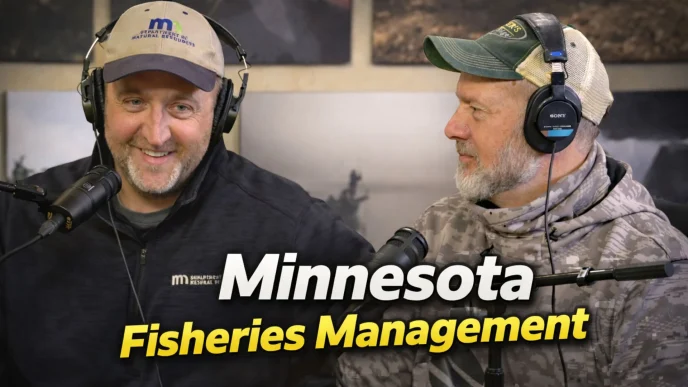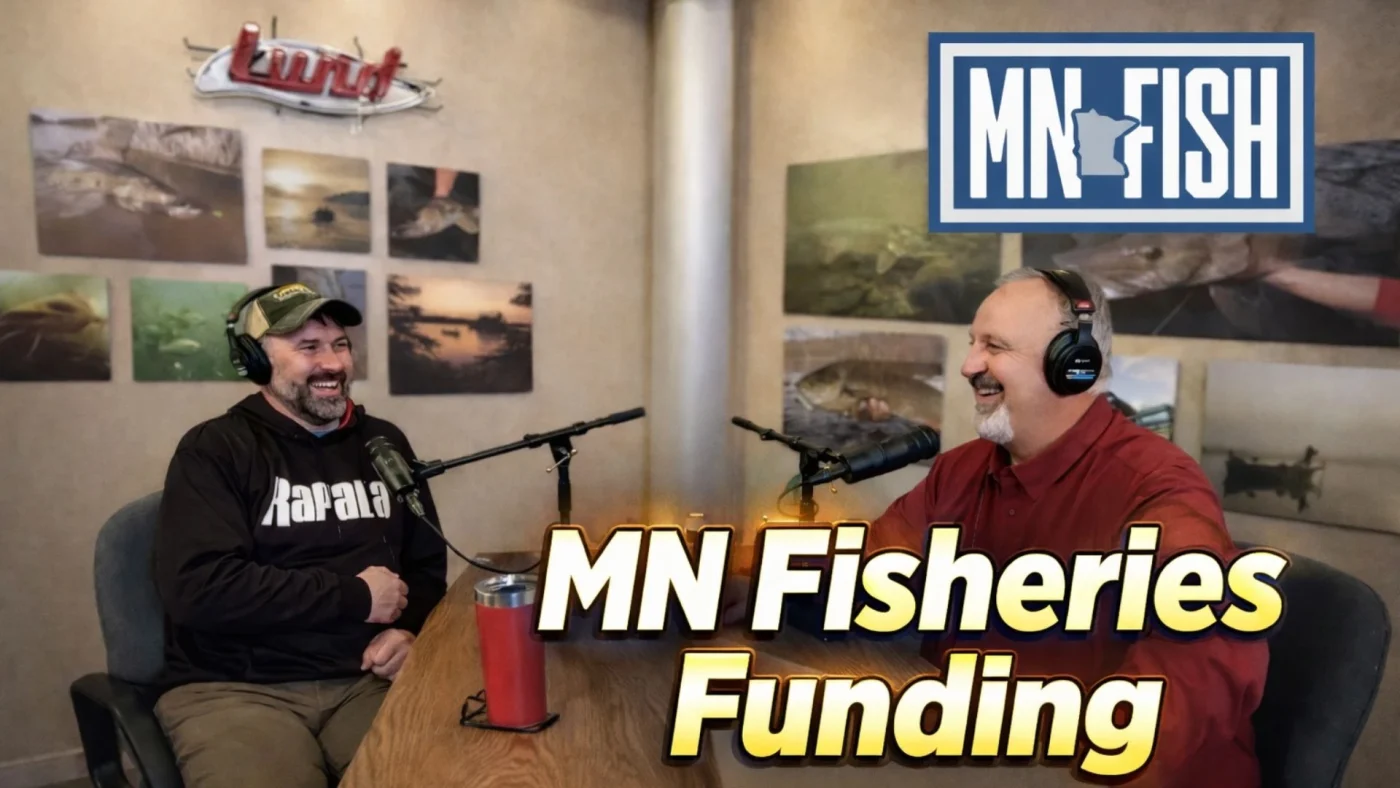

Most anglers know they buy a fishing license every year. Far fewer know what actually happens to that money after the sale, how it gets allocated, and why so many of the things anglers care about (stocking, hatcheries, public accesses, and fisheries management) can still feel underfunded.
That disconnect matters. If you care about better fishing in Minnesota, you need to understand more than just regulations and stocking reports. You need to understand how the system is funded, who controls the dollars, and why even good conservation ideas can stall out without political and financial support.
This conversation matters now more than ever. Minnesota anglers are watching debates about hatchery upgrades, public water access backlogs, invasive species, aquatic plant management, and the proposed 4-fish walleye limit. Underneath all of those issues is the same question: how is fisheries management actually funded, and is that system working well enough to support the future of fishing in Minnesota?
Where Minnesota Fishing Money Comes From
At the most basic level, Minnesota fisheries funding starts with license fees.
When anglers buy a fishing license, those dollars go into the Game and Fish Fund. That fund has strict legal boundaries on how the money can be spent. It is not a general account that can be freely moved into unrelated parts of government. It is a dedicated user-fee fund intended to support hunting and fishing-related work.
That sounds simple enough, but there is another major funding source too: federal excise tax dollars. On the fishing side, that comes through Dingell-Johnson funding, generated by taxes built into fishing-related equipment at the wholesale level. Anglers do not see that tax line on a receipt, but it is there, and those federal dollars eventually come back to the state to support fisheries-related work.
So in practical terms, Minnesota fisheries are supported largely by:
- fishing license dollars
- federal Dingell-Johnson dollars
- a smaller amount of other support, depending on the specific program
That is an important point. Fisheries management in Minnesota is not mainly built on broad taxpayer support. It is largely funded by user fees from people who hunt, fish, register boats, and buy outdoor equipment.
The Part Most Anglers Miss: The DNR Does Not Just “Spend the Money”
A lot of anglers assume that when they buy a license, the Minnesota DNR just gets that money and uses it however fisheries managers see fit.
That is not really how it works.
The money goes into state-managed funds, but the legislature still has to authorize spending. The DNR does not simply have unrestricted access to every dollar that comes in. The agency proposes budgets, the governor’s office puts forward a budget, and then the legislature decides how much spending authority the agency gets.
That means there is an important distinction between:
- money entering the system
- money the legislature allows the DNR to spend
This is where fisheries funding starts to feel more complicated than most anglers expect. Even if the dollars are generated by anglers, the process still runs through state government structure and budget authority.
The DNR itself is part of the executive branch, which manages day-to-day operations. But the legislature created the agency, defines its authority, and controls appropriations. So even highly specialized conservation work still depends on the broader political and budget process.
Why Hatcheries and Public Water Access Became Major Priorities
When people think about fisheries management, they usually think about fish surveys, stocking, regulations, and maybe invasive species. But two of the biggest issues facing Minnesota anglers are far more basic:
- hatcheries
- public water accesses
Both are critical pieces of fishing infrastructure, and both have fallen behind.
Hatcheries
Minnesota’s hatchery system is incredibly important, especially for walleye anglers. While some lakes are naturally reproducing fisheries, many others depend on stocking support to remain viable. If you care about walleyes in Minnesota, hatcheries matter whether you think about them often or not.
The concern is that some of the state’s hatchery infrastructure is badly outdated. One of the clearest examples is the St. Paul hatchery, which has not seen major modernization since the late 1980s. The problem is not just cosmetic age. It is old technology, aging physical systems, and operational risk in a place that supports meaningful fisheries work.
The larger point is that hatcheries are not just buildings. They are part of the state’s long-term capacity to produce fish, respond to changing fisheries needs, and address new biological challenges such as disease, invasive species, and changing water conditions.
Public Water Accesses
The second major issue is public access.
Many Minnesota anglers have experienced it firsthand: aging ramps, undersized facilities, poor layouts for larger boats, and access sites that clearly have not kept up with how anglers use them today.
The shelf life of a public water access is not forever. If the state is not continually reinvesting in them, a backlog forms. And once that backlog builds, it takes serious money and political will to catch up.
One of the key takeaways from this conversation is that public water access funding was allowed to drift for years without enough people noticing. Once that happened, the state fell behind, and anglers were left dealing with the consequences.
Why Legacy and Trust Fund Dollars Do Not Solve the Whole Problem
Minnesota anglers often hear about the Legacy Amendment and the Environment and Natural Resources Trust Fund and assume those dollars are solving a lot of the DNR’s funding challenges.
They are not. At least not in the way many people think. Those dollars are generally project dollars, not core operations dollars. That distinction matters.
Legacy and trust fund money can support things like:
- habitat restoration
- conservation projects
- land acquisition
- research
- one-time or targeted initiatives
What they do not reliably do is support the day-to-day operational backbone of fisheries management in the way anglers might assume. They are not the same as stable, flexible funding for trucks, fuel, staffing, ongoing hatchery operations, and routine management functions.
That means you can have major conservation work on paper while still having fisheries operations that feel constrained in practice. In other words, great project work can happen while core agency capacity still struggles.
The Bigger Issues Underneath the Surface
One of the strongest points raised in this discussion is that anglers often view fisheries from the perspective of their own lake, whereas the DNR must manage a statewide system.
That difference in perspective matters.
From the angler’s point of view, the frustration is immediate and local:
- “I used to catch walleyes here.”
- “This lake used to have better crappie fishing.”
- “Why isn’t my access maintained?”
- “Why aren’t they fixing this water?”
From the agency’s point of view, resources are finite, and priorities have to be set across an enormous range of lakes, species, and regional needs.
That often means the biggest, most visible, or most biologically important fisheries get protected first, while smaller lakes receive less attention than anglers would like.
At the same time, management is getting harder.
Fisheries managers are dealing with:
- invasive species
- changing water clarity
- zebra mussels
- habitat shifts
- aquatic plant conflicts
- climate-related changes
- greater angler efficiency through technology
- aging infrastructure
- tight budgets
Those are not small variables. They are long-term structural challenges.
Aquatic Plant Management Is a Great Example of the Complexity
A particularly interesting part of the discussion centered on aquatic plant management.
Many anglers view aquatic vegetation as fish habitat, and they are right to do so. Fish need cover. Lakes need healthy plant communities. But lakeshore owners and recreational users often see the same vegetation as a nuisance.
That conflict has been playing out for decades.
The system developed in Minnesota separated different kinds of aquatic plant regulation into distinct permit structures, and over time, one of the major concerns has become whether fish habitat is given enough weight in those decisions.
The key question is not whether all invasive plants should simply be left alone. It is whether management is still being done with the right objective, and whether enough thought is being given to habitat function, not just aesthetics or convenience.
The concern raised here is that in many situations, removal efforts continue while native restoration does not meaningfully follow. That can leave lakes with less habitat overall, even if the original intent was management.
That is exactly the kind of issue that gets ignored when anglers do not have a seat at the policy table.
What MN-Fish Is Trying to Change
This is where MN-Fish enters the picture.
The idea behind MN-Fish is straightforward: Minnesota has long had strong hunting-related advocacy organizations, but far less organized representation for the average angler at the legislature and in statewide fisheries discussions.
That gap matters.
If no one is showing up to ask for hatchery investment, access improvements, fisheries research, and better management tools, those things are easy for lawmakers to overlook.
One of the clearest philosophies shared in this conversation was this:
If nobody is asking, the legislature is not giving.
That is true whether the issue is hatchery modernization, public water access improvements, aquatic plant management reform, or long-term fisheries investment.
MN-Fish is trying to give anglers a voice in those policy fights, not just react after the fact when a crisis or regulation becomes public.
What This Means for the Future of Fishing in Minnesota
The future of fishing in Minnesota is not going to be determined by one bag-limit debate.
It is going to be determined by whether the state and its anglers are willing to invest in the unglamorous but essential parts of fisheries management:
- hatcheries
- access infrastructure
- habitat work
- research
- long-term operational capacity
- better policy alignment between agencies and anglers
Regulations matter. But regulations alone cannot fix structural funding problems.
If you want better fishing in Minnesota, you need more than lower limits or stronger opinions. You need a system that is actually equipped to maintain and improve fisheries over time.
That means better funding, sharper priorities, and more angler engagement.
Final Thoughts
For most anglers, fisheries funding is invisible until something breaks.
A hatchery ages out. An access falls apart. Stocking struggles. Habitat deteriorates. Then everyone asks why the state is not doing more.
The answer, at least in part, is that Minnesota fisheries management operates under a more constrained, more complicated funding system than most people realize.
Fishing license dollars matter. Federal excise tax dollars matter. Legislative appropriations matter. Operational funding matters. And advocacy matters.
If anglers want better fishing, they need to pay attention not just to what is happening on the lake, but also to what is happening in the budget process, in hatcheries, in habitat policy, and at the legislature.
Better fishing in Minnesota is not just about fish. It is about whether the system behind the fish is strong enough to support them.