
2025 BuzzCast Episodes
The Journey of Toby Kvalevog and the Magic of Leech Lake
Toby Kvalevog is a seasoned fishing guide and former professional hockey player whose life story seamlessly weaves together athletic competition, community roots, and an enduring love for the outdoors.
From Bemidji to Brainerd: The Early Days of Early Season Fishing
Originally from Bemidji, Minnesota—home of the legendary Paul Bunyan—Toby grew up immersed in the traditions of the Northwoods. Raised as the younger of two boys, his competitive spirit drove him into the world of sports, where he particularly excelled in hockey. His journey took him to the University of North Dakota, where he had the honor of representing the United States at the World Juniors and was drafted by the Ottawa Senators.
However, all athletic careers reach a crossroads. “That all comes to an end,” Toby noted, “but the drive to be competitive does not.” That drive found a new home in fishing, a passion that had been simmering since childhood.
Fishing as a Competitive Outlet
After hockey, Toby transitioned into the tournament fishing world, participating in events such as the FLW tournaments and drawing inspiration from the professional walleye tours and fishing media he had followed growing up. At the same time, he built a career in education, teaching 8th grade physical education in Brainerd for over 25 years. “I throw balls at kids for like nine months and then lures at fish,” he joked.
His dual life as a teacher and angler eventually expanded into guiding, a natural extension of his lifelong love of fishing. A childhood spent with a rod in hand—pedaling a bike down to the Mississippi River to chase rock bass and perch—planted the seeds for what would become a second vocation.
One of the most pivotal early experiences in Toby’s fishing journey came thanks to Rob Baumer, an employee at a local sporting goods store in Bemidji. Toby, then a young boy, would frequently ride his bike to the store, volunteering to help pick leeches in hopes of being included in a fishing trip. One day, Rob said yes.
That first outing was eye-opening. “He actually had 2D sonar, probably the Lowrance flasher, and we went over to Diamond Point Bar,” Toby recalled. “We back-trolled over it with a Lindy rig and a couple leeches and caught walleye.” That moment cemented his passion. Fishing was no longer just fun—it was something more, something life-defining.
Building a Guide Service from the Ground Up
After college and some years guiding with Walleye Dan’s Guide Service, Toby partnered with Jeff Anderson and Steve Olson to form Leisure Outdoor Adventures. Olson, who owns a group of hotels, recognized the value of providing high-quality fishing experiences as an amenity for guests. What started with 40 guided trips between two anglers has now grown into a service that handles up to 700 trips annually.
The guide service now includes 12 professional fishing guides and focuses heavily on areas such as Leech Lake and Lake Vermilion. The group is not just a business—it’s a tight-knit family that collaborates daily to share knowledge, strategize, and maximize client success. “It’s just so much easier to break down the water when you communicate,” Toby explained.
Breaking Down Leech Lake: Strategy for Early Season Fishing Success
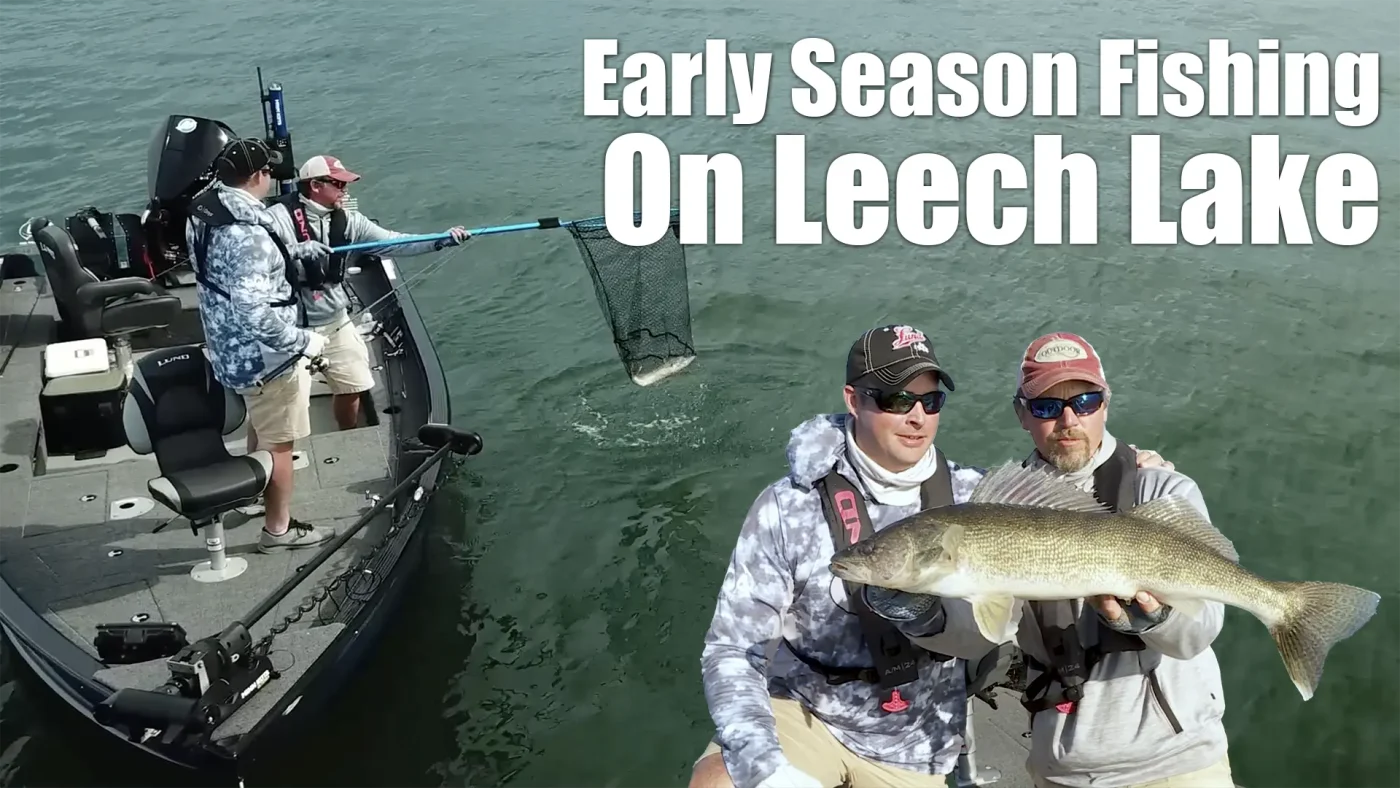
Leech Lake, a sprawling body of water with over 112,000 acres, offers both complexity and opportunity for skilled anglers during early season fishing. Toby explained the strategic approach that guides take, particularly during the spring walleye opener. “It’s a shiner bite,” he said, referring to the key forage of spot-tail shiners that walleyes feed on post-spawn.
Understanding the lake’s ecology is critical for early season fishing. Walleyes, fresh off the spawn, begin feeding as shiners spawn in adjacent sandgrass flats and sandy shallows. Water temperature is a major factor—warmer waters on the northwest sides of the lake tend to attract both baitfish and predators early in the season.
Toby highlighted areas like Steamboat Bay, Sucker Bay, and Portage Bay, as well as the shoreline stretch from Otter Tail Point to Portage, as early-season fishing hotspots. These areas warm quickly and feature the right combination of structure and forage to draw fish.
Reading the Bottom: Structure and Habitat
The specifics of bottom composition—what Toby referred to as “sand, hard bottom to soft bottom transitions”—play a key role in locating fish. From shoreline rubble to 10- to 14-foot depths with boulders and soft mud, understanding these zones is essential.
In the lake’s bays, sand grass becomes more important, especially as traditional cabbage weeds have declined—likely due to invasive rusty crayfish. Pockets and edges in the short springtime sand grass provide perfect ambush points for walleyes.
“You’re talking about more of a sand grass and sand,” Toby explained, “and they like the edges.” As of mid-May, when the fishing season opens, these growths are still short, but already form part of the lake’s intricate food web.
Early Season Fishing Walleye Patterns on Leech Lake: Understanding Weed Structure and Live Bait Strategies
As the conversation shifts toward spring fishing patterns on Leech Lake, a key point emerges: weed growth and structure transitions play a central role in locating fish, especially walleyes. While traditional broadleaf cabbage beds may have diminished in many areas, sand grass has become increasingly important.
The Importance of Sand Grass and Bottom Transitions
Weeds of any type—whether towering cabbage or short, four- to eight-inch sand grass—hold temperature, baitfish, and ultimately, predator fish. These small weed beds often form along shoreline breaks or sand-to-mud transitions, acting as travel corridors for schools of walleyes. Locations such as Sucker Bay north of Goose Island and Portage Bay were highlighted as productive areas where sand grass thrives.
The advent of side imaging sonar has revolutionized the way anglers identify these subtle transitions. Even when weed growth isn’t visible on the surface, imaging clearly shows bottom composition and weed edges. Whether it’s a dense cabbage patch or a sparse bed of sand grass, fish relate to the edges—making these ideal zones for targeting walleyes in spring.
Spot Tail Shiners: The Opener’s Go-To Bait
When it comes to bait selection during the opener, spot tail shiners reign supreme. Their importance is rooted in the fact that they’re a natural forage for walleyes in the spring. While alternatives like fatheads, rainbows, and even plastics can catch fish, nothing quite compares to a lively spot tail on a jig.
Guides favor shiners not just because they match the hatch, but because they’re user-friendly—effective even when fished slowly. This makes them ideal for clients of all experience levels. When water temperatures remain in the low 40s to near 50°F, a stand-up jig with a shiner, gently dragged or twitched, is often all it takes to entice strikes.
Jig and Line Setup: Traditional Tactics Still Hold Water
Although modern gear like braid with fluorocarbon leaders is popular, many experienced anglers on Leech Lake continue to swear by straight monofilament setups for pitching jigs in the spring. One such preference is 6 lb Berkeley Sensation mono, favored for its subtlety and superior jig movement.
According to veteran anglers, mono allows the jig and minnow to move more naturally, especially in shallow water. It also offers better castability in windy conditions, which is common on Leech. This becomes especially important when using light jigs like 1/8 oz or even 1/16 oz, which are standard in calmer conditions. As wind increases, anglers may move up to 1/4 oz, but rarely more.
Color choice for jigs tends to stay natural—blue and white, black, or light shades. While green and gold are often touted as traditional Leech Lake colors, individual success with lighter colors remains consistent.
Transitioning to Leeches and Crawlers
The jig-and-shiner window is typically short—one to two weeks after opener. As water warms and walleyes begin rooting around for other forage like bugs or small leeches, anglers often shift to leech presentations.
At this stage, long-line live bait rigging becomes a staple technique, especially in wind or current. Leeches fished under slip bobbers remain effective all season long, from opener until leeches are no longer available in bait shops. While jumbo leeches are reserved for targeting trophy fish, medium to large-sized leeches work best for most presentations. And when it comes to bobbers, small leeches just larger than panfish-size are ideal for triggering bites from eater-size and slot walleyes.
The key with leeches isn’t just size—it’s presentation speed. Slower pulls along breaklines or through scattered weed beds often lead to consistent success.
Understanding Seasonal Transitions in Walleye Tactics
One of the most important nuances in walleye fishing success isn’t just what you use—it’s when and how you use it. As spring transitions into summer, and water temperatures climb, anglers must adjust not only their bait but their presentation speed and style.
From Jigs on the Bottom to Aggressive Tactics
Early in the season, during the cold-water period around opener, the name of the game is slow presentations—think dragging jigs along the bottom. But as water temperatures rise through the 50s and begin approaching 60°F, a more aggressive style becomes productive. This is when many anglers start jigging faster and incorporate soft plastics or reaction baits like Jigging Rapalas into the mix.
It’s also when live bait rigging becomes a major player—especially linear rigs paired with leeches or minnows. For those targeting larger walleyes, redtail chubs are a standout choice.
ative to central Minnesota and long a staple in places like the Brainerd Lakes Area, redtail chubs are lively, robust, and can run 4–7 inches long, making them irresistible to bigger fish. Creek chubs, often stretching up to 10 inches, are another option for serious trophy hunters. The logic is simple: big fish eat big prey, and late May through early June is a time when walleyes are actively feeding.
When the Crawlers Take Over
As water temperatures hit and surpass 60°F, nightcrawlers come into play—and for many anglers, this marks the most enjoyable period of the season.
Nightcrawlers are affordable, easy to find, and most importantly, walleyes love them. A crawler bite is unmistakable: the fish inhales the bait, the rod loads up, and the hookset delivers a satisfying battle, especially on long lines set 60 feet from the boat.
Around 62°F is traditionally when many would transition into pulling spinners, but Leech Lake’s changing conditions have made that approach more challenging.
Spinner Rig Challenges on Leech Lake
In years past, pulling spinner rigs was a reliable June pattern. But modern realities on Leech Lake have reshaped that tradition. The shallow bite—often in 10 to 12 feet of water—makes it difficult to run spinners at a 45° angle beneath the boat without spooking fish. This growing challenge is why other techniques like bobber fishing, casting jigging raps, or casting live bait rigs have gained popularity.
Even during educational events like Lund Camp, where techniques are demonstrated for anglers of all ages and experience levels, the effectiveness of spinners has noticeably declined. Despite hundreds of walleyes being visible on sonar during a recent trial, few were caught using spinners. That speaks volumes about how the fish have adapted to pressure and boat presence.
That said, spinner rigs still have their place—especially in deeper water. Areas like Stony Point, where sand flats stretch out in 18 to 22 feet, can still yield results with spinners. But many guides and seasoned anglers now focus more on casting approaches rather than trolling.
Casting Live Bait Rigs and Spinners: A Game-Changer
Casting live bait rigs, often compared to Carolina rigs in the bass world, is gaining traction for good reason. Especially with redtail chubs or nightcrawlers, this method allows anglers to use side imaging to locate schools, hit SpotLock, and pitch their rig past the fish to pull it through the school without driving directly over them.
The key to success with casting live bait rigs is adjusting the leader length—shortening it helps with casting accuracy and prevents tangles, particularly when using minnows. This tactic, although not widely used yet, is extremely effective and underutilized in tournament and recreational fishing alike.
Enter the Search Bait Revolution
Search baits, typically jigs with spinner blades, are becoming a popular crossover between walleye and bass fishing strategies. Originally developed in places like Green Bay, where tournament anglers traditionally relied on crankbaits and spinners behind planer boards, these new jigs are designed to be cast and retrieved while tracking fish using forward-facing sonar.
A new tungsten jig designed for Mission Tackle exemplifies this innovation. Lightweight (⅛ to ¼ ounce) and equipped with a finesse-style SmileBlade, it’s ideal for lakes like Leech, Winnie, or Cass—where fish are shallow and easily spooked. The smaller, more subtle profile is perfect for these clearer waters and contrasts with the larger Colorado blades typically used on bodies like Lake Erie.
The Impact of Clarity and Technology on Walleye Behavior
One of the biggest game-changers in recent years on Leech Lake is water clarity. Where once the lake would green up in summer, now it remains strikingly clear—especially over shallow reefs where anglers can now see the bottom in 8 feet of water on most days. This transformation is largely attributed to the spread of zebra mussels, which have been established in Leech Lake for only a few years but have already had a profound effect on water transparency.
The result? Spookier fish. Combined with the evolution of fishing technology—forward-facing sonar, side imaging, 360° scanning—walleyes are being pressured more than ever before. They’re adapting quickly, often avoiding boats and reacting differently to traditional presentations.
A Changing Lake, A Changing Approach
There’s no doubt that Leech Lake is in flux. While there are promising signs, like an upcoming strong year-class of walleyes and new stocking efforts, anglers must continually evolve. Compared to 15–20 years ago, there may be fewer fish or simply more aware ones.
Whether it’s driven by environmental change, fishing pressure, or technology, success now hinges on finesse, stealth, and innovation.
A Lake Full of Food: The Rusty Crayfish Boom and What It Means for Leech Lake
Leech Lake is currently experiencing what could be described as a buffet for predators. As discussed, one of the biggest contributors to this abundant food supply is the rusty crayfish population.
These invasive crustaceans are everywhere—from shallow shoreline waters to deep, mid-lake boulder piles. According to the guide in the conversation, you can literally drop a trap in three feet of water or stagger one in 18 feet out in open water and haul in a full pot. The coverage is so widespread it’s fair to say that the bottom of Leech Lake is carpeted in food.
Crayfish aren’t just abundant—they’re a critical part of the local food chain. Walleyes, in particular, are making the most of it. When filleted, these fish consistently show crayfish in their digestive systems, especially those caught near sand grass areas.
This trend holds year-round but is especially intense from early June through early July. That period coincides with the crayfish molting cycle, during which their shells soften and make them easier targets. Anglers familiar with this phenomenon know it’s not uncommon to see orange crayfish remains—either in the stomachs of fish or smeared across the boat floor.
Walleyes, Crayfish, and the Shifting Bite
That June-to-July window is pivotal in the annual predator-prey rhythm on Leech Lake. Once the mayfly hatch begins, fish behavior starts to change. Smaller walleyes, particularly the keepers, shift focus to mayflies and other emerging bugs. But the big ones? They stick with what they love—crayfish. If a walleye has locked onto a food source like a rusty crayfish bed, it’s going to stick around. That means those deep weed beds and sand grass patches continue producing long after the hatch ends.
Interestingly, even after decades on Leech Lake, guides are still seeing new things. The winter perch bite, for example, was incredible this past season, producing schools of jumbo perch that hadn’t been seen in years. It raises questions about where those fish go during the summer—possibly deeper or hanging around mud lines. But it all ties back to one unifying theme: Leech Lake is teeming with food, and crayfish are at the heart of it.
The Mayfly Hatch: Curse or Opportunity?
Ask a casual angler about the mayfly hatch, and they’ll likely grumble. Floating rafts of bugs on the surface often signal tough fishing ahead. But for those in the know, that hatch—particularly around the late June full moon—is prime time. Walleyes of all sizes become extremely active and predictable. It’s a short, explosive feeding period where fish gorge themselves, not necessarily because they need to, but because the opportunity is too good to pass up.
When the hatch ends, though, the real challenge begins. The easy bite shuts down. Fish begin migrating again, seeking out their next reliable food source—often back to crayfish-rich areas. By late July, walleyes typically settle into those same sandgrass patches or rock transitions, where they’ll remain until fall.
Matching the Hatch: Spinner Rigs and Bobbers
To capitalize on the mayfly bite, spinner rigs fished on deeper sand-to-mud transitions (often in the 18–22 foot range) are highly effective. These zones, especially near rock reefs that border softer bottoms, are bug factories—and the fish know it. Walleyes pile into these areas, and the action can be hot.
When conditions flatten out and fish get skittish, bobbers become the go-to method. But here’s a tip that could make or break your day: ditch the jumbo leeches. Instead, opt for small or medium leeches—just a couple inches long. These mimic the size and appearance of the insects walleyes are gorging on, and they’re often far more effective, especially under a float. It’s the fishing equivalent of offering an after-dinner mint.
The truth is, big fish eat small leeches. Whether you’re targeting eater-sized walleyes or chasing a trophy, these little baits get the job done. And they do so all season long.
Understanding Reaction Bites and Seasonal Movements
As the season progresses and mayfly hatches begin on parts of the lake, anglers must shift their focus. During this phase, fish often respond better to reaction bites, especially when they’re no longer feeding actively in the mud. These walleyes might suspend or push up into shallow sand grass, especially as the water temps move into the mid-60s and 70s.
At this point in the season, the vegetation hasn’t reached full summer growth, which opens up opportunities to work presentations like jigging raps through emerging weed beds. However, as Toby notes, this technique isn’t for everyone—it requires the right kind of client.
For many guides, especially those prioritizing efficiency and client satisfaction, simplicity reigns. If they can catch fish on a spinner, live bait rig, or slip bobber with a leech, that’s often the path they’ll take. It’s a strategy about maximizing catch rates while keeping the experience enjoyable and accessible for anglers of all skill levels.
Matching Tactics to Client Expectations
Toby gives great insight into the diverse clientele that visit Leech Lake. Whether it’s families looking for constant action, serious anglers targeting trophies, or long-time clients who’ve evolved from meat hunters to catch-and-release enthusiasts, the experience is tailored accordingly.
He emphasizes that his client base, especially after years of guiding, largely consists of returning customers who no longer care much about limits. Instead, they come for big, memorable catches—the kind that are photographed, admired, and released. For others, especially families with kids, it’s about rod-bending action, regardless of species. That’s where Leech Lake’s panfish opportunities shine.
Panfish Variety on Leech Lake: More Than Just Bonus Fish
Leech Lake is home to a surprisingly robust population of bluegills and crappies, and in recent years, it has earned a reputation for producing some truly giant panfish. The spring panfish bite, especially from walleye opener through Memorial Day, is when attention on these species peaks.
During this time, crappies move shallow to spawn, creating a high-action window that attracts anglers to specific bays. Toby mentions this period as being particularly active, with the majority of panfish harvest occurring during this stretch. After the spawn, things get tougher. Crappies become more elusive, and while they may still be patterned, their feeding habits change, especially the larger, wiser specimens.
Importantly, the lake now has special regulations to help preserve this trophy potential, particularly for bluegills. While Toby doesn’t see as many of the largest fish coming into cleaning shacks—a good sign—he notes that harvest pressure is still significant, particularly during peak spring periods.
Rock Bass: The Underrated Fighter
Among the unsung heroes of Leech Lake’s panfish population is the rock bass. Often overlooked or even dismissed by anglers focused on more “desirable” species, rock bass on Leech Lake can grow to impressive sizes and provide non-stop action—especially when fishing slows down for other species.
Toby shares that he’s even got a few go-to locations, often associated with submerged cribs, that hold massive numbers of these fish. For guides with kids or action-seeking clients, rock bass provide an easy and entertaining target. Their aggressive nature and willingness to bite make them ideal for introducing kids to fishing.
Not only do they fight hard, but they’re also, somewhat controversially, delicious. Despite their thick skin and heavy ribcage making them tricky to clean, their meat is firm and snow-white. Both Toby and his host, Jer, agree that a clean rock bass can rival or even surpass crappie in taste—provided it’s parasite-free.
The Unsung Heroes of Fishing: Rock Bass and the Realities of Guiding
While much of the spotlight often goes to species like walleye and musky, there’s no denying the sheer fun and utility that rock bass bring to a day on the water—especially when fishing gets tough. Though often maligned and considered less glamorous, these feisty panfish have a charm all their own. They’re abundant, aggressive, and when prepared right (especially with a Cajun-style shore lunch), they hold their own on the plate.
However, they come with some cautionary tales. As veteran guide Toby Kvalevog shared, rock bass have been the suspected cause of two painful bouts of cellulitis in his hands, a bacterial infection resulting from cuts exposed to the slimy mucus on these fish. It’s a stark reminder that the job of a guide isn’t just about catching fish—it’s a gritty, hands-on lifestyle that comes with occupational hazards few anglers ever consider.
Guide Teamwork: Communication Is Key on Big Water
Leech Lake is expansive, dynamic, and ever-changing—especially as the seasons transition. Toby and the Leisure Outdoor Adventures team have developed a system rooted in cooperation and trust to stay ahead of fish movement patterns. While every guide has their own stretch of water they might want to explore—be it Walker Bay, Sucker Bay, or the South Shore—communication keeps the whole team dialed in.
Smartphones, despite their unwelcome intrusion into the serenity of fishing, have become vital tools. A quick group text can reroute struggling boats toward better bites, maintaining morale and maximizing client success. It’s about more than catching fish—it’s about delivering a consistent, high-quality experience.
When guiding corporate or large groups, strategy shifts. Boats may start spread out to cover more water, but they often end up converging once the hot bite is found. That’s not just efficiency—it’s camaraderie. Clients love it when boats are within sight of one another, celebrating fish catches and sharing the moment.
Navigating Leech: Strategy and Safety
On any given day, a guide might only have time to fish two or three areas across Leech Lake—eight-hour trips pass in a flash. Having a dialed-in network and local expertise makes it easier to adapt on the fly. For visiting guides or anglers, being able to tap into that local insight is invaluable.
That’s why, if you’re new to Leech Lake, investing in even a half-day guided trip is a game-changer. It’s not just about learning spots—it’s about developing a foundational understanding of how to fish a big, complex lake. As Toby explained, it’s not always about catching fish on a guide trip; sometimes, it’s about understanding how to use your electronics, interpret structure, and, perhaps most critically, control your boat.
Boat Control: The Overlooked Skill
Boat control is often underestimated—until it becomes the difference between a successful outing and a frustrating one. On Leech Lake, with its frequent wind and wave activity, keeping your boat in the right place at the right speed is a true art form. Whether it’s maintaining position while casting for muskies or executing a precise drift over a walleye flat, your ability to manage the boat directly affects your fishing success.
And when waves start topping out at four feet, precision boat control shifts from an advantage to a necessity. Knowing when to fish into the wind, when to manage a drift, or when to use your outboard to reposition safely becomes critical—especially for anglers in smaller tillers versus glass boats like Toby’s 219.
Beyond safety, there’s the challenge of navigation. Leech is dotted with shallow hazards and low spots that can cause serious damage if you’re not paying attention—especially in low water years like this one. Traveling smart, understanding your route, and knowing when to throttle down all come with experience or guidance from those who know the lake best.
Learning On Your Own Boat
Toby also highlighted a growing trend: hiring guides not just for fish-catching but for personalized instruction on your own boat. Whether it’s learning to use side imaging or mastering forward-facing sonar, many anglers find more value in learning on their own setup. There’s an undeniable benefit in transferring skills directly to the environment and technology you’ll actually use.
This kind of instruction goes deeper than tactics—it involves setup, screen interpretation, and integrating all elements of modern fishing technology into a cohesive strategy. And, crucially, it helps anglers learn how to control their boat, read wind direction, and adapt to live conditions—all of which are vital to long-term success on big water like Leech.
Low Water, Engine Health, and Preventative Maintenance
With water levels currently lower than usual around Leech Lake and the Brainerd Lakes area, navigation hazards aren’t the only concern. Fuel-related outboard issues become more prominent in early season outings, and this is where preventative maintenance plays a role. Seafoam Marine Pro, for example, is a simple yet powerful additive that helps prevent many of the most common engine problems—especially after winter storage.
Easy to use and made from petroleum-based solvents, Marine Pro dissolves varnish, gum, and deposits in your engine’s fuel system. A higher concentration in a low tank can help remedy rough idles, hard starts, or performance hiccups. For those heading out for opener, adding this step can mean the difference between a smooth day and a frustrating one.
Understanding the Role of Fishing Guides in Resource Use and Conservation
In a candid discussion about the impact of professional fishing guides on lake resources—particularly Leech Lake—Toby Kvalevog offered a measured and insightful perspective.
One of the most nuanced issues he addressed was the perception that fishing guides, by virtue of running many trips and helping clients harvest their legal limit, are removing more walleyes than the average angler.
Kvalevog didn’t dispute this fact. “Are fishing guides taking a lot of walleyes off of lakes like Leech Lake throughout the course of the year? Well, sure, compared to other anglers, they are,” he acknowledged. But he also pointed out that this harvest is entirely within the legal framework and represents the rights of paying clients to retain fish within daily limits.
Guide Licenses and Resource Reinvestment
This brings up the topic of guide licenses and whether they could or should be used to generate additional revenue for fish stocking or lake management. Kvalevog expressed openness to the idea of higher license fees for guides—if, and only if, that money was directly reinvested in the resource. “I would be 100% okay with that if I knew that’s where that money was going,” he said.
He cited his own business, which accounted for 700 guide trips in a single year, translating to potentially 500 fishing license sales—contributing significantly to the funding base of the Department of Natural Resources (DNR). But despite that contribution, there remains little transparency about where that revenue actually ends up. This opacity frustrates guides who are already contributing to the economy through both tourism and licensing.
Legitimacy Through Licensing
Licensing also serves another purpose: legitimacy. “It legitimizes a guide,” Kvalevog stated, referring to how a required and possibly higher-cost guide license could help distinguish committed professionals from part-time or informal operators. Whether the fee is $75 or $1,000, for someone serious about guiding, it’s a cost of doing business. This kind of regulation might actually elevate the professionalism of the guiding industry in Minnesota and encourage only those serious about the vocation to pursue it.
He cited Florida as an example, where clients don’t need to purchase individual fishing licenses as long as they are fishing under a guide’s license. A similar system could potentially benefit both guides and anglers in Minnesota, as long as there’s transparency in how those funds are utilized.
Data Gaps and the Need for Better Information Sharing
The conversation then shifted toward a major disconnect in fisheries management—data collection. While the DNR relies heavily on creel surveys and other periodic samplings, they may be missing insights from the people who are on the water daily. Guides like Kvalevog and other “super users” have a continuous, firsthand understanding of fish behavior, population trends, and angling pressure.
“We talk about this all the time,” said Kvalevog. “The guy floating around in a 14-foot boat on Leech Lake compared to what a guide like me sees every day—those are two different worlds.” He argues that integrating guide data into state fisheries management could provide a more accurate and nuanced view of lake health and usage. Currently, this lack of alignment often leads to friction between anglers and the agencies managing the resources.
The Reality of Mid-Season Pressure
One vivid example of angler behavior is the contrast between the fishing opener and mid-summer activity. Kvalevog described Leech Lake in July as a “ghost town” for walleye fishing once the holiday crowds disperse. The serious fishing effort often continues quietly with a small group of skilled anglers and guides—those who make up the 10% of anglers catching 90% of the fish.
The Muskie Conundrum: Forward-Facing Sonar and Open-Water Fishing
One of the hottest topics in the Minnesota fishing community is the rising pressure on Leech Lake’s muskie population, particularly in deep water. Long considered nomadic fish, muskies have used deep-water basins—especially those rich in ciscos and mayfly activity—for years.
These areas have always attracted some trolling pressure, especially in the post-spawn period, but the game has changed dramatically with the introduction of forward-facing sonar (FFS).
Kvalevog admitted that he’s embraced FFS across multiple species, including muskies, to remain competitive and deliver results for clients. “I started chasing muskies with forward-facing sonar…and you know what? It was a lot of fun.”
But the concerns are mounting. Larger, older muskies are often in poorer physical condition, particularly by late summer. Combine that with the challenge of catching them in deep water—sometimes coaxing a fish from 20 feet below the surface—and you have a situation where post-release recovery can be significantly impaired. “They struggle to recover,” Kvalevog said, noting that this is true even in shallower waters.
The challenge is even more acute with open-water trolling, where larger fish are more likely to be encountered and are more vulnerable due to their already-depleted stamina and the physical strain of a fight. The result: more pressure on the oldest, most valuable individuals in the muskie population.
Technology, Pressure, and Ethics
The conversation has evolved into a broader one about ethics and technology—what constitutes fair chase, and how modern tools like FFS are reshaping fishing dynamics. The tools may be legal and effective, but the ecological and ethical implications are just starting to be fully understood. Kvalevog’s perspective is valuable not just because he’s using these tools, but because he’s asking the right questions about what it means for the future of the fishery.
Technology, Opportunity, and Responsibility: Navigating the New Frontier in Muskie Fishing
The conversation around forward-facing sonar (FFS) in muskie fishing is no longer speculative—it’s here, it’s impactful, and it’s transforming the way people engage with this legendary species. Whether it’s a 52-inch muskie caught by a beginner on her second-ever cast or an 86-year-old angler landing his biggest muskie to date, FFS is providing access to fish in ways never before possible. The result? More people catching muskies, more frequently, and often under circumstances that wouldn’t have been possible even a few years ago.
A Game-Changer for Anglers of All Backgrounds
One of the most compelling elements of the discussion is how forward-facing sonar is democratizing access to muskies. From young kids getting hooked on fishing after spotting a muskie while walleye fishing, to seniors catching their first Minnesota trophy, FFS is lowering the barrier of entry to what was once one of the most elusive freshwater species.
But this rise in accessibility comes with an undeniable shift in the conversation among guides and seasoned muskie anglers. Where once trolling the trench on a good day might yield one to three fish—already a win—trips are now producing double-digit numbers. This level of success, while exhilarating, also brings a growing sense of concern.
From Exceptional Days to Common Occurrences
With the concentrated presence of muskies in deeper basin areas of lakes like Leech during certain windows—often a few short weeks—anglers are taking advantage of the bite using both traditional trolling methods and FFS. What used to be a quiet stretch of water fished by a boat or two is now seeing dozens of boats, each potentially landing multiple fish a day. The numbers are impressive, but they’re also alarming when you consider the low-density nature of the muskie population and the intense pressure now being placed on these fish.
It’s not just the quantity of fish being caught; it’s the quality—trophy-class muskies over 48 inches, concentrated in one area, and heavily targeted during a narrow time frame. The angling pressure is unprecedented, and it’s forcing a reevaluation of best practices and ethical responsibility.
Mortality: A Hidden Cost of Success
One of the most eye-opening elements of the conversation is the emerging data—and anecdotal experience—around muskie mortality. Even under ideal conditions, the hooking mortality rate is higher than previously believed. Muskies caught on bucktails, especially those coming up fast from deep water, may swim off seemingly fine, but the survival rate isn’t guaranteed. This is especially concerning when you factor in warm water temperatures and deep water pressure changes, which can increase stress on the fish.
What’s perhaps most sobering is that many of these fish are being caught repeatedly in a short period of time, sometimes with fatal consequences. When fish that live 25–30 years and grow to incredible sizes are dying from catch-and-release encounters, it begs the question: How sustainable is this new fishing paradigm?
A Call for Research and Education
Recognizing the urgency of the situation, anglers and conservationists alike are pushing for new research. Bemidji State University, in partnership with MnFISH and organized in part by Jeff Arnold, is launching a telemetry tagging study on Leech Lake to better understand the behavior, movement, and survival rates of these pressured muskies. While this is a promising step forward, the results will take years to fully realize—time that the fishery may not have if current trends continue unchecked.
In the meantime, the Minnesota DNR and concerned anglers are taking action through outreach and voluntary guidelines. Signs have been posted at Leech Lake accesses requesting anglers not to target muskies in deep basins during critical periods. The rationale is simple: Leech Lake’s muskies serve as broodstock for the entire state’s muskie program. Every individual fish is invaluable, and the stakes are high.
It’s Not About Ban or Blame—It’s About Balance
To be clear, this isn’t a crusade against technology or innovation. As the conversation acknowledges, advancements like mapping and side imaging have always changed the game. FFS is simply the latest—and perhaps most significant—evolution. The key takeaway is that with powerful tools comes the need for equally powerful stewardship. It’s not about banning FFS or outlawing muskie fishing; it’s about using this technology responsibly and educating anglers—especially those who are new to the sport—on how to minimize harm and maximize sustainability.
It’s also about understanding the nuances. Not every muskie marked at 30 feet is uncatchable, nor is every shallow fish automatically safe to target. The problem isn’t just depth—it’s the stress of the fight, the handling, and the frequency of encounters. The conversation needs to move beyond simple answers and toward thoughtful, evidence-based guidelines that reflect the reality on the water.
The Ethics of Muskie Fishing: A Complex Balance
As technology in the world of muskie fishing continues to evolve, so too do the ethical questions surrounding the practice. The introduction of forward-facing sonar and its ability to help anglers spot muskies in deep water has raised concerns among conservationists and long-time muskie enthusiasts. With more tools at their disposal, anglers are now able to locate and target muskies with unprecedented precision, leading to the possibility of overfishing and greater stress on the fish population.
In recent discussions, some anglers have argued that certain practices—like trolling over deep water or casting at visible muskies using advanced sonar—pose a serious risk to the fish’s well-being. While the technology may make fishing more productive, it also comes with significant ethical dilemmas. The risk of injuring a fish, particularly when they are caught in open water, is higher than ever. These concerns raise questions about whether the benefits of these technologies outweigh the potential harm to the fish and the broader ecosystem.
The Case for Seasonal Closures
One possible solution to mitigate the stress on the muskie population is the implementation of seasonal closures. A suggestion to close muskie fishing on Leech Lake after the 4th of July has been floated as a means to preserve the fishery during a particularly vulnerable time. During certain windows of time, muskies are more susceptible to stress, especially with increased fishing pressure. This is particularly concerning because the easy-to-catch bite that occurs in June could lead to a rapid decline in fish numbers over the next few years if not carefully managed.
The idea of a seasonal closure, however, is not without its challenges. It would require careful consideration of the local economy and the livelihoods of resort owners, guides, and other businesses that rely on muskie fishing for income. Balancing the needs of the fish with the economic realities of the area is a delicate task, and one that requires input from all stakeholders involved. The potential backlash from anglers and businesses alike who rely on the summer months for their income is a real concern.
Managing the Fishery with an Eye on Conservation
One of the most important aspects of managing a muskie fishery is understanding the balance between preserving the fish and maintaining the experience for anglers. The discussion around limiting the number of fish caught per day, or perhaps introducing limits on how many times an angler can fish for muskies in a season, is a conversation worth having. These kinds of measures could help reduce the overall pressure on the fishery and allow for a healthier population in the long run.
As a guide, the conversation shifts from what’s best for an individual angler to what’s best for the fishery as a whole. The idea of only catching one muskie per day, for example, could help mitigate the overfishing problem while still allowing anglers to experience the thrill of muskie fishing. These limitations, though, would have to be accompanied by strict regulations and enforcement to ensure that anglers adhere to the new guidelines.
The Role of Anglers in Conservation
It’s clear that maintaining a sustainable muskie fishery will require cooperation from anglers, conservationists, and local businesses. Every action taken, whether it’s reducing the number of fish caught or adjusting fishing seasons, should be aimed at preserving the long-term health of the fishery. It’s also essential to keep educating anglers on the importance of catch and release practices, as well as the need to minimize stress on the fish.
While some argue that the solution lies in stricter regulations, others believe that the technology itself—like forward-facing sonar—needs to be reconsidered, particularly when it comes to its ethical implications. The line between fair play and overfishing is becoming increasingly difficult to define, especially as the technology advances and more fish are caught than ever before.
The Historical Context of Muskie Fishing
Muskie fishing has always been a unique and passionate pursuit. For many anglers, it is a tradition that goes back decades. For some, the thrill of fishing for muskies began when they were young—perhaps at the age of 12, using simple gear like a musky pole and a couple of bucktails.
Over the years, the practice evolved as new techniques were introduced, but the core essence of muskie fishing remained the same: patience, understanding the water, and mastering the art of casting.
However, with the rise of modern technology, the dynamics of muskie fishing have shifted. While some may feel that the new tools and techniques have enhanced the sport, others worry about the long-term effects on the fishery. These growing concerns are forcing the muskie fishing community to reevaluate how they approach the sport and whether it is time to embrace changes to preserve the fish for future generations.
This ongoing conversation is a pivotal moment for muskie fishing in Leech Lake and beyond. In the coming years, we will see how these issues evolve and how the community decides to balance tradition with the future of the sport. Whether it involves adjusting fishing seasons, implementing new regulations, or rethinking the use of technology, the goal remains the same: to ensure a sustainable future for muskie fishing, while maintaining the quality of the experience for generations to come.
The Ethics of Muskie Fishing: A Complex Conversation
As discussions about Leech Lake’s muskie fishing continue, one key topic revolves around the ethics of muskie fishing, particularly as new technologies like forward-facing sonar transform the sport. These tools offer greater precision, allowing anglers to target specific fish more easily. However, with this increased capability comes the responsibility to ensure that the fishery remains sustainable.
The issue of ethics was discussed in depth during the podcast, where Toby and other anglers shared their thoughts on how technology is reshaping the way muskies are targeted. For instance, forward-facing sonar makes it easier to spot muskies in deeper waters, which could potentially lead to an increase in angling pressure. While it provides an exciting opportunity to catch trophy fish, it also raises concerns about how these advancements may affect fish health and the quality of the fishing experience.
Toby raised the point that while it might be fun and rewarding to use these technologies to catch more fish, there are also potential downsides. He referenced the importance of maintaining a sustainable population of muskies, acknowledging the delicate balance between catching fish and ensuring they can continue to thrive in the lake.
The Seasonal Closure Debate
One proposed solution to address the impact of fishing pressure on Leech Lake’s muskie population is the introduction of seasonal closures. By closing certain areas to fishing during key periods, such as the June bite, it may allow the fish population to recover and reduce the overall stress on the system. However, as Toby pointed out, such a measure would need to consider various stakeholders, including guides, resorts, and anglers, many of whom depend on the annual muskie season for income.
A seasonal closure, though potentially effective in preserving the lake’s health, would require significant buy-in from all involved parties. For example, resort owners and local businesses, who rely heavily on the influx of anglers during the peak season, would likely have concerns about the potential loss of revenue.
As much as the idea of a seasonal closure has merit from a conservation standpoint, it presents practical challenges in terms of enforcement and community impact.
Toby also emphasized the difficulty of enforcing such a closure. The sheer size of Leech Lake, combined with the mobile nature of anglers, makes it hard for conservation officers to effectively monitor every aspect of fishing activity. While the idea of a closure might seem straightforward, its implementation could be complex and contentious.
Technology’s Role in Muskie Fishing
Despite concerns about the impacts of new technologies, it’s important to acknowledge that they also have their benefits. Tools like forward-facing sonar can enhance the fishing experience by making it more accessible to a wider range of people. For instance, Toby mentioned that he could take his dad, who has never caught a musky, out on the water with technology that would give him a fair shot at landing one.
The key, however, is ensuring that these technologies don’t lead to excessive fishing pressure. Toby emphasized that if technology helps reduce fish mortality by allowing for more precise targeting and catch-and-release practices, it could be beneficial to the sport. However, this would need to be balanced with education on best practices to avoid undue stress on the fish population.
Education, as Toby pointed out, is crucial in this ongoing conversation. Efforts to educate anglers about the responsible use of technology and the importance of conservation are essential to maintaining a healthy fishery. Signage around Leech Lake, as mentioned earlier in the discussion, could help raise awareness and guide anglers in making informed decisions.
The Future of Muskie Fishing on Leech Lake
Looking ahead, the future of muskie fishing on Leech Lake is a topic of much consideration. The area is unique, offering incredible fishing opportunities that attract anglers from all over the country. However, with increasing pressure on the fishery, it’s clear that a thoughtful approach is necessary to preserve what makes Leech Lake so special.
For guides and anglers alike, it’s important to consider the long-term sustainability of the lake’s muskie population. While muskie fishing remains a thrilling and rewarding experience, it must be balanced with responsible practices that ensure the future of this valuable resource.
Toby’s perspective, shaped by years of experience and a deep connection to the lake, reflects a growing sentiment among many anglers: it might be time to take a step back and reassess the way we approach muskie fishing. By taking actions now—whether it’s through seasonal closures, improved fishing practices, or the responsible use of technology—there is potential to safeguard the future of Leech Lake’s muskie fishery for generations to come.
Final Tips for Muskie Fishing on Leech Lake
As fishing season kicks off, Toby shared some helpful tips for those planning to fish on Leech Lake. For a successful day on the water, he recommended focusing on jigging with shiner minnows, particularly in the blue and white color scheme. Finding areas away from crowded boat traffic, especially on sand flats, will increase your chances of success.
Toby also advised that anglers ocus on shorelines, where fish tend to gather. Whether you’re targeting muskies or other species like walleye or crappie, finding a quieter spot away from the masses can make a significant difference in your fishing experience.
As the fishing opener approaches, it’s clear that the conversation surrounding Leech Lake’s muskie population is far from over. By continuing to discuss ethical considerations, sustainable practices, and the impact of technology, anglers, guides, and conservationists can work together to ensure that this iconic fishery remains a vital resource for future generations.