

Spring Walleyes on Leech Lake: Targeting the Shiner Bite
The Leech Lake spring walleyes are primarily driven by one key forage species: the spot-tailed shiner. In this post, we’ll break down the lake’s structure, the shiner-driven walleye behavior, and the best tactics and locations to help you find success during the opener.
The Spring Walleyes Shiner Connection: Timing and Location
Post-spawn walleyes on Leech Lake immediately look to feed, and spot tail shiners provide a plentiful and accessible food source. These baitfish begin to spawn in sandgrass and sand flats—often in the same or adjacent areas where walleyes have just finished spawning. This overlap creates what can only be described as a buffet for hungry walleyes.
Anglers should focus on the northwest sides of bays and points, especially early in the season, as these areas tend to warm faster. Warmer water is crucial in spring and helps both walleyes and shiners become more active. Unlike crappie fishing, where the emphasis is also on warm water, walleye fishing on Leech Lake is more about targeting the overlapping habitats of predator and prey.
Spring Walleyes Structure and Productive Zones
One of the things that makes Leech Lake unique is its structure. The lake features several “fingers” that run north-northeast, creating numerous northwest-facing shorelines that warm quickly in spring. Notable areas such as Steamboat Bay, Sucker Bay, and Portage Bay are prime starting points, along with the entire north end from Otter Tail Point to Portage Bay. These zones provide shallow, warm waters where shiners congregate—and where walleyes won’t be far behind.
It’s worth noting the old adage: 90% of the fish are in 10% of the water. On Leech Lake, much of that productive 10% lies along the west and northwest shores, where the shiner bite is most concentrated.
Spring Walleyes Habitat Breakdown
As anglers move along the Otter Tail Point to Waboose Bay shoreline, they’ll encounter a wide variety of habitats. Understanding bottom composition is key to locating walleyes in spring. The most productive areas often feature transitions—from rubble near shorelines, to clean sand, and eventually softer mud bottoms around the 14–16 foot depth range.
The north end of the lake tends to follow this pattern: rubble in the first 5–6 feet, giving way to sand, and eventually leading to deeper boulder fields and muddy flats. Notable areas like the beach near Ivins and east of that point offer excellent transition zones where walleyes and shiners mingle.
In the bays, conditions shift slightly. Anglers should focus on sandgrass and sand, especially where these mix with soft-bottom areas. The edges of sandgrass beds—even though still short in May—hold heat and are prime spots for baitfish like shiners, perch, and crayfish. These weedy pockets are important food sources and starting points in the lake’s springtime biomass chain.
Interestingly, rusty crayfish have changed some of the lake’s vegetation composition. While cabbage weeds have declined, sandgrass or tar grass has become more prominent. Even at its short May height, sandgrass supports baitfish and holds warmth, making it especially attractive to foraging walleyes.
Key Zones for Opener: Come opener, there are a few go-to zones that consistently produce results:
• Sucker Bay (north of Goose Island): Known for its sandgrass and shoreline breaks.
• Portage Bay: Offers sand-to-mud transitions and ample sandgrass pockets.
• Otter Tail Point to Waboose Bay: A vast stretch with diverse structure and forage-rich shallows.
The key to success is using a jig and shiner presentation. This method is highly effective when walleyes are schooled up and following bait along these weed edges and breaklines. With the help of modern fish-finding technology, locating these schools is easier than ever.
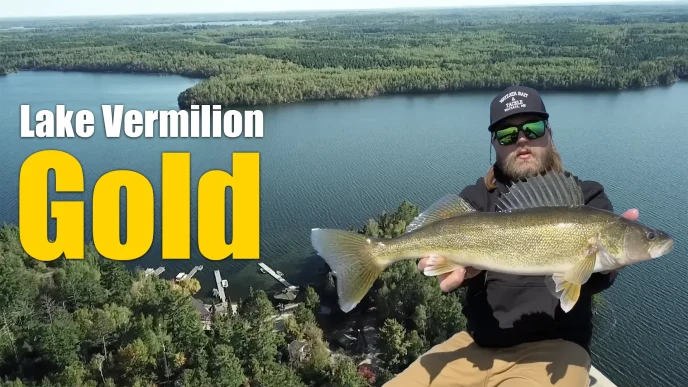
Spring Gold on Leech Lake
Targeting walleyes on Leech Lake during the spring opener is all about understanding the connection between shiners and structure. Focus on warming northwest shorelines, sandgrass beds, and bottom transitions. Use a jig and shiner to mimic the lake’s natural forage, and you’ll be well on your way to a successful start to the season. Whether you’re fishing the expansive north shore or probing the fertile bays, Leech Lake offers world-class walleye action for those who know where to look.