
2025 BuzzCast Episodes
Unlocking the Secrets of Prairie Fishing: A Deep Dive into the Dakotas and Beyond
The Passion for Prairie Waters
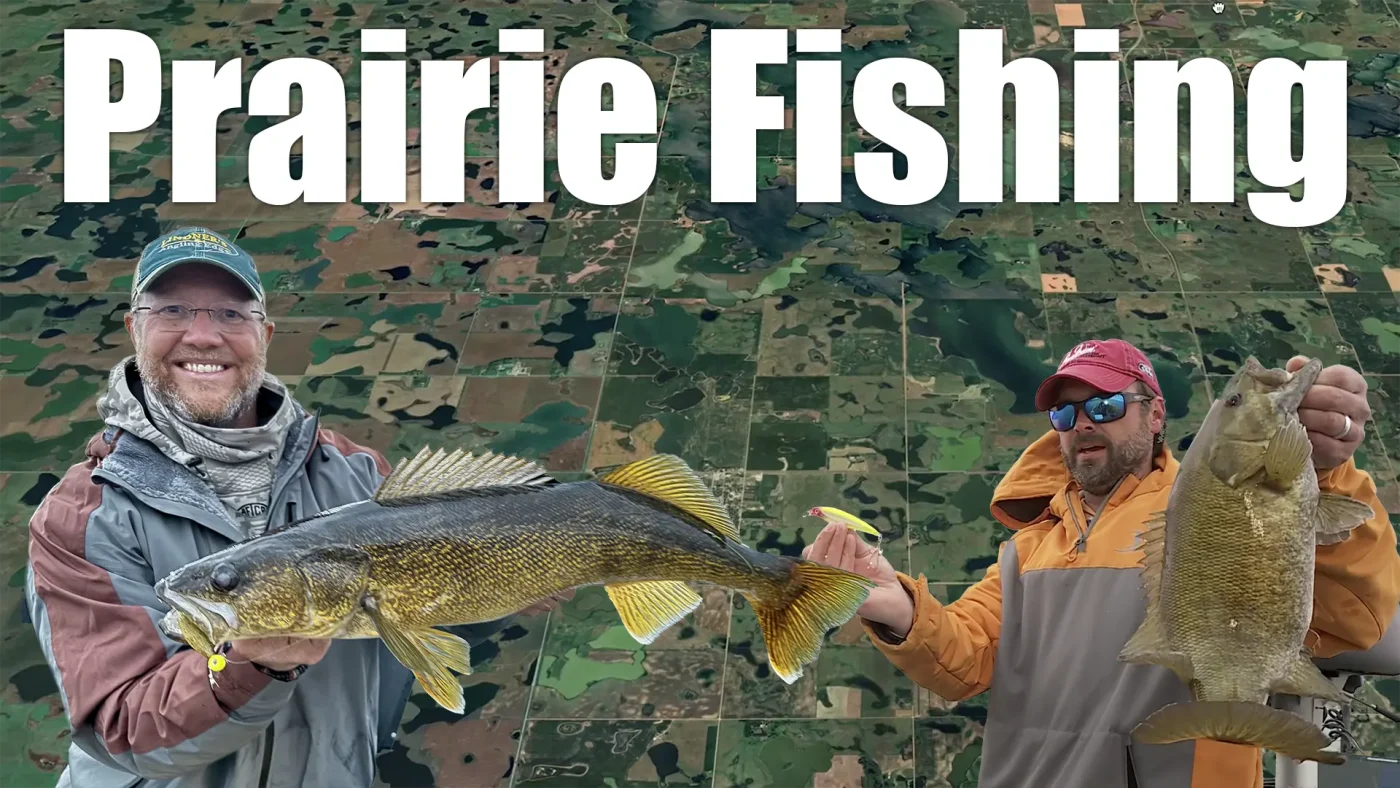
This week’s episode opens not on the water, but in the studio, as Jeff Simpson and Jeremy Smith discuss all things prairie fishing. Check out this in-depth dive into one of North America’s most underrated and fishing regions: the prairie lakes and river systems of the Midwest and Canadian Plains.
A Lifelong Connection Prairie Fishing
Jeff’s credentials as a prairie fisherman are hard-earned and deeply rooted. Raised in South Dakota, his angling education began in the prairie pothole region of the eastern part of the state. That area, part of a much larger glacial formation, is filled with lakes teeming with fish. Walleye are the crown jewel of these waters, but countless other species thrive in this fertile environment.
The Missouri River system, with its vast reservoir chain—Lake Oahe, Lake Sakakawea, Lake Sharpe, and others—was Jeff’s classroom and playground. Back in the 1980s and through his college years, these waters were considered a “walleye factory.” And even today, they remain some of the most productive fisheries on the continent.
Prairie Fishing: Bigger Than You Think
The conversation shifts to the geographical scope of prairie fishing. The prairies stretch from western Minnesota through the Dakotas, into eastern Montana, and sweep across the Canadian provinces of Manitoba, Saskatchewan, and Alberta. It’s a vast, diverse landscape, rich with opportunity for anglers. But most people’s mental map of prairie fishing stops at western Minnesota and the Dakotas.
For those unacquainted with the terrain, a visual inspection is in order. Pull up a topographical map on OnX Fish, Google Earth, or any mapping tool. Strip away the state lines and focus on the landscape. The sheer number of water bodies in the region is staggering. What once were simple duck sloughs—many of which Jeff’s grandfather used to wade through waterfowl hunting—are now deep, productive fisheries, in some cases reaching depths of 25 feet or more.
Just Go Fishing: A Simple Philosophy to Prairie Fishing
Jeff’s advice for tackling these waters is refreshingly simple: “Just go fishing.” That may sound overly basic, but in the context of prairie lakes, it’s actually quite strategic. Unlike the highly structured lakes of Minnesota, where anglers rely on one-foot contour maps to target specific features, prairie lakes are often bowl-shaped or dishpan-like. They lack the textbook points, humps, and weedlines that many anglers rely on.
Still, there’s structure to be found—especially in the spring. Keying in on factors like water temperature, weed lines, shoreline features, and especially moving water from runoff can make a huge difference. These lakes are dynamic, and spring is when they come alive.
Transitioning from Traditional Tactics
Jeremy points out one of the challenges many anglers face when shifting from structured Minnesota lakes or Canadian shield fisheries to the featureless mud and sand of the Dakotas. “It takes confidence,” he notes. Without familiar structure to target, anglers have to trust that the fish are there—and they are. The trick is covering water, making casts, and believing in the process.
Jeff agrees. Having worked in the angling industry, including years at In-Fisherman Magazine and observing professional tournament circuits, he’s seen even elite anglers struggle with this kind of fishing. One memory that stands out is fishing in Devil’s Lake when the cottonwood trees were still standing in the flooded water. Every tree felt like it could hold a fish, making it hard to know where to begin. Again, the answer was simple: just start fishing.
Open Season Advantage
A major benefit to prairie fishing, particularly in the Dakotas, is the year-round open season for species like walleye. In contrast to Minnesota’s closed seasons, South Dakota and North Dakota allow anglers to fish as soon as the ice melts. For locals, it’s almost second nature. As Jeff puts it, “We didn’t start fishing until the fish started biting.” With access that easy, fishing becomes a way of life, not just a seasonal hobby.
Wind, Mud Lines, and Water Color
No discussion of prairie fishing is complete without talking about the wind. In the Dakotas, wind is a constant—and it’s not just a nuisance; it’s a tool. Wind creates mud lines and shifts water color, both of which attract fish. Subtle points and contours may not be as visible or defined, but these wind-generated elements can become prime locations.
In the spring, when fish are preparing to spawn, water temperature becomes a critical factor—down to a single degree. The dirtier, churned-up water heats up faster under sunlight, creating warmer zones that draw in spawning fish. Understanding these patterns is key to unlocking consistent success.
The Fertility Factor
The Dakotas are rich in agricultural land, and that directly translates into fertile, productive water. Whether it’s duck-filled wetlands or fish-heavy lakes, the biological output of this region is enormous. Jeff emphasizes the high productivity of these ecosystems, recalling his time working with South Dakota’s Game, Fish, and Parks Department after college.
Despite a low-water period in the early 1980s, fishing quality rebounded and has remained strong, thanks in part to robust fisheries management programs. The support from agencies is remarkable. For example, in 2024, North Dakota raised 12 million walleye fingerlings for stocking—compared to Minnesota’s 2 to 5 million, even though Minnesota manages over 4,000 lakes to North Dakota’s 400. The scale of production and dedication to stocking quality fish is unmatched.
River Systems: Missouri, James, and Beyond
While prairie potholes get a lot of attention, the river systems in the region are equally compelling. The Missouri River in particular has undergone significant changes over the years. Once driven by massive smelt populations, today’s forage base has shifted toward ciscoes, contributing to the boom in trophy walleye fishing on Lake Oahe and other parts of the system.
Jeff’s lifetime of experience on these waters has given him a front-row seat to this evolution, and it’s a testament to the resilience and richness of the prairie fishing ecosystem.
The Rise and Fall of Smelt: A Fishery in Flux
The Dakotas’ fisheries are deeply influenced by natural events, and one major example was the boom and bust of smelt populations. As the guests described, there was a time when electronics would light up with large marks — big balls of bait, and hooks in them. These were smelt aggregations, with walleyes feeding aggressively on them. Anglers could drop a lure and quickly catch 4- to 7-pound walleyes, a testament to how plentiful and active the fishery was during that smelt-driven peak.
However, water levels rose across the system — from Fort Peck to Sakakawea and down to Lake Oahe, a vast reservoir stretching from North Dakota into South Dakota. When the reservoirs filled beyond capacity, water had to be released, and in the process, large numbers of smelt were flushed out of the system. Initially, fishing remained spectacular — the following spring, anglers like John Cooper and an old friend named Wicker Bill (Bruce Crist) were catching walleyes almost effortlessly. But as the year progressed, the walleyes got noticeably thinner. The food source had vanished, and the fishery began to suffer.
Boom Years and Trophy Fish
Managing large-scale fisheries like those on the Missouri River is a daunting task. During the downturn, authorities allowed liberal harvest limits on walleyes, which led to an abundance of fish. In recent years, this has set the stage for potential state-record-class walleyes to be caught regularly. Some of the fish being pulled out now are in the mid-to-high teens in weight — an incredible testament to how the system has bounced back.
Still, the conversation returned to forage. While smelt once drove fast-growing but ultimately unhealthy walleyes — described humorously as “McDonald’s-fed fish” due to their fat-laden flesh — the current forage base is producing massive, healthier fish. It’s a dramatic shift, but one that underlines how critical baitfish populations are to gamefish health and size.
Spring Walleye Tactics Across the Missouri System
Francis Case, especially accessible from I-90, stands out as a spring walleye hotspot. The diversity of tactics used here speaks volumes about the productivity and accessibility of the fishery. Anglers deploy ringworms and swimbaits along riprap banks, vertical jig with minnows from 6 to 30 feet, pull lead-core line, run three-way rigs, and even fish from shore using pickerel rigs. Whatever your preferred style, it likely works somewhere along this stretch of the Missouri River.
And that’s the beauty of the system — nearly every tried-and-true method for catching walleyes can be used successfully here. These waters have essentially written the book on walleye fishing techniques.
Beyond Walleyes: Diversity and Hidden Gems
Though walleyes are the star of the show, the Dakotas offer a diverse and often underappreciated fishery. Smallmouth bass, for instance, are prolific and reach trophy sizes. In fact, 4- to 6-pound smallmouths are not uncommon, and national tournament circuits like Bassmaster have taken notice.
In addition, there are salmon, lake trout, and panfish scattered across the prairie lakes and reservoirs. One of the most jaw-dropping fisheries, however, is the Red River of the North — a world-class catfish destination that regularly produces trophy channel cats. Anglers from across the country are often stunned by the size and abundance of fish in this relatively overlooked river. It’s not uncommon to have so much action that multiple rods can’t be managed at once.
Fishing for catfish on the Red is simple, too. Tossing out cut bait like suckers or frogs in promising areas is often enough to hook into monster fish. These aren’t finesse fisheries — they’re action-packed, brute-strength battles that leave anglers hooked in more ways than one.
Wintertime Glory: Perch on the Prairie
As spring arrives, it’s easy to forget the frozen season that just passed. But in the Dakotas, ice fishing is legendary — especially for jumbo perch. Historically, perch fishing has been so revered that the “Perch Express” once carried eager anglers by train to Devil’s Lake, a renowned hotbed of winter panfish action.
Perch in the Dakotas aren’t just numerous — they’re enormous. While a 12-inch perch is considered large in most parts of the country, it’s not unusual to find 13-, 14-, even 15-inch perch in prairie waters. Unlike bluegills, which are often released when trophy-sized, jumbo perch are typically harvested, as they are often nearing the end of their lifecycle.
Every winter, bites ignite across various lakes, creating world-class perch fishing opportunities. Devil’s Lake remains at the center of this scene, with operations like Woodland Resort and the long-standing Perch Patrol offering fully outfitted experiences, including snow bears and advanced ice transport systems.
Why Perch Thrive
Perch aren’t just fun to catch; they’re arguably the most sought-after species during the ice fishing season, largely due to their exceptional flavor. Anglers who’ve gone a few seasons without a perch fry often rediscover just how good they are — to the point of indulgence.
Interestingly, while many regions experience cyclical perch booms and busts, the Dakotas seem to rotate hotspots effectively. When one lake is overfished or declines, others take the spotlight. This natural ebb and flow is aided by water fluctuations — a drawdown followed by a rise stimulates fertility and perch spawning success.
A major secret to their explosive growth is freshwater shrimp. Many Dakota lakes are loaded with these protein-rich crustaceans, which not only fuel rapid growth in perch but also in other species like walleyes. Anecdotes of shrimp clinging to anglers’ waders, then cooking in truck beds like an accidental boil, underline just how abundant and influential they are in this ecosystem.
Prairie Lakes’ Natural Cycles and Abundant Forage
One of the most compelling features of prairie lake ecosystems is their resilience. As fish populations shift—whether due to angling pressure or environmental factors—these lakes often “self-regulate.” The abundance of forage plays a major role in this. Even when perch numbers dwindle in one body of water, the existing predators still have plenty to feed on, making them harder to catch and giving the population a chance to recover. Pressure naturally moves to other lakes, spreading out the impact. This dynamic promotes sustainability and showcases the ecological health of many prairie fisheries.
Ice Fishing Pressure and Natural Rebounds
While winter angling, particularly for perch, can be intense in areas like South Dakota and Minnesota, nature often steps in to balance the scales. On the prairies, where wind blows snow off the lakes and makes access easy even with two-wheel drive vehicles, perch bites can draw a remarkable number of anglers. Despite this, the perch populations often bounce back, a testament to the productivity and resilience of these waters.
Summer and Fall Perch Fishing—A Hidden Gem
Although perch dominate the winter fishing scene, summertime opportunities are often overlooked. As the season transitions into mid-July and through the fall, an outstanding bite sets up for perch in deeper water. Vertical jigging and slip bobber tactics become especially effective during this window. Still, most of the angling focus during the warm months shifts to walleyes, leaving much of the summer perch potential untapped.
A Prairie Mecca of Multi-Species Opportunity
The prairie region is far more than just perch and walleye. It’s a multi-species haven. Anglers can also target channel catfish, lake trout, muskies, white bass, crappies, and even salmon species like Atlantic and Chinook in specific stocked systems. One particularly fascinating experiment was the stocking of zander—a European cousin of the walleye—in North Dakota’s Spiritwood Lake. While rare, catches have been documented, including one by angler Troy Lindner.
These innovative stocking efforts are driven by proactive management from agencies like the Game, Fish, and Parks departments, often referred to more broadly as the DNR in other regions. Their openness to trying new things keeps the fisheries both exciting and diverse.
Yes, You Can Catch a 50-Inch Muskie in the Dakotas
Surprisingly to some, South and North Dakota offer legitimate trophy muskie opportunities. Bodies of water like Lake Sakakawea and Autobahn Lake have been stocked with both tiger muskies and pure strains, producing fish that exceed the 50-inch mark. Places like New Johns Lake continue to deliver outstanding muskie catches, proving that big-pike country isn’t limited to traditional northern strongholds.
Bass, Crappies, and Hidden Prairie Gems
Crappie and white bass also offer exciting action, especially when overlooked by anglers targeting walleye or perch. Smallmouth and largemouth bass can be found in good numbers, though largemouths are less common than one might expect given the habitat. Some lakes appear perfect for them—complete with standing timber and shallow cover—but they’re simply not present in large numbers.
However, in the western prairie stock dams and small reservoirs—many of them on private land—trophy largemouth opportunities exist. Float tubing or shore fishing in these waters can lead to catches of five to seven pound bass, making them a hidden gem for the adventurous angler.
The Prairie Region Extends Northward
While the Dakotas dominate the prairie fishing narrative, this region seamlessly extends into Canada. Lakes in Manitoba‘s Duck Mountains and Saskatchewan’s Diefenbaker and Last Mountain lakes continue the prairie fishing experience, complete with the same diversity and potential for trophy-class fish. Even urban fisheries like those near Winnipeg fall into this broader category, adding more depth to the definition of “prairie angling.”
Spring Tactics for Prairie Pothole Fisheries
As spring arrives, many fish—whether pre-spawn or post-spawn—remain shallow. This presents an excellent window for casting techniques and fun, active fishing. When fish are shallow and moving in search of food, casting paddle tail swimbaits becomes one of the most effective approaches. These baits appeal to a fish’s hunting instincts and are ideal for covering water quickly.
Whether using a quarter-ounce or three-quarter-ounce jig head, a simple straight retrieve with a paddle tail swimbait often outperforms more complicated presentations. Fish in these systems are frequently on the move, and this style mimics natural prey effectively.
Hair Jigs and the Power of Simplicity
Hair jigs also shine in these conditions. In particular, black hair jigs have proven effective in green-stained water. Jeff and Al Lindner, for instance, had a memorable outing fishing hair jigs in only two to three feet of water on a calm, hot summer day—conditions that many would overlook. It’s a reminder that sometimes the best tactics defy conventional wisdom.
Lipless Crankbaits: The Prairie Powerhouse
Perhaps the most versatile and consistent producer in prairie fisheries is the lipless crankbait—specifically, the Rapala Rippin’ Rap similar rattle baits. These baits are incredibly adaptable: cast them, jig them, burn them, or yo-yo them off the bottom. Their design appeals to a fish’s visual and lateral line senses, making them deadly in active, search-style fishing.
One of the reasons this bait excels is that it doesn’t target just one species. It catches walleyes, white bass, crappies, and even big perch. Its vibration and flash make it ideal for stained water and mobile fish. When the bite is on, strikes are aggressive—you’ll feel it in your bones.
Tackle Tips: Baitcasters and Modern Technology
Fishing on the prairie often means battling the wind. While many anglers prefer spinning gear, especially in tough conditions, those who master baitcasters can gain a tactical advantage. New baitcasting technology like Daiwa’s SV system uses magnetic braking to prevent backlash during the early, high-inertia moments of a cast. This innovation makes it easier to cast into the wind confidently and effectively, even with wind-resistant baits like lipless cranks.
Mastering the Cast: Control, Confidence, and Tackle Efficiency
One of the most revolutionary advancements highlighted in the discussion was the modern technology built into baitcasting reels—specifically, systems designed to prevent backlash. Traditionally, one of the key challenges in using baitcasters has been spool overrun, especially when casting into the wind or when the lure’s weight changes mid-cast.
This newer technology mitigates that problem, allowing even less experienced anglers to confidently throw lures like shallow-running crankbaits without fear of creating a bird’s nest in their reel. For anglers accustomed to spinning tackle, this opens the door to exploring baitcasting with significantly reduced frustration.
This naturally leads to a broader point: many walleye anglers, unlike bass fishermen, have been slow to adopt baitcasting gear. But that tide is shifting. While spinning setups still have a place—especially for finesse presentations—there’s growing acknowledgment that baitcasting gear offers superior control and contact with the lure, which translates directly into more effective fishing.
That “puppeteer” level of control is especially crucial with moving baits like lipless crankbaits. As the anglers noted, direct, tactile connection with the bait allows you to pick up on subtle cues, adapt quickly, and ultimately out-fish someone with less control.
Rod, Reel, and Line Synergy: The System That Catches
Another essential takeaway is the importance of building a cohesive “system”—the rod, reel, and line must work together for maximum efficiency and effectiveness. For instance, when fishing a lipless crankbait, a medium-moderate action fiberglass rod paired with fluorocarbon line is an ideal setup. To anglers used to fast-action rods and braided line, such a setup may feel slow or “spongy.”
However, this system excels in holding onto fish once hooked. The stretch in the line and flex in the rod help prevent the bait from tearing out during the fight, especially given the small trebles often used on crankbaits.
The right baitcaster allows quick line pickup and delivers the backbone needed to drive hooks home. And when you’re dealing with hard-fighting fish in heavy cover or open water, that system can be the difference between landing a trophy or watching it swim away.
Braid vs. Fluorocarbon and the Case for Wire Leaders
The conversation also dug into one of the more nuanced topics in tackle choice: line visibility and terminal rigging. On stained and fertile waters common in the Dakotas and parts of Canada, line-shy fish are far less of a concern than in the clear lakes of Minnesota. In such stained systems, anglers often tie directly to brightly colored braid—like chartreuse—because it allows them to visually detect strikes when the feel isn’t there.
This direct connection is especially practical in snaggy environments like the Missouri River system. There, the durability of braid allows anglers to retrieve snagged jigs without constantly retying, saving both time and money. But when it comes to protecting those pricey crankbaits from the inevitable pike encounters, tie-able wire leaders are a game changer.
These leaders, especially the newer titanium versions, are remarkably thin—often thinner than fluorocarbon—and resistant to kinking. Unlike old-school wire that retained memory, titanium wire snaps back to form after being bent or stressed.
For anglers skeptical about wire spooking fish, the advice is simple: try it. In these systems, walleyes are aggressive and opportunistic—they’re not examining your terminal tackle before striking. If you find that it’s affecting the bite, you can always switch back to fluorocarbon or lighter mono. But more often than not, the bite continues regardless.
Efficient and Ethical Fishing Practices
Beyond effectiveness, the use of wire leaders also touches on an ethical aspect of fishing—preventing lost tackle and leaving hooks in fish. These leaders significantly reduce the chances of losing expensive baits and minimize the impact on the fishery.
It’s a win-win approach that seasoned anglers recommend starting with, especially in pike-rich waters, and only adjusting if absolutely necessary.
In clearer systems, of course, line shyness becomes a real concern. Below Oahe Dam, for instance, or on other high-visibility lakes, anglers do observe that dropping to lighter pound test or a fluorocarbon or even mono can make a significant difference. This variability is also echoed in ice fishing, where subtle presentations and invisible lines can be the key to getting bites.
More Than Just Walleyes: White Bass and Mixed-Bag Bonanzas
The discussion also ventured into the underappreciated thrill of white bass fishing—especially in places like Devils Lake, where these fish can grow to impressive sizes. With their aggressive feeding and schooling behavior, white bass often provide nonstop action. In fact, the efficiency of heavier setups—whether it’s beefier line or terminal tackle—becomes essential when you’re hauling in fish after fish.
The same principle applies to walleye and smallmouth during peak feeding windows. When the bite is hot, simplicity rules. A heavier rod, fluorocarbon or wire leader, and a sturdy lure setup let you get fish in quickly and get back to casting. In these moments, you don’t need finesse; you need speed and durability.
These fisheries allow for a refreshing return to straightforward, no-nonsense fishing. You’re not tiptoeing around with ultralight tackle and 30-foot leaders. You’re casting, hooking, and landing fish—just the way it should be.
Plastics vs. Hair Jigs: Matching Bait to Conditions
Transitioning to presentation preferences, soft plastics versus hair jigs sparked some great insights. While many anglers don’t associate prairie lakes with weed growth, there are plenty of vegetated areas. In these spots, ripping a soft plastic through the weeds can be deadly effective. Soft plastics also offer a larger profile and tend to displace more water—qualities that provoke reaction strikes when pulled free from submerged vegetation.
Hair jigs, on the other hand, excel in open water or clean-bottomed areas like sandy flats and shoreline breaks. Their natural fall and subtle movement can be irresistible to walleyes and smallmouth in less cluttered conditions.
Shore Fishing Opportunities: Waders, Boots, and Big Bites
One of the most exciting aspects of these fisheries is the accessibility. Shore anglers can have a field day, especially during evening and nighttime bites. Many locals and visiting anglers alike suit up in their duck hunting waders to get chest-deep in the water and cast from the shallows. The bite often heats up as the sun goes down, and some of the best action can be found just a short walk from the road.
Shore Fishing Secrets and High Water Advantages
One of the more surprising revelations in this conversation was the potential for shore anglers to outperform boat anglers during certain times of the year. Jeff emphasizes that in areas with high water, especially in the spring and early summer, fish move in to feed along shorelines, particularly at dawn and dusk.
These feeding windows present a rare opportunity for shore anglers to catch fish consistently — sometimes even more successfully than boat anglers.
This high-water scenario has reshaped much of the accessible landscape.
Jeff recounts how entire road sections, once framed off in mile-long stretches, are now submerged. These former roads now form unique underwater structures — hard-bottom edges with ditches and riprap that attract fish. Areas like Bitter Lake, which has become a massive expanse of water, are filled with such structures. Anglers who locate these submerged roads can wade out and fish effectively along culverts and riprap edges, often catching their limit with ease.

An Amazing Trailer Loading Upgrade System
Before closing, Jeff shares his excitement about his new Lund Pro-V boat setup — especially his latest upgrade: the Drotto Boat Latch System. This innovative product, developed in South Dakota, just miles from his hometown, is designed to make launching and loading boats faster and less stressful.
The Drotto system uses a spring-loaded mechanism that clamps onto the bow eye of the boat as soon as it touches the latch. Whether you fish alone or with someone unfamiliar with trailering, this device is a major asset. Jeff describes how seamlessly it works — drive up, the latch grabs hold, and you’re locked in. When you’re ready to launch, a quick trigger pull releases the boat.
While this system works with bunk trailers, it’s especially valuable for those using roller trailers. It eliminates the risky juggling act of trying to balance throttle control, gear shifting, and latch release — particularly on steep ramps or in current-heavy situations like the Mississippi River. Jeff confirms that it performs flawlessly, even when he rams his river boat on to the trailer in heavy current — works every time!
Wrapping It Up: A Gift and a Reflection
As the conversation winds down, the crew surprises Jeff with a gift: a large Fresco photo tile of him holding a massive lake trout. Fresco tiles are magnetic photo displays that allow users to swap out images easily — a perfect way to commemorate great fishing memories. Jeff notes that the image was captured with a cell phone, yet the quality holds up even at large print sizes.
Final Thoughts: Prairie Lakes Are No Secret
Jeff ends with a powerful reflection on the vast and overlooked potential of prairie lakes. North and South Dakota might not be the first places that come to mind for premier fishing, but their abundance of water and accessible shorelines make them a dream destination. “Go look at the aerial map,” he urges, emphasizing just how much adventure awaits.
While wind is a given in these wide-open spaces, it’s a trade-off most anglers are happy to make in exchange for excellent fishing. Whether you’re launching a boat or wading in from shore, prairie lakes are a paradise for those ready to explore.