


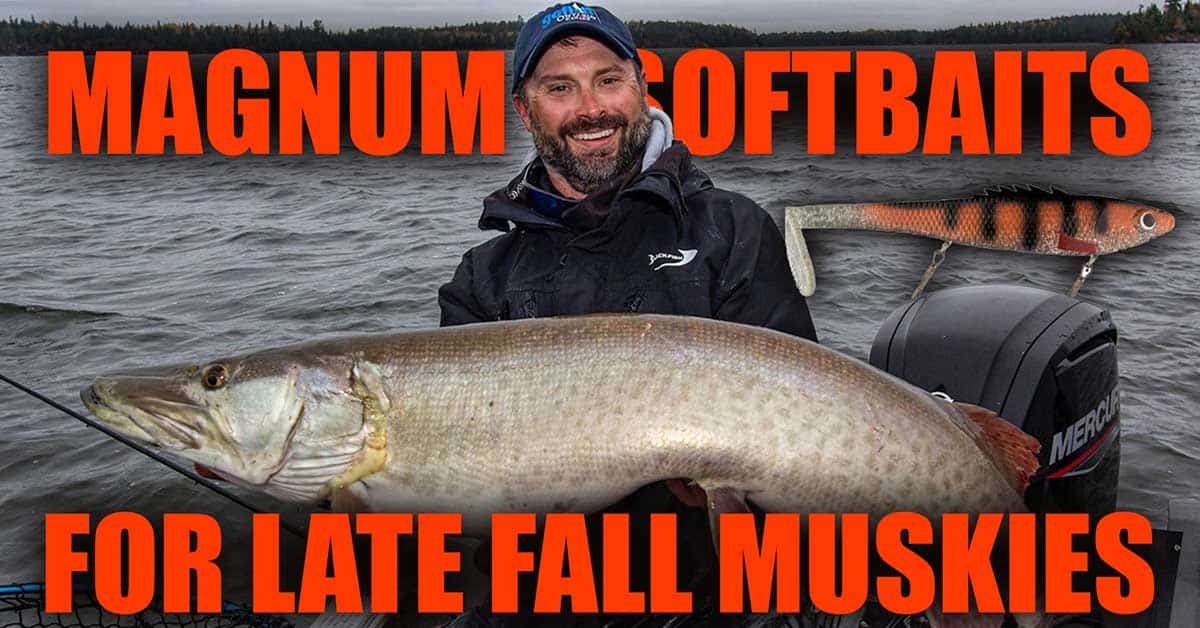

Magnum Softbaits for Gigantic Late Fall Muskies
When it comes to fall muskies, bigger isn’t always better. These days, that’s because much bigger is much better, at least in the eyes of serious muskie hounds. Enhanced stocking programs and the acceptance of catch and release has changed the game, with more big muskies available to anglers, in more areas, than at any time in history. This increased availability of larger muskies has spawned a complementary “growing trend” in tackle for pursuing and catching these giants. Bigger lures. Longer rods. Heavier lines and leaders.
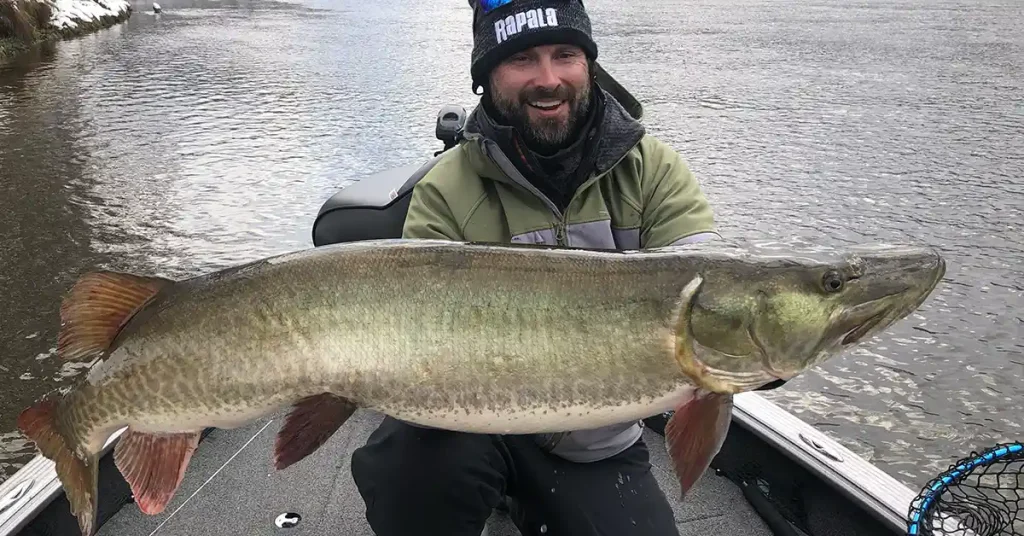
No lure category displays this trend as much as soft plastics, where a manufacturer can greatly expand the length and bulk of a lure without necessarily adding serious tonnage to the bait. Adding a long, writhing, slithering tail to a magnum softbait expands the profile without creating a massive weight overload, creating the illusion of an oversized baitfish while still allowing anglers to cast the lure effectively. Without too much pain and strain. Hour after hour. Day after day.
Big Plastics Fall Muskies
We’re talking baits that routinely top the 10-inch mark; 12 inches and more is common. Lures like Musky Innovations BullDawgs, Chaos Tackle Medussa, Storm WildEye Swim Shads and Kickin’ Minnows, Red October Tubes and the like.

Mega mouthfuls for hungry, tooth-filled, cavernous mouths that can, believe it or not, still swallow them whole and come back for seconds. That being said, casting—even trolling—lures exceeding 12 inches in length and 4 or 5 ounces (They don’t call ‘em “Pounders” for nothing!) reaches a point of mechanical infeasibility when using traditional muskie rods. The trend is to longer, stouter and stronger rods, again without adding serious weight to tire your arms, back and shoulders even further.
Musky Rods for Big Plastics
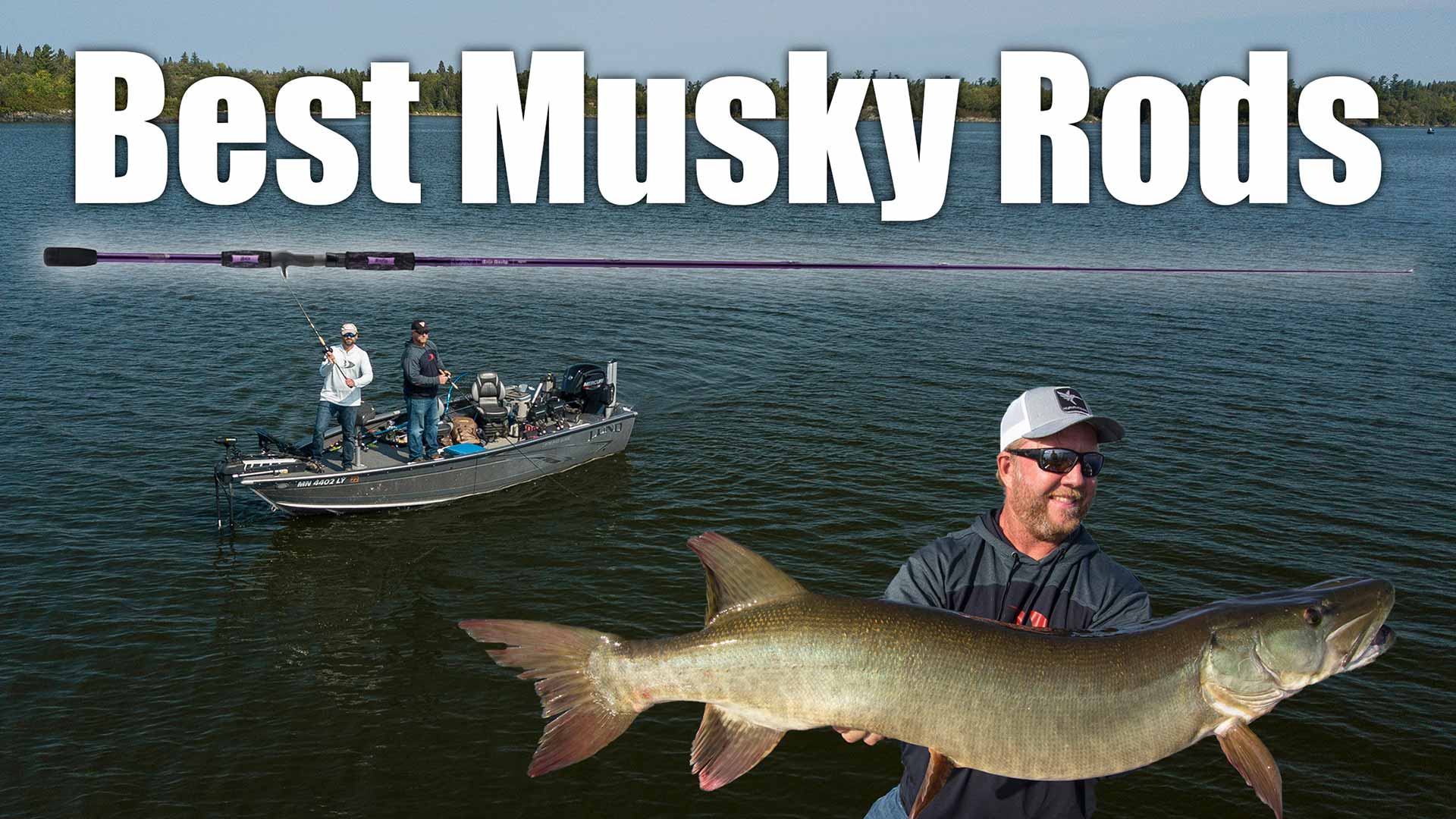
Today’s premier muskie rods—particularly for throwing oversized soft plastics—are generally between 8 ½ to 10 feet, and in some cases, even more! The best musky rods feature heavy duty components for two-handed, bombing casts into the next hemisphere.
Their added leverage not only allows you to fling lures with remarkable efficiency, and to bury the hook with jaw-jarring sweepsets. But also, to work large softbaits with long upward sweeps of the rod, followed by dropping the rod tip to follow the lure’s descent. This enhanced sweeping action allows large soft plastics to achieve their maximum glide and plummet action, and is largely credited with triggering more big fall muskies to bite than ever before.

Location of Fall Muskies
Throughout the year muskies are consistently following around the food. In fall ciscos and whitefish, a common food source for muskies, spawn on hard bottom structures near deep water. Points, rock reefs, and steep breaks with hard bottom are all good spots. These types of areas will congregate fall muskies as they follow the baitfish.
FAQ’s
1. What is the best time of day to catch muskies?
Sunrise and sunset are good times to catch muskies. Many anglers like to target muskies during the major and minor fishing feeding periods.
2. What do muskies eat in the fall?
On most bodies of water muskies feed on large sixes fish between six and twenty inches. This makes large softbaits ideal for the cold-water conditions of late fall, when muskies key in on oversized forage fish like white suckers, redhorse, cisco/tullibees and such.
3. What is the best color of bait for musky?
It can be hard to narrow down the best color for musky. Black, silver, chartreuse, orange, and brown all work great for muskies. It’s extremely beneficially to have a couple of different color options available. Color is an important factor depending on the water conditions, time of day, and mood of the fish.
4. Does live bait work in the fall for muskies?
Yes. Large white suckers under floats work well for big muskies.
5. When do muksies spawn?
Muskies spawn in the spring when water temperatures are between fifty and sixty degrees.
Conclusion
Big baits appeal to big fall muskies with big appetites, plain and simple. You can work them slowly, barely crawling them subsurface. Fish weighted baits deeper, usually with sweeping lift-drops. Erratically, with aggressive twitches of the rod tip. Pretty much anyway you like. Or more importantly, whichever way the fall muskies seem to like. Lakes. Rivers. Reservoirs. Wherever big fish swim, big baits work.






Comments are closed.