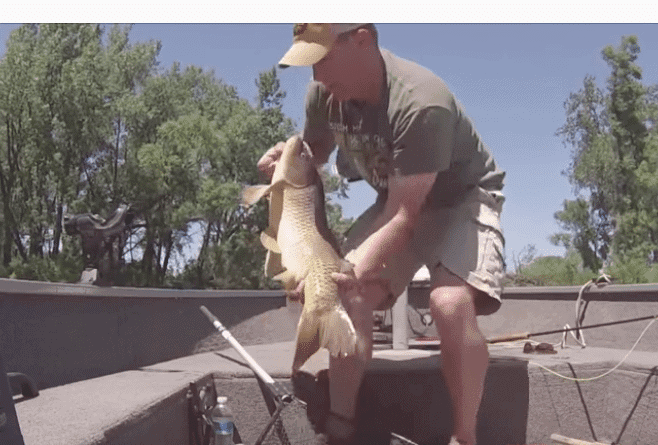

Fly fishing for Carp
Fly fishing for carp is both fun and very effective. Charlie Moore discusses the essentials of reading fish activity, fly selection, and going toe-to-toe with heavy-duty carp on a fly rod.
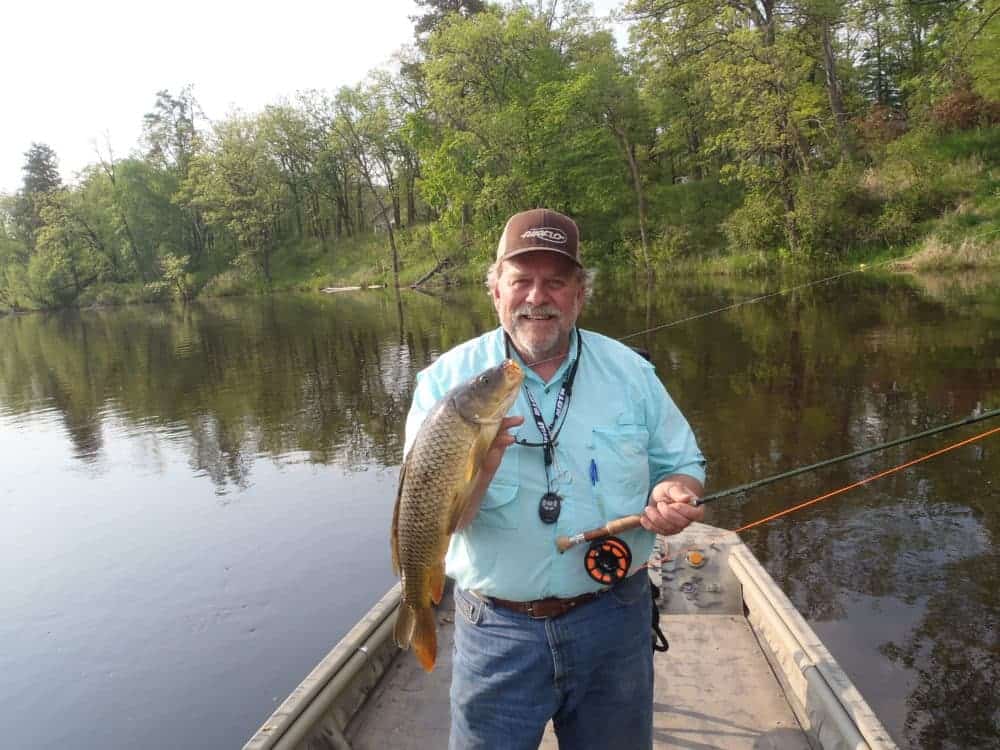
Fly fishing for carp is one of my all-time favorite activities, especially for those of us who live in eastern South Dakota or anywhere in the US. Carp are aggressive and active fish, making them a thrilling catch all summer long. Unlike many other freshwater species, carp can grow up to 25, 30, or even 35 pounds. In this article, I will share some quick tips on fly fishing for carp so that you can enjoy this exciting experience on the fly rod.
Finding Carp and Reading Their Behavior
Carp provide some excellent indicators of their behavior and activity levels, just like any other fish. By observing these indicators, you can determine what flies to use and where to fish for them.
Currently, in mid-June, the water temperature is finally up to around 70 degrees, and the carp have moved up to spawn. This is the easiest time to find them, as they gather in large groups. Fly fishing for carp is a visual game, so you want to see them and cast at them.
However, be careful not to land the fly directly on their heads, as this will spook them. Instead, cast the fly in front of them and strip it by them to get it right in their face.
Activity Levels and Fly Selection
Carp exhibit different activity levels, which can guide your fly selection. If you see carp up shallow, bulging the surface and with their fins out, these are active and aggressive fish. They are easy to catch and can be found in the main lake or just off the shore.
On the other hand, if you see carp cruising the shoreline, they are also very active and aggressive. Finally, if you spot carp gulping on the surface, they are a bit harder to catch due to their angle in the water, but it’s still possible.
When to Use Weighted Flies
One common question when fly fishing for carp is when to use weighted flies. The answer depends on the angle at which the fish is sitting in the water. If the carp is sitting with its head up and a bit tail down, you’ll want to use a fly that doesn’t go very deep.
Carp have downward vision, so flies that cruise way above them won’t be seen. A light pattern like the Charlie’s Carp Candy, which doesn’t have much weight and only gets about a foot below the surface, is a good choice in this situation.
When to Use Weighted Flies
However, if the carp is sitting with its head down and tail up, you’ll need a weighted fly to get it down quickly and right in front of them. An angled pattern with dumbbell eyes, like the one I use, works well in this scenario. It’s not super heavy, but it gets down fast and entices the carp to eat.
Reading the Angle of the Fish
When fly fishing for carp, it’s crucial to read the angle at which the fish is sitting in the water. If the fish is angled with its tail down and head up, a lighter fly that only gets down about a foot is ideal. This allows you to bring the fly into the carp’s strike zone without it falling out too quickly.
On the other hand, if the fish is angled with its head down and tail up, a weighted fly is necessary. In this case, you can use a classic bonefish pattern or a similar weighted fly that you can put right in front of the carp.
The Excitement of Fly Fishing for Carp
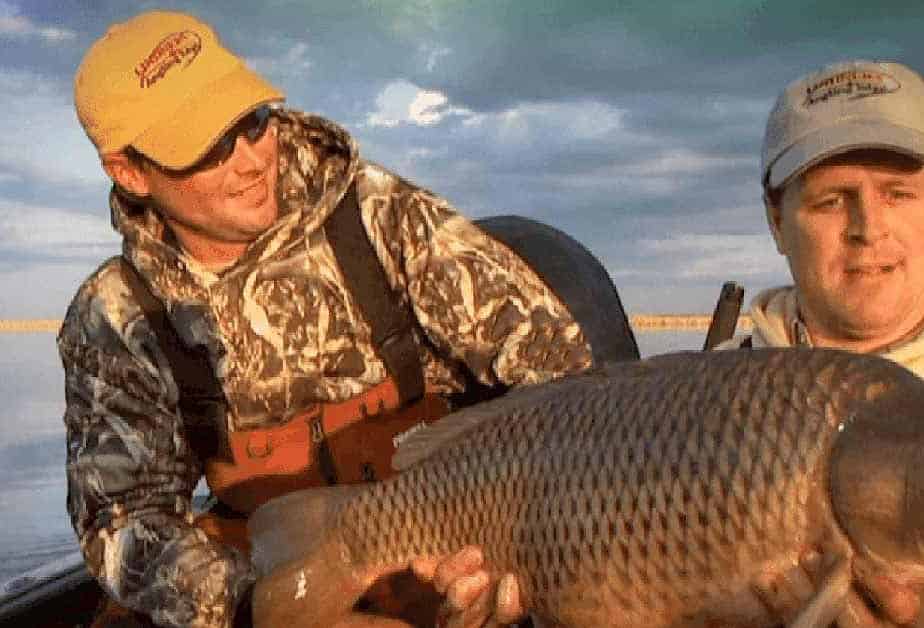
Fly fishing for carp is a thrilling experience that offers an immense amount of game to fly fishers. In eastern South Dakota, where I fish, I use a 9 or 10 weight fly rod because I can tangle with a 30 to 35 pound carp.
These fish put up a fight, and it’s not uncommon to battle them for 45 minutes or more. Contrary to what some may believe, carp do eat flies. When you watch them take the fly, you’ll see that they don’t just eat it, but they turn and charge at it. It’s a truly incredible sight to witness.
Conclusion
If you’re looking for a new and exciting fly fishing experience, I highly recommend trying your hand at fly fishing for carp. These aggressive and active fish provide a thrilling challenge all summer long.
By observing their behavior and selecting the right flies based on their activity levels and the angle at which they’re sitting in the water, you can increase your chances of a successful catch. So grab your fly rod and get out there to enjoy the excitement of fly fishing for carp!