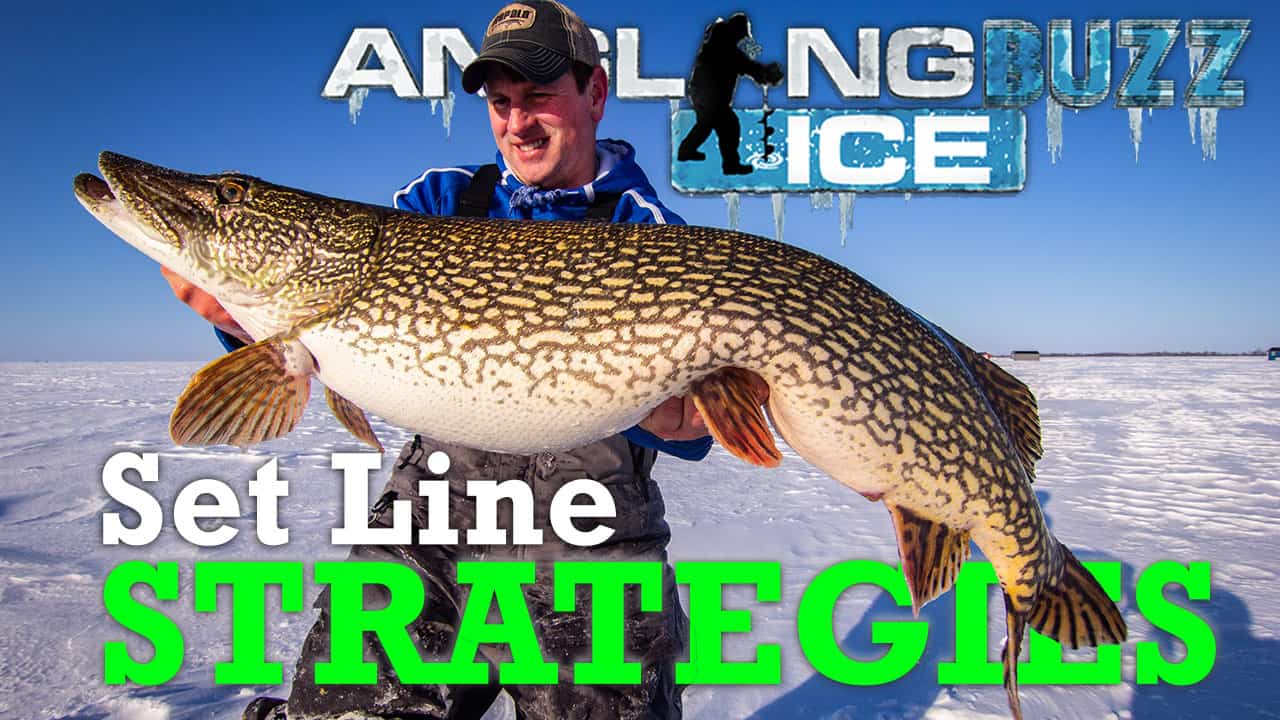

Using a set line has been around since people started ice fishing, and they are responsible for producing more fish than any other method. This episode is all about setline strategies — tip-ups, rattle reels, auto setters (Jaw Jackers), deadsticks, and more.
The AnglingBuzz Ice team start off targeting monster Lake of the Woods pike using classic and Arctic Warrior tip-ups. We also cover bait rigging tips for walleye and ice house rattle reel and deadstick strategies. Jeremy Smith shows a simple jerky recipe, a perfect snack for friends, family, and kids while waiting for the next flag to fly.
Setting Up Tip-Ups
When setting up tip-ups for ice fishing, there are a few key strategies to keep in mind:
- Choose the Right Location: Before setting up your tip-ups, it’s important to choose the right location. Look for areas with weed beds or structures where fish are likely to gather. Using a fish finder or an underwater camera can help you identify the best spots.
- Use Quick Strike Rigs: When targeting smaller pike, using smaller quick strike rigs is recommended. These rigs consist of two hooks, one in the front and one in the back, allowing the minnow to be presented horizontally. This setup increases your chances of hooking the fish.
- Adjust Depth: Adjusting the depth of your tip-ups is crucial for success. Pike are known to roam at different depths, so it’s important to find the right depth where they are actively feeding. Start by setting your tip-ups about two to three feet off the bottom, as pike often swim higher in the water column.
- Keep Warm and Comfortable: Ice fishing can be a cold activity, especially for kids. Make sure to dress in warm layers and bring extra blankets or hand warmers to keep everyone comfortable. Setting up a hub house or pop-up shelter can provide additional protection from the elements.
- Bring Snacks and Drinks: Keeping your energy up is important while ice fishing. Pack plenty of snacks, drinks, and even some hot beverages to keep everyone fueled and hydrated throughout the day.
Making Homemade Jerky
If you’re looking for a tasty snack to enjoy while ice fishing, homemade jerky is a great option. Here’s a step-by-step guide on how to make delicious jerky using deer meat:
- Slice the Meat: Start by slicing the deer meat into thin, even pieces. It’s important to have consistency in the thickness of the slices to ensure even cooking. Aim for slices that are about a quarter to three-eighths of an inch thick.
- Apply Cure and Seasoning: Choose a flavor of cure and seasoning for your jerky. Apply the cure and seasoning evenly to the meat, following the instructions on the package. Lay out the meat on a non-metallic surface, such as a cookie sheet, and apply the cure and seasoning evenly to both sides.
- Pat Excess Moisture: Before transferring the meat to a plastic bag, pat off any excess moisture. This will help ensure that the jerky dehydrates properly and doesn’t retain too much moisture.
- Rub and Marinate: Rub the meat together to evenly distribute the cure and seasoning. Place the meat in a ziploc bag and let it marinate in the fridge for 24 hours. Every few hours, take the bag out and move the meat around to ensure even coating.
- Choose a Cooking Method: When it’s time to cook the jerky, you have a few options. You can use a food dehydrator, a smoker, or even the oven in your home. For this recipe, we will be using the oven. Preheat the oven to 200 degrees Fahrenheit.
- Lay Out the Meat: Lay out the marinated meat on racks and place them in the oven. Follow the instructions on the package for cooking time, which is typically anywhere from one to a few hours.
- Enjoy: Once the jerky is cooked to your desired level of doneness, remove it from the oven and let it cool. Store the jerky in an airtight container or ziploc bag for future snacking.
Ice Fishing with Kids
Ice fishing is a great activity to enjoy with kids, as it can be both fun and educational. Here are some tips for getting kids involved in ice fishing:
- Make it an Adventure: Kids love adventures, so make ice fishing an exciting experience for them. Let them help with setting up the tip-ups, drilling holes in the ice, and searching for fish on the fish finder or underwater camera.
- Keep Them Warm: It’s important to keep kids warm and comfortable while ice fishing. Dress them in warm layers, provide extra blankets or hand warmers, and consider setting up a hub house or pop-up shelter to provide additional protection from the cold.
- Bring Snacks and Drinks: Pack plenty of snacks and drinks to keep kids fueled and hydrated throughout the day. This will help keep their energy up and make the experience more enjoyable for them.
- Target Species with Action: To keep kids engaged and excited, target species of fish that are most likely to provide the best action. In the case of the transcript, they are going after pike, which are known for their aggressive nature and provide a lot of action when caught.
- Teach Conservation: Use the opportunity to teach kids about conservation and the importance of managing fish populations. In the transcript, they mention the regulation in central Minnesota where they can keep 10 pike under 22 inches, while the ones between 22 and 26 inches are protected. This helps control the population and allows bigger fish to thrive.
- Capture the Moment: Bring along a camera or use an underwater camera like the Aqua-Vu Micro Camera mentioned in the transcript to capture the excitement of catching fish and exploring underwater. This allows kids to see the fish up close and adds to the overall experience.
- Make it a Snack Shack: Create a cozy and comfortable environment by setting up a hub house or pop-up shelter. This provides a warm space for kids to take breaks, enjoy snacks, and recharge before heading back out to fish.