

When it comes to musky trolling on expansive waters like Green Bay, success hinges on details most anglers might overlook. From rod placement to line length, planer board configurations to weed management systems, there’s a deliberate process behind every bite. Here’s a closer look at how serious musky anglers dial in their trolling setups for maximum effectiveness.
Why Green Bay Trolling Is Unique
Green Bay allows anglers to run three lines per person, offering a distinct advantage—but also adding complexity. Building an effective spread is about much more than simply tossing baits overboard. It requires precise measurement, consistency, and adjustment.
One key factor? The distance from the planer board to the bait. Seemingly minor differences—say, 22 feet versus 25 feet—can mean the difference between one bite and five. While that sounds insignificant, anglers report this is often more important than lure color. Starting each day involves experimenting with distances like 10, 15, 20, 25, and 30 feet back from the board. Once a pattern emerges, it tends to hold true throughout the session.
Setting Up Planer Boards for Musky Trolling
Preferred Boards and Modifications:
Most Green Bay musky guides rely on Offshore Tackle planer boards. Despite musky trolling often calling for big baits, the smaller Offshore boards handle Super Shads effectively without overpowering. The primary modification is upgrading the front clip and double-wrapping both front and back clips to ensure solid line retention. This ensures boards never drop off unexpectedly and reduces pressure on the fish during the fight.
Why Smaller Boards Work:
Using smaller boards provides several benefits. If a musky buries the board, there’s less strain on the fish, which helps avoid pulling hooks or damaging gear. Importantly, anglers report almost never needing to cut hooks out when using Super Shads paired with these smaller boards.
Line Choices: Braid vs. Mono Debate
Experienced musky trollers on Green Bay favor 100% braid mainline. The reasoning is simple: no stretch equals quicker rod load-up and consistent pressure on the fish. While some anglers in Minnesota prefer using 50-pound mono for extra cushion, especially with big boards, Green Bay experts argue that there’s already enough give in the rod, line length, and wind-induced line bow.
They balance this setup with fluorocarbon leaders, offering just enough stretch while maintaining maximum control.
Building and Managing a Three-Rod Spread
For those new to trolling, positioning rods and boards in a clean, manageable pattern is critical:
- Start from the Outside In: Begin with your outside rod first, usually the shortest line (e.g., 10 feet back from the board to the bait) and work inward. This minimizes tangles and keeps the spread organized.
- Typical Spacing: A practical setup would involve running 10, 20, and 30 feet back on three rods per side. This maximizes coverage while maintaining control.
- Fast Deployment Tips: If time is tight and fish are active, it’s sometimes faster to start with the inside rod (longest line back) first and work outwards, especially when trolling bucktails where precise bait presentation is essential.
Trolling Bucktails: Added Nuance
When running bucktails, setup requires extra care:
- Feathering the Bait Out: Since trolling depths are often as shallow as 6 to 10 feet, feathering the bait with your thumb while letting out line prevents snags and ensures blades start spinning properly.
- Managing Line Twist: Bucktails can create line twist, particularly when using snap-on weed kits. While most anglers use inline weed kits, snap-on versions are more effective at catching weeds but can introduce twists, which is a trade-off experienced anglers accept.
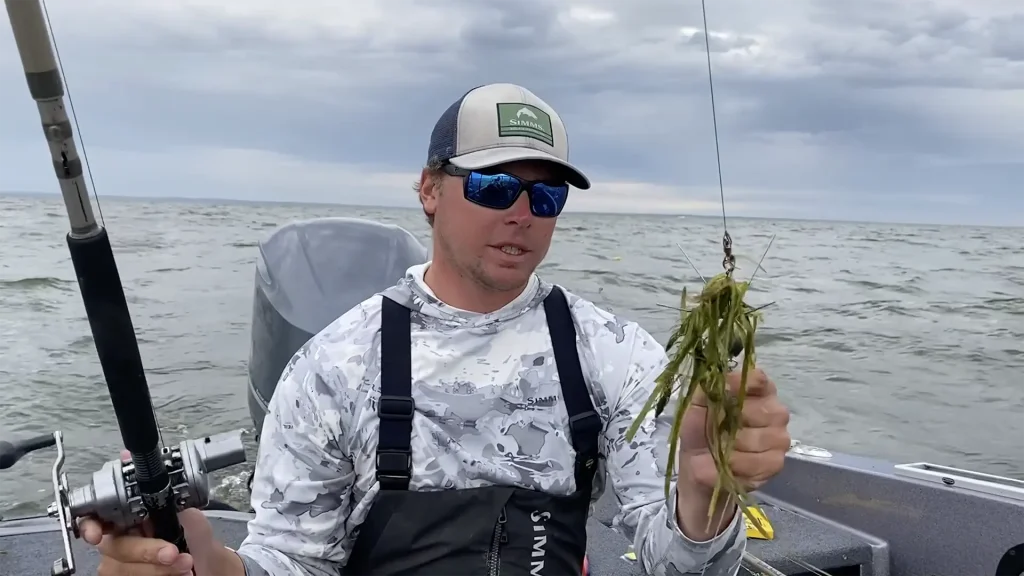
Musky Trolling Weed Management Systems: Snap-On vs. Inline Weed Kits
Weed build-up can ruin a trolling pass. To counter this, anglers use two types of weed kits:
- Inline Weed Kits: Popular and widely sold, these clip directly onto the line.
- Snap-On Weed Kits: Preferred by serious trollers, these are positioned five feet behind the planer board and act as a second line of defense, catching any debris that slips past the first board. This ensures the bait remains weed-free without affecting its action.
While snap-on kits can cause minor line twists, their benefits far outweigh that drawback.
The Technical Side of Musky Trolling: Far from Boring
Contrary to the stereotype, trolling isn’t a passive or boring way to fish. Captaining multiple lines requires constant attention: adjusting spread patterns, monitoring weed build-up, tweaking lure depths, and reacting to changing bite windows.
For many musky anglers, contour trolling—using kicker motors to follow structure precisely—is a favorite variation. This technique is especially effective on waters like Leech Lake, where anglers can combine trolling spreads with intricate boat control for an even more dynamic fishing experience.
Musky trolling on isn’t just about dragging big baits around. It’s a precise, technical approach requiring thoughtful adjustments and a solid understanding of both equipment and fish behavior. From choosing the right planer boards and line to mastering weed management and spread setup, every detail matters when you’re chasing giants in big water.