
The Evolution of Reel Construction: One-Piece Monocoque (MQ) Bodies MQ Spinning Reels
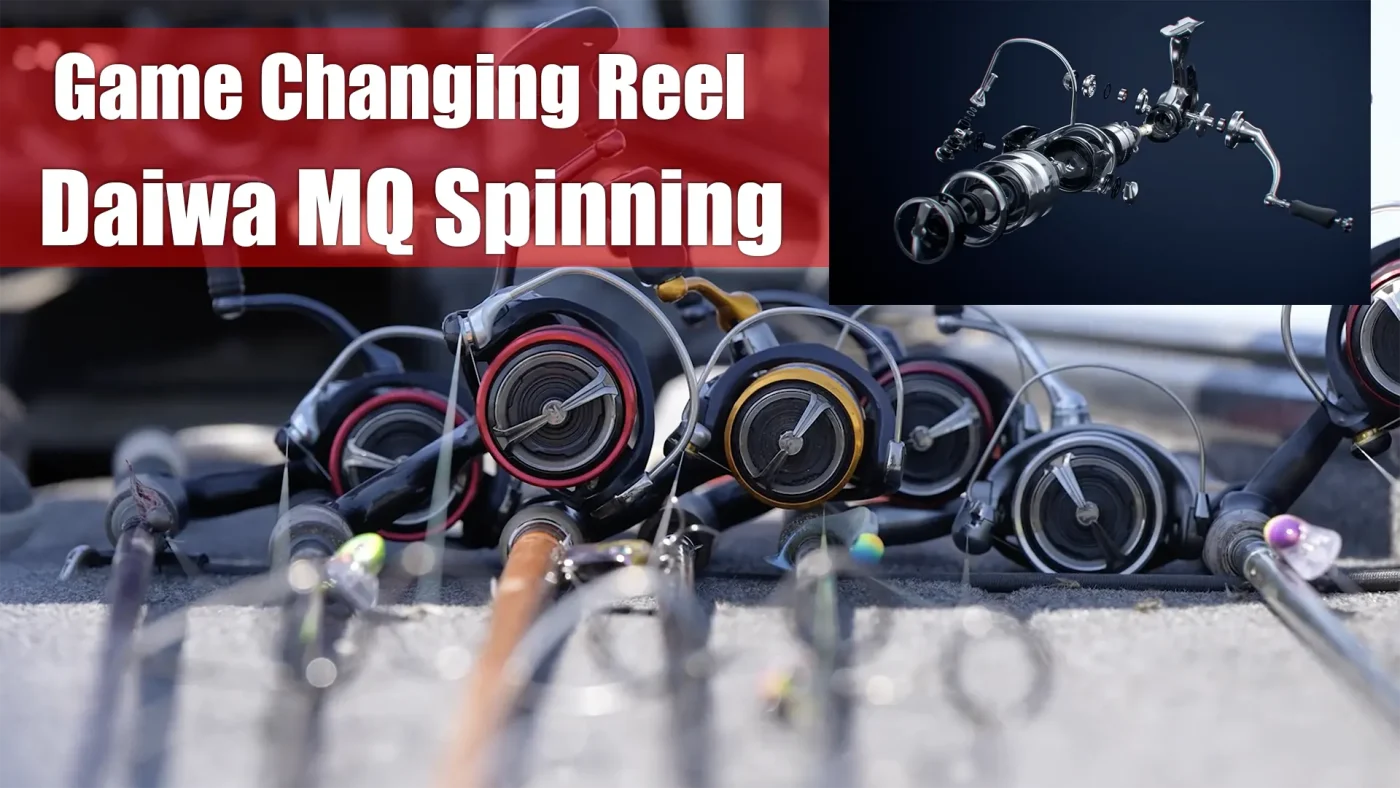
Daiwa’s MQ spinning reels replace the traditional two-piece reel frame with a single, rigid body. That seamless housing does three critical things:
- Maximises Gear Size – The large circular side plate you see on every MQ reel lets Daiwa install an oversized drive gear that fills the body cavity. More surface area equals more gear contact and dramatically increased cranking power.
- Eliminates Flex – A one-piece frame has no jointed seams to shift under pressure, so internal components stay in perfect alignment even under heavy loads.
- Trims Bulk, Not Strength – Moving from a 3000- to a 4000-size MQ adds only fractions of an ounce, yet you gain a much more powerful gear train. Older two-piece 4000s felt like boat anchors by comparison; modern MQ 4000s share nearly the same footprint as their 3000 counterparts.
MQ Spinning Reels Drag Systems That Stay Smooth—Fish After Fish
Many anglers remember the “zip-zip-zip” sound of legacy drags that wore down a little more each season. MQ reels are different. Their carbon-based drag stacks deliver a uniform, click-by-click release no matter where you set them:
- Consistent Heat Management – On blistering, bottom-to-surface runs from big walleyes, the drag plates stay cool and never glaze over or grab.
- Protection for Light Line – Six-pound mono or fluoro is common in finesse walleye tactics. A steady, non-jerky drag lets you pressure 6-, 8-, even 10-pound fish without sudden break-offs.
- Long-Term Reliability – Unlike older reels that needed an annual crank-down to maintain the same drag pressure, MQ drags deliver day-one performance season after season.
Real-World Proof on the Water
A first-time visitor to the famed “bokeh” walleye bite learned the hard way: three consecutive break-offs on lunging trophies because his reels couldn’t cope with the surge. Upgrading to MQ models solved the problem instantly. Those long dives back to bottom are exactly what the drag system is built to tame.
A Family of Reels—From Procyon to Exist
Whether you want an affordable workhorse or a flagship showpiece, the MQ architecture runs through the entire Daiwa lineup:
| Series | Key Traits | Ideal For |
|---|---|---|
| Procyon MQ | Entry point to MQ tech, lightweight aluminium frame | Weekend multispecies anglers |
| Fuego MQ | Carbon body, Magsealed main shaft | Value-minded power users (many are still flawless after 4–5 hard seasons) |
| Ballistic MQ | Zaion carbon body, high IPT for fast presentations | Tournament finesse specialists |
| Saltist MQ | Full aluminium, heavy-duty sealing | Coastal and Great Lakes big-water hunters |
| Exist MQ | Monocoque magnesium, Air Drive rotor, hyper-tuned internals | The ultimate in refinement and minimal weight |
Whichever tier you choose, you’re buying the same one-piece rigidity and oversize gear platform that define the MQ concept.
Why Investing in Quality Pays Off
A high-end reel is more than a luxury; it’s insurance against lost fish and premature gear failure. When even modest upgrades in weight and cost translate to years of flawless service, smoother drags, and the confidence to fish lighter line, the long-term math makes sense.
Daiwa’s MQ technology has rewritten what anglers can expect from a spinning reel. From the rock-solid frame to the whisper-smooth drag, every detail is engineered to help you land more fish and keep your gear performing like new—season after season. If you haven’t fished one yet, pick up a Procyon, Fuego, or go all-in with an Exist. Once you feel that seamless power on the retrieve and the silky drag under load, you’ll understand why MQ reels are quickly becoming the new standard on boats everywhere. The next time you are in a sporting good store, pick one up and give it a spin. Of course, you can also just take our word for it, these reels are amazing!