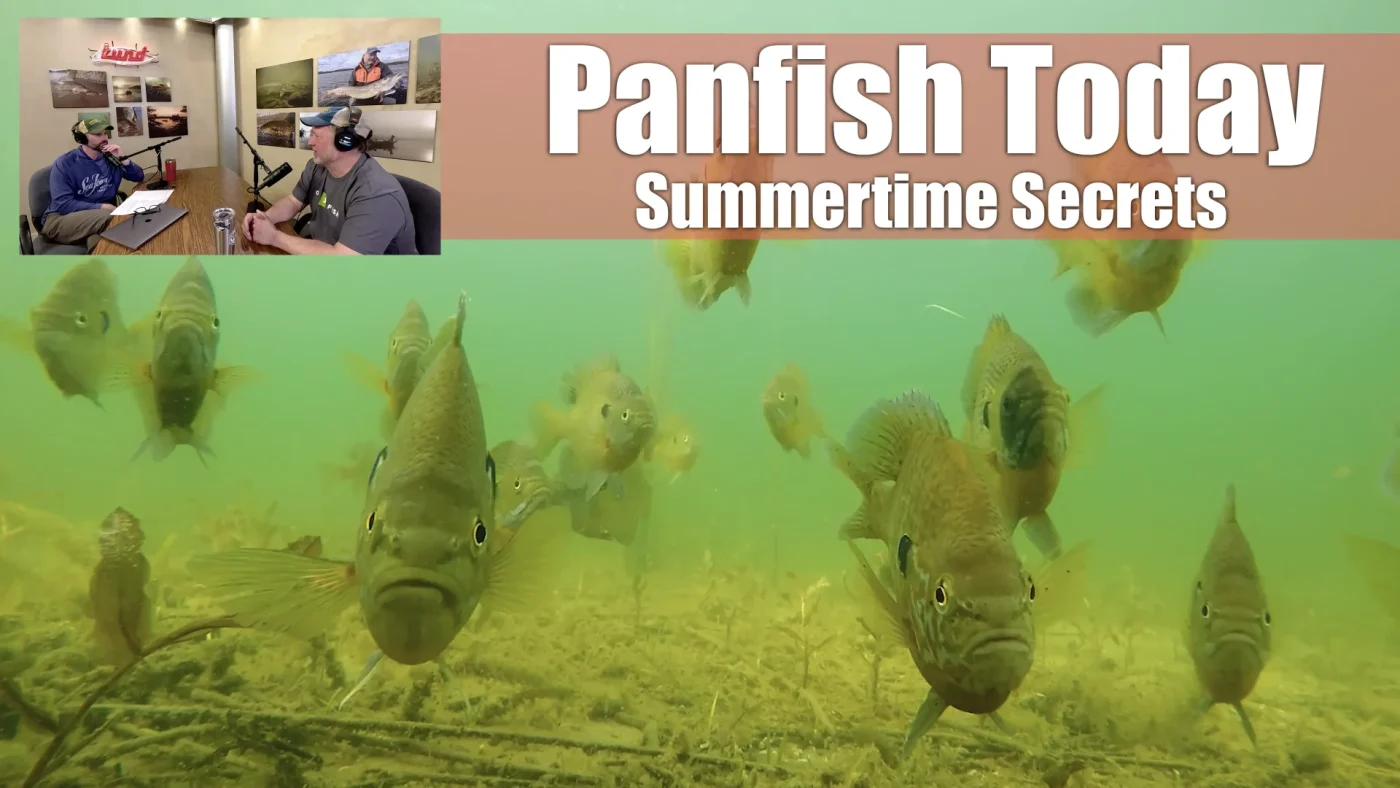

When it comes to longevity in the fishing industry, many know the name and face of Mike Hehner. A cornerstone of the angling media community and a man with deep roots in fishing, Mike’s journey began with a passion for the sport that eventually led him from fisheries management studies into the publishing world.
It was at the Hunting and Fishing Library where he first crossed paths with industry icon Bill Lindner, a meeting that would set the trajectory for decades of media contributions through Lindner Media Productions. Mike’s expertise in summer panfishing has made him a key figure in sharing knowledge about fishing.
Today, Mike plays an integral role in producing high-quality fishing content for all of Lindner Media brands, managing Bill Lindner’s stock photo library, and leading efforts behind projects such as Lund’s The Ultimate Fishing Experience. His field experience and deep understanding of multi-species angling make him an invaluable resource—especially when the subject turns to his soft spot: panfish.
As summer panfishing enthusiasts, many rely on Mike’s experience to enhance their understanding of effective techniques, locations, and strategies that optimize their summer panfishing trips.
Panfish Passion and the Overlooked Summer Season
Panfish—bluegills and crappies—capture anglers’ attention heavily during winter through the ice, again in the spring when they spawn in shallow waters, and in the fall as they gather in predictable basin locations. But according to Mike, summer remains an underappreciated window for chasing these fish.
For those exploring summer panfishing, it’s crucial to adapt your strategies, considering the changing behaviors of panfish during these warmer months.
Engaging in summer panfishing opens up new opportunities to connect with nature and catch delicious fish, adding to the enjoyment of this timeless outdoor activity.
“It can be challenging,” Mike admits. “They’re no longer in the easy-to-find spawning grounds. After that, they move out into weed beds and become harder to locate. But that’s also when it gets fun—because no one else is out there targeting them.”
During this time, the pressure drops, and savvy anglers like Mike can have entire stretches of productive water all to themselves—if they know where to look.
Locating the Bite: Weed Beds and Cover Matter
Identifying ideal summer panfishing locations can lead to a more fruitful and enjoyable fishing experience, maximizing your time spent on the water.
Utilizing effective summer panfishing techniques not only increases your chances of a successful day but also enhances your appreciation for this engaging sport.
In central Minnesota, where Mike is based, lake types range widely. However, one constant is the importance of good weed beds, particularly those composed of cabbage or coontail. As the spring progresses into early summer, these vertical standing weed beds become crucial habitat for both crappies and bluegills.
“I look for quality weed beds not far from the spawning areas,” Mike explains. “As the weeds mature, panfish seem to settle into these flats for much of the summer. It might take some work to find them, but once you do, they usually stick around.”
He emphasizes the value of experience and memory—knowing historically productive weed beds and replicating those conditions on other lakes. For anglers newer to summer panfishing, identifying thick, healthy weed beds or brush piles becomes the starting point.
Understanding Weed Types and Fish Positioning
Not all weeds are created equal. For instance, curly-leaf pondweed grows early but dies off quickly, leaving behind open water. In contrast, cabbage and coontail offer more persistent vertical structure.
Mike recalls his father referring to these as “crappie weeds,” and uses visual clues—like weed tips emerging from the water in mid-June—to guide his search. Once found, the edge of the weed bed becomes ground zero for casting and exploring both inward and outward.
Bluegills vs. Crappies: Depth and Approach Differences
Summer panfishing is about more than just catching fish; it’s about enjoying the outdoors and creating lasting memories.
While bluegills and crappies often inhabit the same areas, Mike has observed consistent differences in their preferred depth. Crappies tend to ride higher in the water column, while bluegills usually hang lower and deeper into the weeds.
Last June, Mike had a day that illustrated this well. “I was casting plastics for crappies and started catching big sunfish too,” he says. “So I changed it up—used a slip bobber with a jig and worm, and dropped it deeper into the weeds. That’s where the sunfish were.”
Engaging in summer panfishing allows for an immersive experience, providing opportunities to learn about local ecosystems and fish behavior.
This subtle depth adjustment can mean the difference between an average day and an exceptional one, particularly when trophy-class panfish are the goal.
Technology’s Role in Summer Panfishing
When targeting larger panfish during summer panfishing, understanding their feeding patterns becomes essential for success.
As summer panfishing evolves, embracing new techniques and innovations can significantly enhance your fishing experience.
Locating fish in the dense cover of summer weeds is no easy task—but modern electronics make it far more manageable. Mike relies on side imaging and 2D sonar to identify weed lines and structure. “You just drive around and look for where the weeds begin. It shows up clearly on side imaging.”
Forward-facing sonar is also in Mike’s arsenal, but he emphasizes that side imaging remains invaluable for understanding bottom composition and identifying key areas.
One tip he shares: crank up your side imaging sensitivity in soft-bottom, weedy areas. This makes panfish show up as distinct white signatures against the background. “If your sensitivity is too low, fish and weeds blend together,” he says. “But when you dial it in, you can actually see the schools.”
From Sonar to Confidence
What’s great about panfish is their tendency to school. “If you catch one, chances are good there’s more,” Mike explains. That instant feedback builds confidence quickly, turning cautious exploration into productive fishing.
Finding Lakes with Trophy Potential
When it comes to choosing a lake, Mike turns to one of Minnesota’s most valuable resources: Department of Natural Resources (DNR) lake surveys. These surveys contain decades of data on fish populations, sizes, and trends.
But thanks to technology like the OnX Fish app, Mike and other anglers now have this information at their fingertips in an even more usable form. The app not only compiles DNR survey data but organizes it by species and size class, allowing anglers to filter for lakes with trophy bluegills or crappies.
“You can see right away if a lake has 10–11-inch bluegills or 12–14-inch crappies,” Mike notes. “If a lake only has fish in the 7–8 inch class, with very few bigger, it might not be worth your time if you’re looking for quality.”
Finding Trophy Panfish: Interpreting Onyx Data
One of the most powerful tools for anglers targeting trophy panfish is the OnX Fish survey data, which breaks down the size structure of panfish populations in various bodies of water. If you’re aiming for crappies in the 12- to 14-inch range, a quick glance at past survey results can help narrow down your options to lakes with genuine trophy potential. Conversely, if a lake’s data doesn’t show crappies over 9 inches, it’s probably not the best choice if your goal is big fish.
Still, nearly every lake in the region has panfish, so if you’re just looking to catch a mess of 5- to 7-inch bluegills or a few eating-size crappies, there are plenty of options. But for targeting bigger fish, data-driven lake selection is essential.
Summertime Presentations for Crappies
When it comes to summer crappie fishing, pitching light plastic jigs along weed lines is a go-to strategy. This includes using 1/16- to 1/8-ounce jigs rigged with small, two-inch soft plastics like tube jigs or fluke-style baits. Interestingly, while many anglers instinctively want to jig these baits actively, a more passive retrieve often yields better results.
The key technique? Cast the jig, let it sink to the desired depth, and then reel it in slowly and steadily. A slight pulse can help, but over-jigging tends to scare off crappies or attract less desirable species like small pike. With today’s sensitive rods and braided lines, anglers can feel even subtle bites—crappies often hit with a sharp “jump” on the line.
Precision in Presentation
Though the technique may sound simple—cast and retrieve—it’s deceptively nuanced. Success hinges on controlling the bait’s position in the water column. This means matching the weight of your jig to the drag created by the plastic body, and fine-tuning with the right line. Light lines like braid or fluorocarbon aid sensitivity and control.
The VMC Muni jig in 1/16-ounce is a favorite among seasoned anglers for its balance of castability and presentation. As for plastics, straight tails and tubes tend to outperform curly tails. While color can play a role, having a natural, baitfish-like presentation is often more important than hue.
Crappies vs. Bluegills: Behavioral Differences
Crappies tend to be impulse strikers—they respond well to a subtle moving bait in their vicinity. Bluegills, on the other hand, are far more scrutinizing. Anglers often observe them staring at a bait for extended periods, especially during ice fishing. Because of this, natural bait like worms or waxworms is usually necessary to trigger bites, even more so outside of the spring spawn or bedding periods.
Bobber Tactics: Fixed vs. Slip Floats
Float fishing remains one of the most common and effective panfish techniques. Choosing between a fixed float and a slip bobber depends largely on depth and presentation.
- Fixed floats are ideal for fishing six feet of water or less. They allow for more precise bait control and better casting in windy conditions. Many anglers prefer them for the additional action they can impart on the bait.
- Slip bobbers shine in deeper water, typically over six feet. They allow the bait to descend to exact depths while still being castable. However, fixed floats often allow for more dynamic bait movement.
Despite their simplicity, fixed floats—those budget-friendly, clip-on bobbers—are remarkably effective, offering control and action with minimal fuss.
Drop Shotting for Panfish
A more recent technique gaining traction, especially for bluegills, is the drop shot rig. This setup excels in deeper water where fish are holding just off the bottom. Unlike cork setups that require constant depth adjustments, a drop shot rig keeps the bait consistently at a desired level—usually just above bottom—regardless of total water depth.
While some anglers (half-jokingly) resist the technique for its bass fishing origins, it has proven highly effective for bottom-oriented species like bluegills. Crappies, being more suspended, are less frequently targeted with drop shots, but for sunfish, especially in summer, it’s a game changer.
Big Bluegills in Deep Water
As the summer progresses, particularly from late June onward, the largest bluegills often shift to deeper structures, behaving almost like walleyes. Anglers trolling for walleyes with crankbaits or dragging bottom bouncers routinely report surprise catches of jumbo gills—sometimes 10 inches or more—in depths of 20 to 25 feet.
These deep-dwelling bluegills are commonly found around walleye-type structure like reefs, rock piles, and transitions from sand to mud. It’s a reminder that trophy sunfish can behave quite differently than their smaller, shallow-water counterparts, often requiring specialized tactics and locations to target effectively.
The Importance of Light Tackle
One barrier to successful crappie jig fishing is using tackle that’s too heavy. Casting a 1/32- or even a 1/16-ounce jig with a standard walleye setup—spooled with heavier line—makes detecting bites and achieving natural presentations difficult. To fish panfish jigs effectively, ultralight rods and light lines (4-lb test or lighter) make a huge difference in both control and sensitivity.
Gear Matters: Optimizing Your Setup for Panfish Success
One of the most important themes that emerged in this part of the conversation was the significance of using the right gear when targeting panfish, particularly crappies. As the discussion transitioned into equipment recommendations, it became clear that specialized setups can make a huge difference in casting distance, bait presentation, and bite detection.
Mike shared his favorite panfish combo, which includes a high-end, seven-foot, one-piece St. Croix Legend Elite rod—specifically a light or medium-light model with an extra-fast tip. This rod is paired with a 1000-size Daiwa Regal LT spinning reel, a lightweight option that provides a smooth retrieve and enough line capacity for longer casts. The choice of line is equally critical: six-pound Sufix braid, either the Nano Braid or the newer Revolve, is the go-to for achieving maximum casting distance and sensitivity.
Why Braided Line Stands Out
The panel highlighted the performance benefits of using advanced braided lines like Sufix Revolve. Unlike mono or fluorocarbon, this new-generation braid is light—not just in pound test, but in material density—which allows for minimal drag and unparalleled casting efficiency. With the proper setup, anglers can cast even a 1/16 oz crappie jig “a mile,” enabling them to reach skittish fish from a distance without spooking them.
Braided line also has no memory and lasts for years, making it a low-maintenance, high-performance choice. One key tip: pair it with a fluorocarbon leader, which improves stealth and provides a buffer against toothy predators like pike. The panel acknowledged that tying knots in thin braid can be tricky, so a number 12 barrel swivel is often used to make leader transitions easier and more efficient.
Visual Bite Detection with Colored Braid
An often-overlooked benefit of braided line is the visual feedback it provides. Using high-visibility colors—such as white or chartreuse—helps anglers see subtle movements that indicate a bite, especially when reeling or swimming jigs. This is critical because many crappie bites are soft or come as the fish pushes the bait toward the angler rather than pulling away. Watching for that line twitch is sometimes the only way to know it’s time to set the hook.
Gear Durability and Innovation
Another noteworthy point was the discussion around durable soft plastics made from elastic materials. One panelist reported catching up to 50 crappies on a single jig and tail without it tearing—an incredible value for both casual and hardcore anglers. Even with standard plastics, it’s not uncommon to get 10 fish per bait, which speaks to how far soft bait technology has come in recent years.
Unlocking Panfish Potential in the Canadian Shield
The conversation then turned to the unexpected panfish opportunities available in northeastern Minnesota, especially in classic Canadian Shield lakes like Lake Vermilion, Crane Lake, Namakan, Sand Point, and even Rainy Lake. While these waters are traditionally known for smallmouth bass, walleye, pike, and musky, they’re also teeming with high-quality crappies—and in some cases, big bluegills as well.
Many of these crappie populations aren’t widely targeted, making for low-pressure and high-reward fishing. Some lakes may have been naturally stocked, while others possibly benefited from unofficial “midnight bucket” introductions. Regardless of how they arrived, the bottom line is clear: these lakes are crappie goldmines.
Interestingly, in some shield lakes where weed beds are scarce, crappies are often found around rocky structures—similar to walleye habitat. Anglers might stumble onto crappies while fishing for something else, noticing that what they thought were walleyes on their sonar are actually slabs. This presents a unique opportunity to switch gear on the fly and enjoy an epic crappie bite over offshore rock piles in 8 to 12 feet of water.
Surprising Encounters on Classic Walleye Waters
Several anecdotes drove this point home. On Pelican Lake, for example, while targeting smallmouth in spring, anglers noticed crappies staging on rocks—a revelation that challenged the assumption that panfish require weeds. Another account from Wahbegoon Lake involved discovering big crappies in stained water while fishing shallow rock piles. Even in these traditionally “non-panfish” waters, crappies proved to be more abundant and catchable than expected.
A Nod to the Past: Pelican Lake Roots
As the conversation closed this segment, it took a nostalgic turn. One panelist reminisced about working summers as a dock boy at Bratton’s Resort on Pelican Lake during junior high and high school. Those formative years spent cleaning fish and hanging around the docks planted a deep-rooted appreciation for the lake and its underrated panfish fishery.
Reviving a Bluegill Legacy: From Abundance to Recovery Efforts
In the previous section, we looked at the speaker’s early days working summers at a Minnesota resort, cleaning fish by the hundreds and witnessing firsthand an era when trophy-sized panfish were the norm. Now we continue as he delves into the population decline, lessons learned, and the tireless work being done to bring those legendary bluegills back.
A Summer Job Turned Fish Cleaning Marathon
During his summer baseball off-seasons, the speaker spent two years working at a resort in northern Minnesota, where a unique perk came with the job: every third evening off meant he and his colleagues could fish. The lake at the time was teeming with giant panfish, especially bluegills.
Anglers routinely brought in full limits — 30 fish per person — with bluegills in the 9- to 10.5-inch range being commonplace. As part of his duties, he cleaned fish for guests, initially charging a nickel per fish, which he later raised to a dime. It became a nightly ritual. He recalled cleaning so many sunfish that his fillet knife developed a permanent bend. Despite his deep appreciation for these fish, he acknowledged being part of a system that unknowingly overharvested them.
A Culture of Harvest: Generations of Pressure
Back then, families would arrive from Iowa, Illinois, and Indiana with cardboard milk cartons, ready to haul home hundreds of bluegills weekly. With six family members, that could mean well over a hundred fish in a single outing. At the time, it seemed harmless — the fish were everywhere.
But over time, the inevitable happened. Trophy-sized bluegills — some pushing two pounds — became increasingly rare. Although he never personally cleaned one of those giants, he vividly remembers holding one that weighed 1 pound, 14 ounces. These fish were remarkable, described as “as tall as they are long,” with impressive girth and thickness.
That abundance vanished. As he puts it, “now they’re gone.” The mindset of both anglers and even biologists had been that panfish were self-regulating, resilient to pressure. Unfortunately, that assumption proved false.
Understanding the Collapse: Biology and Behavior
Now deeply involved with the Minnesota Department of Natural Resources (DNR) through its panfish work group, the speaker has spent nearly a decade working alongside biologists and policy makers to rebuild panfish populations. A central revelation of that work is that the disappearance of large bluegills isn’t primarily a genetic issue — it’s behavioral and ecological.
When large bluegills are systematically removed from a lake, it causes a cascade of changes. Bluegills that would have taken five or six years to reach sexual maturity begin spawning as early as two or three years of age. With maturity no longer linked to size, fish reproduce earlier and more frequently, but at smaller sizes. This accelerates the proliferation of stunted populations and undermines the ecological balance.
Restoring Balance: Regulations and Resistance
To counter this trend, the DNR has worked to reduce harvest pressure and protect the few large fish that remain. The bag limit for sunfish was cut from 30 to 20 fish, and more recently, experimental five-fish limits have been implemented on select lakes. These more restrictive limits aim not just to maintain populations, but to allow bluegills to grow to larger sizes again.
And it’s working. Lakes that previously peaked at nine-inch fish are now beginning to yield ten-inchers again. Angler behavior is also shifting — instead of avoiding restrictive lakes, many are now seeking them out for the chance to catch trophy-caliber bluegills, even if they only keep a few.
The Push for Slot Limits: A New Chapter in Bluegill Management
One of the most promising developments is the upcoming implementation of slot limits. Historically, proposals to limit the harvest of larger bluegills faced stiff resistance — both from anglers and even from law enforcement, who questioned the practicality of measuring bluegills.
But times have changed. With anglers now accustomed to measuring walleyes and other regulated species, the idea of applying slot limits to bluegills is no longer far-fetched. Starting next year, five Minnesota lakes will have experimental regulations allowing anglers to keep up to 20 bluegills, but only five over eight inches. The goal is to rebuild size structure while still allowing harvest of smaller, more abundant fish.
As you refine your skills in summer panfishing, remember to respect the environment and maintain sustainable practices for future generations.
These lakes were chosen based on their historical potential to produce large bluegills, and the results will be closely monitored. The program represents a long-awaited step forward in bluegill management and a potential model for other states.
Changing Attitudes, Changing Fish
Perhaps most telling is the shift in perception. On social media, anglers now celebrate ten-inch bluegills as rare trophies — a far cry from the days when such fish were the norm. The speaker notes with a touch of nostalgia how, in his youth, ten-inchers were hardly worth mentioning; now they’re cherished, photographed, and often released.
This change in culture is key. Protecting large bluegills depends not only on regulations but also on individual choices. As he points out, letting a nine-incher go today is what allows a ten-incher to exist tomorrow. And increasingly, anglers are getting on board with that mindset.
Growing Support for Conservation-Minded Bluegill Management
As the conversation turns toward the impact of regulations on angler behavior, it’s clear that public perception has shifted significantly over time. Mike shares insights from conversations with lakeshore owners and other anglers who, once skeptical of new size and harvest restrictions, are now seeing the tangible benefits. He describes how property owners on lakes without protective regulations are now advocating for them after witnessing the improved size structure and abundance of sunfish on neighboring lakes with slot limits.
“I was just over at the lake next door that has it, and I caught a whole bunch of really big sunfish, and ours are not. Can we do that, too?”
This evolution in angler sentiment underscores how effective communication, community engagement, and demonstrated success on managed waters can lead to broader support. Even local game wardens who were once wary of increasing regulations are now accustomed to regularly measuring fish across multiple species—pike, walleye, bass, and now bluegill. As they put it, “What’s another species?”
Education and Personal Growth Among Anglers
Mike, despite jokingly referring to himself as a “meatpacker,” has undergone his own evolution. With a background in biology and a commitment to learning, he’s become an advocate for conservation and a resource for others seeking to understand the reasoning behind harvest regulations. He shares a story about a friend—an avowed fish harvester—who proudly released a pair of 9.5-inch bluegills. That moment speaks volumes about the cultural shift happening within the angling community.
Crappies: A Different Management Picture
Switching gears to crappies, the hosts and Mike highlight the distinct biological and ecological traits that set them apart from bluegills. Crappies have a more temperature-sensitive, narrow spawning window, making them “cyclical spawners.” In other words, a single cold front during the spawn can wipe out an entire year class. As a result, crappie populations often consist of a few dominant year classes—leading to periods where lakes are full of big fish followed by years of sparse catches.
Because of this natural boom-and-bust cycle, crappies are generally more resilient to angling pressure than bluegills. Harvesting a few big crappies doesn’t necessarily have the same long-term population consequences. However, Mike and the group emphasize that restraint and timing still matter. For example, fishing during peak spawn—particularly when crappies are nesting in shallow bulrush beds—can lead to localized overharvest. Stories of entire bedding areas being wiped out over a single holiday weekend illustrate the vulnerability of spawning fish.
“He counted 32 crappies on beds… by Monday morning, there wasn’t a crappie in it.”
Changing Harvest Attitudes
The conversation circles back to a larger trend: angler values are shifting away from a quantity-first mindset. Harvesting a small number of quality fish—like five 12-inch crappies—is now seen as a successful day on the water. This change in mindset has helped gain acceptance for reduced bag limits, especially on heavily fished lakes. While the ability to keep fish remains a central part of the fishing experience, many anglers are placing greater value on the opportunity to consistently catch quality-sized fish.
With each summer panfishing trip, anglers can refine their skills, making every outing an opportunity for growth and enjoyment.
Interconnectedness: Perch, Pike, and Panfish
The discussion wraps with a deep dive into the interconnected dynamics of lake ecosystems. A balanced fishery, particularly in mesotrophic lakes common across the upper Midwest, often hinges on a stable mix of perch, northern pike, and bluegills. Each species plays a role in regulating the others. For example, when an overabundance of small pike decimates a perch population, the resulting lack of predation pressure allows young bluegills to proliferate unchecked—leading to stunting and poor size structure.
Restoring balance isn’t as simple as harvesting more small pike. In fact, doing so without protecting larger pike may exacerbate the problem. Large pike help regulate their smaller counterparts, so maintaining a multi-age structure—including trophy-sized individuals—is essential. This mirrors the same principle applied to bluegill management: protecting top-tier specimens ensures a healthier, more balanced fishery.
“It doesn’t matter how many you take out. It just doesn’t seem to help unless you’re also keeping the bigger pike in the lake.”
The conversation underlines the ecological value of apex predators—big muskies, walleyes, and pike—in sustaining the structure and function of freshwater ecosystems. With sound regulations, community engagement, and a willingness to learn, anglers and fisheries managers alike are turning the tide toward healthier lakes and better fishing opportunities.
The Role of Predator Fish and the Perch Puzzle
A key point of discussion in this segment of the conversation was the crucial role that predator fish—like muskies and northern pike—play in shaping healthy fish communities. Contrary to outdated beliefs that these apex predators are simply depleting populations of prized species like walleyes and crappies, the current research highlights how essential they are to maintaining balance within aquatic ecosystems.
One particularly interesting note was the discussion on yellow perch. Traditionally a dominant forage species, perch have recently been exhibiting some remarkable changes in lakes across the region. In many cases, perch populations are showing signs of “miniaturization,” with lakes increasingly populated by ultra-small, maturing perch. These perch are reaching sexual maturity at an incredibly young age—some as early as a few months after hatching.
The camaraderie that comes with summer panfishing can deepen friendships, as shared experiences often lead to lasting memories.
This rapid maturation is being interpreted as a stress response, triggered by the overharvesting of larger individuals. When mature fish are heavily targeted, the population compensates by accelerating reproduction to preserve its numbers, even at the cost of growth. The biological takeaway is clear: when fish invest early in reproduction, they sacrifice growth, leading to stunted populations over time. As one panelist quoted, “Why should I grow big if I’m just going to get harvested?” This underscores the importance of protecting mature fish to allow for a more robust, better-sized population.
The Challenge of Reversing Population Trends
Shifting fish populations back toward larger, older individuals is not an easy task. Fish are highly adaptive, and their biology responds quickly to environmental pressures, including angling. For instance, in northern pike populations, a lake may hold 100 pounds of pike biomass regardless of whether that’s made up of five 20-pounders or 100 one-pounders. This flexibility allows fish communities to persist but complicates efforts to rebuild trophy-class fisheries.
As you embark on your summer panfishing adventures, keep an open mind to new locations and techniques that could enhance your success.
The balance between growth and reproduction is central to fishery management. Fish that are putting all their energy into spawning are not growing. Educating anglers and adjusting regulations to encourage the protection of larger individuals is one of the few tools managers have to steer populations in a preferred direction.
Forward-Facing Sonar: A Game Changer for Crappie Fishing
No contemporary fishing discussion would be complete without addressing forward-facing sonar (FFS), and the group didn’t shy away from tackling this contentious topic. In the context of panfish—particularly crappies—FFS has proven to be a seismic shift in how anglers locate and catch fish.
The panel recounted how effective FFS was during a barotrauma study, enabling them to locate and target crappies suspended over deep water with ease. This raised immediate concerns among biologists and conservation-minded anglers about the potential for overharvest, especially during the fall and winter months when crappies are often congregated and highly susceptible.
The ability to precisely target these deep-water schools has made crappies extremely vulnerable. One of the participants described how, with just a tip about the general area, he was able to locate a crappie hotspot on a new lake using forward-facing sonar in only four holes—and quickly filled a limit. “If you know how to use forward-facing sonar, you will find crappies,” he asserted. This precision, combined with improved mapping, electric augers, and fast information exchange, has elevated the average angler’s capabilities far beyond what was possible even a decade ago.
The Barotrauma Dilemma
Barotrauma—a condition where fish suffer internal injuries from rapid pressure changes during deep-water retrieval—was another major concern discussed in relation to FFS. The evidence from the study was clear: crappies caught from depths greater than 25 to 30 feet often don’t survive, even if released. While not every fish dies, mortality rates increase significantly with depth.
This reality adds urgency to the conversation around ethical angling and responsible harvest. Anglers can still enjoy fishing with FFS, but need to do so with an understanding of the consequences. As one speaker emphasized, “Catch your limit and go. Or just take what you need to eat.” The idea isn’t to stop fishing, but to educate and promote sustainable practices.
Regulation and Responsibility
Education and regulation are the two primary levers available to manage this issue. Informing anglers about barotrauma and the risks of deep-water fishing is essential. Likewise, fisheries managers can—and in some cases already have—implemented reduced bag limits on heavily pressured lakes. These strategies help ensure that modern technology doesn’t outpace the ability of fish populations to sustain themselves.
The discussion underscores a growing realization: forward-facing sonar is not just another incremental advancement in fishing tech—it’s a game changer. And with great power comes great responsibility.
The Long-Term Impact of Forward-Facing Sonar: Waiting and Watching
As the discussion continued, the tone remained one of cautious curiosity. The forward-facing sonar (FFS) phenomenon has already shifted the way anglers target species like crappies, but its long-term effects on fish populations are still unknown. Several lakes in northern regions now carry a five-fish limit for crappie, and biologists and anglers alike are eager—and a bit anxious—to see what the data will show in five to ten years. Will the technology erode the effectiveness of these conservative harvest strategies? Or will education and angler responsibility be enough to sustain these resources?
Skepticism Around Self-Policing
Summer panfishing is not only a sport, but a way to connect with nature and foster a deeper understanding of aquatic environments.
Mike Haener voiced concern about whether anglers can truly police themselves in this new environment. While more anglers are starting to question traditional habits and embrace selective harvest, the mindset shift remains inconsistent. There’s still resistance to limits—questions like “Why only five crappies?” or “Why only four walleyes?”—that reveal a disconnect between regulations and individual attitudes.
Haener was praised for his work in educating anglers through videos on topics like barotrauma (available on Angling Buzz’s YouTube channel). These efforts are vital because, as he points out, even catch-and-release becomes meaningless if deep fish are being caught and returned improperly—they often don’t survive. The key message here is to treat panfish as a valuable harvest resource. If you’re on deep fish, keep what you catch—whether it’s a six-inch crappie or a trophy fish that’s too fragile to survive release.
The Dual Nature of Technology
Maximizing your summer panfishing trips requires a combination of strategy, technique, and adaptability to changing conditions.
Haener admits he enjoys using forward-facing sonar—not just to find fish, but to locate habitat. But he also notes that owning the technology creates pressure. “Now I’ve got this… If I don’t catch fish, I’m really a crappie fisherman,” he joked, touching on the competitiveness that FFS fosters. It’s hard to go back to traditional methods when such a powerful tool is available.
Summer panfishing offers a unique blend of relaxation and excitement, making it a favored activity among fishing enthusiasts.
Yet, in some fishing scenarios, FFS is unnecessary. Shallow bass fishing, for example, still plays out much like it did before. But in deeper open water situations—think muskies, crappies, or lake trout—it’s a game-changer. Anglers are now “sharpshooting” lake trout on massive bodies of water like Lake Superior, targeting individual fish on the sonar and catching dozens in a day. It’s an efficiency leap that would be impossible without FFS.
A Double-Edged Sword
Join the growing community of summer panfishing enthusiasts who are dedicated to sharing tips and experiences for optimal success.
Technology as a learning tool is undeniably valuable. But as Haener pointed out, the implications for the future of fishing are complex. The traditional mystery of the sport—wondering what lies beneath the surface—has largely been solved. FFS can show you what’s 30 feet in front of the boat, two feet below the surface—data that was once unimaginable to obtain.
Even so, the technology doesn’t guarantee success. As highlighted in a recent Bassmaster Classic, every competitor had forward-facing sonar, yet a few still blanked. Skill, strategy, and environmental factors still play significant roles.
With Great Power Comes Great Responsibility
The discussion circled back to the philosophy of responsible use. Haener offered a familiar refrain from Spider-Man: “With great power comes great responsibility.” It’s a fitting reminder that while FFS is revolutionary, it demands ethical restraint.
There is hope, though. Big panfish are becoming “cool” again. Anglers like Hayes and the Crappie Chronicles crew are chasing 16-inch crappies not to kill them, but to admire them. Their success stories—cutting hundreds of holes and tracking a fish across a lake using FFS—sound outrageous to some, but they highlight how passionate and intentional modern anglers can be.
And while such experiences are currently rare, the hope is that these big fish might once again become more common. Holding a two-pound bluegill is like holding a 50-pound muskie—it’s awe-inspiring. The desire to see more of those fish in the wild is what drives much of the current conservation mindset.
A Culture Shift and a Nod to the Fishmonger
As the conversation wound down, there was recognition of the broader culture shift occurring in panfish angling. Techniques are evolving rapidly. Gone are the days of only bobbers and worms. Now, anglers are using X-Raps in spring, targeting basin crappies in the fall, and employing advanced electronics for precision targeting.
For Mike Hehner, panfishing has become far more entertaining in the last five years. It’s not just about catching dinner—it’s about the challenge, the technique, and the joy of connecting with a healthy fishery.
And of course, no discussion of panfish would be complete without recognizing Haener’s knife skills. He’s a renowned panfish cleaner—“the fishmonger” of the crew. If you’ve seen a fish cleaning video on Angling Buzz’s channel, chances are, you’ve watched Mike at work.
A parting gift—another magnetic photo tile on the wall, this time of a big pike from Baker’s Narrows in Manitoba—was a lighthearted but meaningful tribute to a career devoted to the resource and the sport.
Exploring New Horizons in Panfish Fishing
As the conversation wrapped up, there was an exciting look ahead to the future of panfish angling. Mike and his co-host discussed the many innovative techniques now available beyond traditional methods like bobbers and jigs. For example, springtime X-Rap fishing and fall basin crappie hunting with electronics have opened up entirely new ways to experience the sport.
These modern approaches have breathed fresh life into panfishing, making it more entertaining and engaging for anglers of all levels. Mike shared how he has become more invested in panfishing over the last five years precisely because of the variety and challenge it now offers. Sometimes, it’s just about having fun and catching a lot of fish — a rewarding feeling for any angler looking to sharpen their skills or simply enjoy the water.
Final Thoughts and Where to Find More
For those eager to dive deeper into the topics covered, the hosts invited viewers and listeners to explore the extended content available online. A longer version of this episode can be found on Angling Edge’s YouTube channel under Angling Edge Buzz. Fans can also connect via their various social media channels or listen to the podcast wherever they prefer.
This comprehensive conversation about technology, conservation, and evolving angling techniques highlights a pivotal moment in fishing culture—one where innovation and responsibility go hand in hand to protect and enhance the sport for generations to come.
Thank you for following along with this detailed exploration of forward-facing sonar and panfish fishing. Tight lines and respectful stewardship remain the best way forward.