
When early ice arrives, mobility and efficiency are two of the most important factors for a successful day on the ice. The Clam Pack Trap sled system offers a simple solution for anglers looking to travel farther, carry less, and spend more time fishing.
There’s something special about first ice. After months of waiting, anglers are finally getting back onto frozen lakes, searching for those first schools of walleyes, crappies, bluegills, and perch. The fish are often aggressive, fishing pressure is relatively light, and some of the best action of the winter can happen during those first few weeks.
However, early ice presents its own unique challenges. Ice conditions can vary dramatically, snow can make travel difficult, and anglers are typically limited to walking rather than using ATVs or snowmobiles.
That’s where having the right equipment makes a tremendous difference.
One of the most important pieces of equipment for early ice fishing isn’t necessarily a rod, reel, or fish finder. It’s the sled you use to transport your gear.
The Clam Pack Trap sled system is designed to make traveling across the ice easier, particularly when fresh snow makes pulling traditional fishing sleds a workout.
Why Mobility Matters During First Ice
Early ice fishing is all about staying mobile.
Unlike the middle of winter, when anglers can often travel across lakes using snowmobiles, ATVs, or trucks where conditions permit, first-ice fishing frequently requires walking to your favorite fishing locations.
That means everything you bring needs to be transported by hand.
And while pulling a sled across smooth, snow-free ice is relatively easy, conditions can change quickly when several inches of snow accumulate.
Traditional plastic fishing sleds tend to ride directly against the ice and snow. When snow gets deep, wet, or sticky, the front of the sled can begin pushing snow rather than gliding across it.
The result?
More resistance, more effort, and a lot more sweating before you ever drill your first hole.
It’s a situation many experienced ice anglers know all too well.
The Clam Pack Trap Advantage
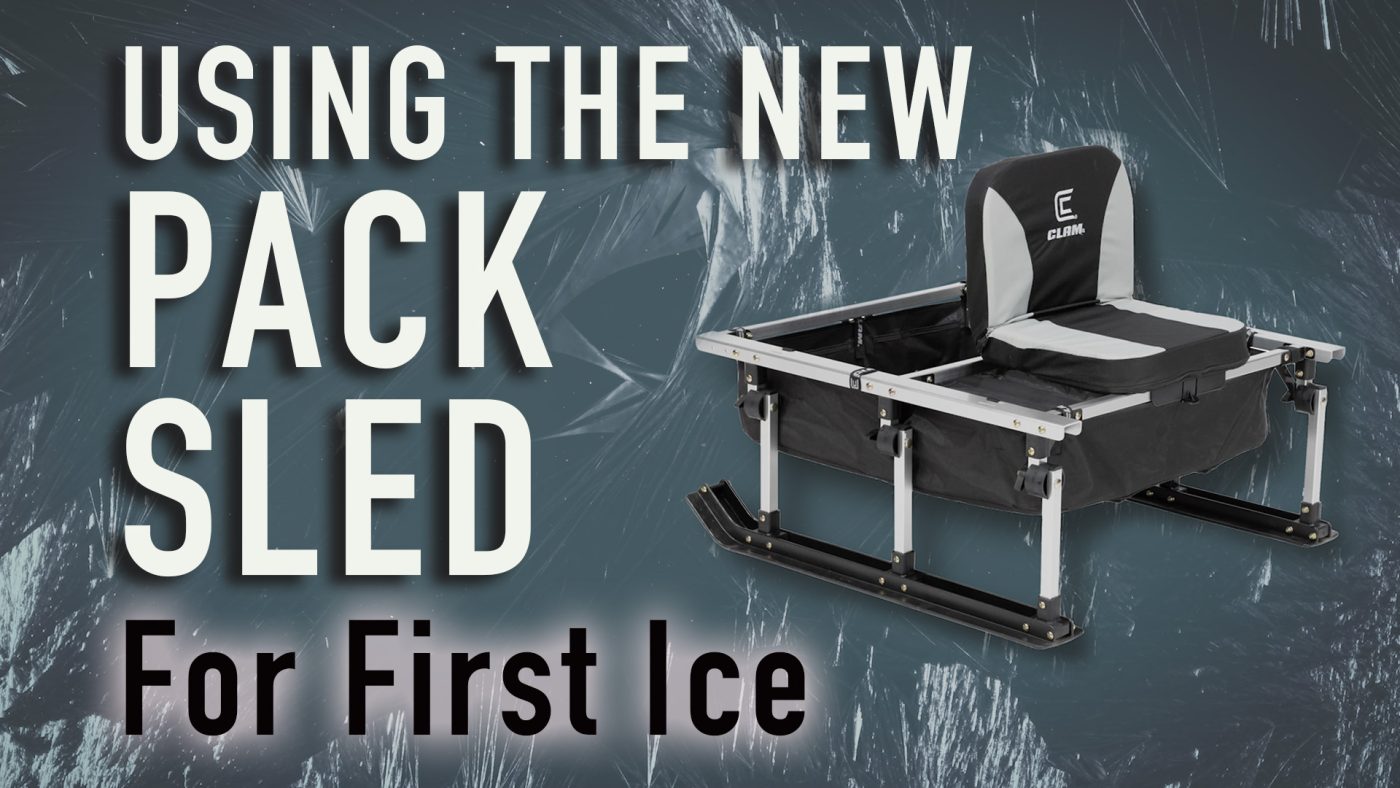
One of the biggest advantages of the Clam Pack Trap system is its ski-based design.
The concept is similar to the homemade Smitty sled systems that ice anglers have used for years.
A traditional Smitty sled utilizes skis mounted underneath a fishing sled to elevate the load above the snow. Instead of dragging the entire bottom of a plastic tub through the snow, the sled rides on skis that reduce the amount of surface area contacting the snow.
The result is significantly less resistance, particularly when traveling through fresh snowfall.
Clam has incorporated this concept into its Pack Trap lineup, offering several different configurations designed around the needs of ice anglers.
The lineup discussed includes:
- One-person Pack Trap: A ski-based system incorporated into a one-person portable fish house.
- Two-person Pack Trap: A larger configuration for anglers who want additional fishing space and gear capacity.
- Pack Trap Shuttle: A transportation-focused option for anglers who prefer to travel light without hauling a complete portable shelter.
Each system utilizes the same basic principle: elevate the load onto skis to make transporting fishing equipment easier.
For first-ice anglers who spend considerable time walking, this design can make a noticeable difference.
Why Skis Make Such a Difference
The effectiveness of the Pack Trap comes down to a relatively simple concept: reducing drag.
When a conventional fishing sled travels through snow, the bottom of the sled creates friction against the surface. As snow accumulates in front of the sled, the amount of force required to pull it increases.
Wet, sticky snow makes the problem even worse.
Imagine pulling a traditional flip-over fish house across four inches of ice covered by five or six inches of fresh snow. Even with a relatively light load, the sled can begin plowing snow, turning a simple walk to your fishing spot into a serious workout.
By elevating the sled onto skis, the Pack Trap reduces the amount of material contacting the snow.
Instead of pushing a wide plastic tub through several inches of snow, the system glides along on narrower ski surfaces.
This provides several practical advantages for early ice anglers.
Less physical effort: Reduced resistance means anglers can transport their equipment without expending as much energy.
Improved mobility: Moving between fishing locations becomes easier, encouraging anglers to continue searching rather than settling into an unproductive area.
Better efficiency: Less time struggling with equipment means more time drilling holes, locating fish, and presenting baits.
Reduced fatigue: Conserving energy is especially important during long days when anglers may walk considerable distances.
These advantages become increasingly noticeable when snow conditions make traditional sleds difficult to pull.
Pack Light and Fish More Efficiently
While the Pack Trap can make transporting equipment easier, there’s another important lesson for early ice anglers.
Don’t bring more equipment than you actually need.
It’s tempting to load a sled with every rod, tackle box, accessory, and piece of electronics you own.
But early ice isn’t the time to haul your entire collection of fishing equipment onto the lake.
Instead, anglers should take a more calculated approach.
Before heading onto the ice, consider three basic questions:
- What species am I targeting?
- What presentations will I be using?
- What equipment is absolutely necessary to fish effectively?
If you’re targeting early ice walleyes, for example, you may only need a couple of properly rigged rods, a small selection of jigging baits, electronics, an auger, and essential safety equipment.
For panfish, a few lightweight rods and a compact assortment of tungsten jigs and plastics may cover most situations.
The goal is to eliminate unnecessary equipment without sacrificing the tools needed to fish effectively and safely.
One particularly useful mindset is to keep your tackle selection small enough to fit in your pocket.
That doesn’t mean leaving important equipment behind. It means narrowing your presentation choices to the baits you’re most likely to use.
When you combine a streamlined tackle selection with an efficient sled system, traveling across the lake becomes much easier.
A More Mobile Approach to Finding Fish
Mobility isn’t simply about making your walk across the lake more comfortable.
It can also help anglers catch more fish.
During first ice, fish can be concentrated in specific locations. Walleyes may relate to shoreline breaks, points, and structural transitions, while crappies and bluegills may occupy particular weed edges, basins, or other seasonal holding areas.
Finding those concentrations often requires covering water.
Anglers who are willing to move, drill additional holes, and investigate new locations can increase their chances of locating active fish.
However, mobility becomes much less appealing when every move requires dragging a heavy sled through deep snow.
After several exhausting moves, it’s easy to convince yourself to stay in one location even when the fishing slows.
A sled system that pulls more easily helps remove that obstacle.
Instead of worrying about how difficult the next move might be, anglers can concentrate on locating fish.
That’s a tremendous advantage when searching for productive water during the early ice period.
Choosing the Right Pack Trap Configuration
One of the appealing features of the Clam Pack Trap lineup is that anglers can select a configuration based on how they prefer to fish.
For solo anglers who enjoy fishing from a portable shelter, the one-person system offers a combination of transportation and protection from the elements.
Anglers who regularly fish with a partner may prefer the two-person configuration, which provides additional room.
For highly mobile anglers who primarily fish outside and want a simple way to transport their equipment, the Pack Trap Shuttle offers another option.
The best choice ultimately depends on how much equipment you carry, whether you prefer fishing inside a shelter, and how far you typically travel.
For first-ice fishing, where keeping equipment lightweight and manageable is especially important, a smaller and more streamlined setup can be particularly attractive.
First-Ice Safety Still Comes First
While the Pack Trap can make transporting equipment easier, mobility should never come at the expense of safety.
Early ice conditions can change dramatically across the same body of water.
Ice thickness may vary around current areas, springs, narrows, pressure cracks, and other locations where ice formation is inconsistent.
Snow cover can make evaluating conditions even more difficult by concealing hazards and insulating the ice.
Before venturing onto early ice, anglers should always verify conditions locally and check ice thickness frequently with a spud bar or auger.
Essential safety equipment should include ice picks worn where they can be reached immediately, flotation protection, a throw rope, and a reliable means of communication.
Whenever possible, fish with a partner and make sure someone knows where you’re going.
Remember that four or five inches of clear, solid ice is commonly referenced as a minimum guideline for walking, not a guarantee of safety. Ice quality, thickness, and local conditions must always determine whether travel is appropriate.
A sled that pulls easily doesn’t make questionable ice safe.
Less Work, More Fishing
First-ice fishing is one of the most exciting times of the entire ice season.
The fish can be aggressive, opportunities are plentiful, and anglers are eager to get back onto their favorite lakes.
But early ice also demands a different approach to equipment.
Lightweight gear, carefully selected tackle, and efficient transportation can make the difference between an enjoyable day on the ice and an exhausting one.
The Clam Pack Trap addresses one of the biggest challenges of early ice fishing by incorporating a ski-based transportation system that reduces the effort required to move equipment across snow-covered lakes.
Whether you’re pulling a portable shelter or using a shuttle-style setup, the ability to travel efficiently can make it easier to cover water and stay on the move.
And when you combine that mobility with a simplified selection of rods, tackle, and essential equipment, you’re better prepared to take advantage of those valuable first-ice opportunities.
The bottom line: Early ice isn’t about bringing everything you own. It’s about bringing what you need, traveling efficiently, and spending more time fishing.
Sometimes, the best way to catch more fish is simply to make it easier to get to them.