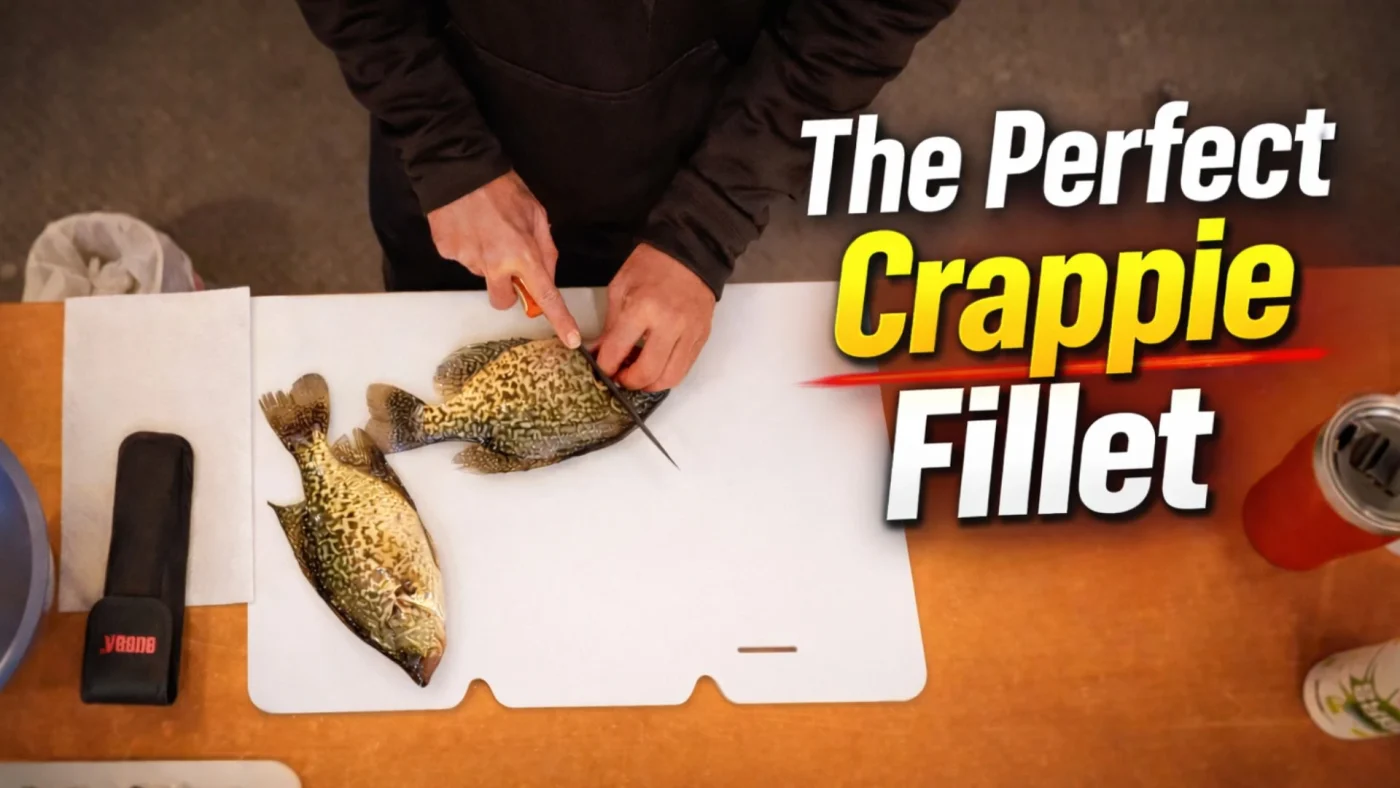

There’s nothing better than a great day chasing slabs, whether on the ice or open water, and finishing it off with a classic fish fry. But even the best crappie bite can fall flat at the table if the fish aren’t cleaned properly.
Learning how to clean crappie properly makes all the difference. Clean cuts, no wasted meat, and fully removed pin bones turn good fillets into perfect ones. In this guide, you’ll learn:
- The exact step-by-step method for filleting crappie
- How to remove pin bones completely
- How to maximize meat yield
- Why the Bubba folding fillet knife works so well for the job
Let’s get into it.
Tools You Need to Clean Crappie Properly
Before you start, make sure you’ve got the right setup. Cleaning crappies doesn’t require much, but having quality tools makes the job easier and cleaner.
Basic gear:
- Sharp fillet knife
- Stable cutting board or cleaning table
- Paper towels
- Trash bucket
- Access to running water (if available)
The most important tool? A sharp, dependable fillet knife.
Why the Bubba Folding Fillet Knife Works So Well for Crappies
For this method, we used a Bubba folding fillet knife, and it’s an excellent all-around utility knife for crappie cleaning.
1. Hard Steel That Holds an Edge
Bubba blades are known for their hard steel construction. That means:
- Exceptional edge retention
- Fewer touch-ups during big cleaning sessions
- Consistent, clean cuts through rib bones and pin bones
When you’re running through a pile of crappies, the last thing you want is a dull blade halfway through.
2. Blade Control & Precision
Crappies have soft flesh and a relatively delicate bone structure. A knife that offers good control allows you to:
- Ride the spine cleanly
- Follow the rib cage accurately
- Pop pin bones without shredding the meat
The firm blade gives you precision without feeling flimsy.
3. Folding Design Advantages
The folding feature makes this knife:
- Easy to store in a boat or ice shack
- Safe to transport
- Compact for travel
It’s a great choice if you want one knife that lives in your boat or sled year-round.
Step-by-Step Guide: How to Fillet a Crappie
This method keeps the process clean and efficient, and helps you get boneless crappie fillets every time.
Step 1: Cut Behind the Gill Plate
Start by inserting the knife right behind the gill plate.
- Angle the blade slightly forward to slide under the scales
- Cut down toward the belly
- Stop when you hit the rib cage
This initial cut establishes your fillet line without cutting into the gut cavity.
Step 2: Follow the Spine to the Tail
Turn the fish so the back faces you.
Using the tip of the knife:
- Slide along the spine
- Keep a slight downward angle
- Let the blade bump the spine so you don’t miss meat
Instead of forcing the knife forward, try pulling the fish into the blade. This gives you better control and cleaner cuts.
Once you feel the blade glide freely, push toward the tail to separate the fillet from the backbone.
Step 3: Work Through the Rib Cage
After freeing the back portion, focus on the rib section.
- Use the tip of the knife to cut the pin bones from the front
- Follow the curve of the ribs carefully
- Keep the blade tight against the rib cage
Take your time here. This is where a lot of anglers leave meat behind, especially near the belly and just above the anal fin. There’s more meat there than most people realize.
Step 4: Remove the Fillet from the Carcass
Once you’ve cleared the ribs:
- Separate the fillet fully from the body
- Repeat the same process on the other side
Because the ribs protect the gut cavity, this method stays clean and minimizes mess.
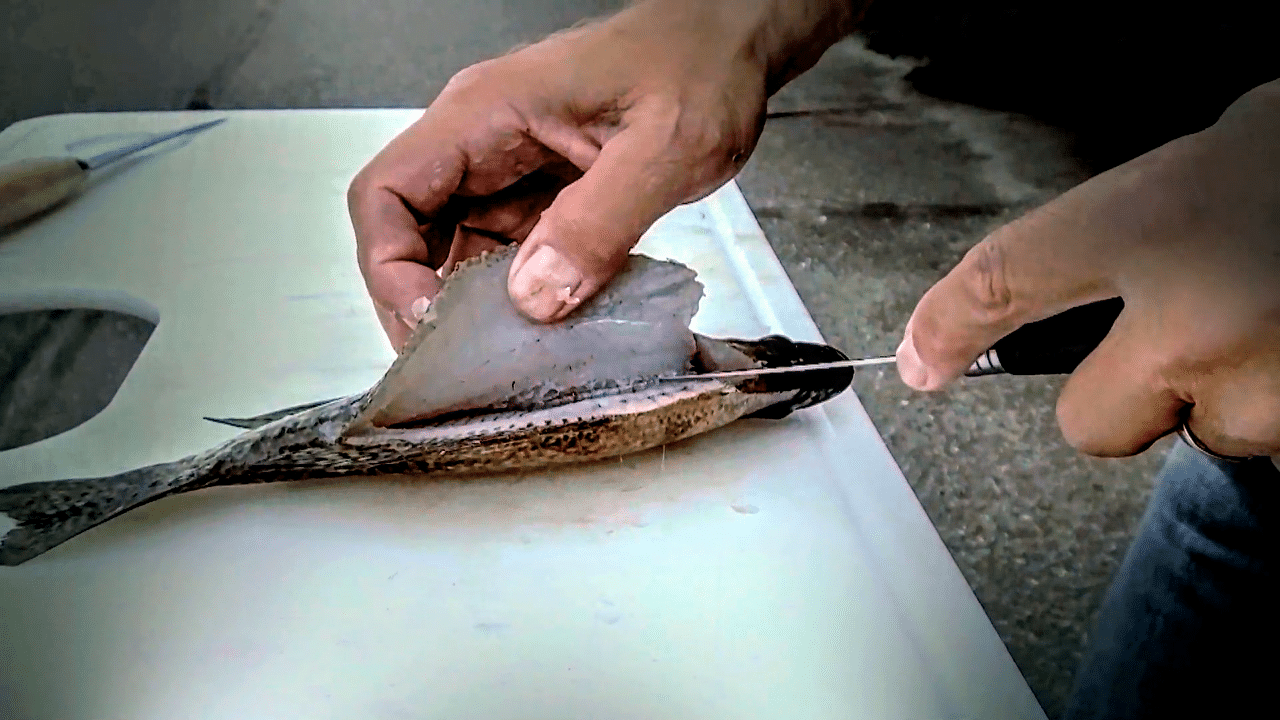
Step 5: Skin the Fillet
Now it’s time to remove the skin.
Position the fillet at the edge of your cutting board so the knife handle can clear the surface.
- Start at the tail end
- Keep the blade nearly flat
- Push the knife forward while holding the skin steady
If done correctly, you’ll remove the skin cleanly without wasting meat.
Step 6: Remove the Pin Bones
Even after filleting, crappies have small pin bones running along the lateral line.
To remove them:
- Run your fingers along the center of the fillet to feel the bones
- Make one shallow cut along one side of the bone line
- Make a second cut on the opposite side
- Remove the narrow strip of meat containing the bones
The bones usually run about two-thirds of the way down the fillet. After this step, you’ll have a completely boneless crappie fillet ready for cooking.
Pro Tips for Maximizing Meat on Crappies
If you want the most yield possible:
- Don’t rush the rib cage section
- Use a sharp knife at all times
- Pull the fish into the blade instead of pushing aggressively
- Pay attention to the belly meat, especially near the anal fin
- Feel for bones before calling it done
Crappie flesh is soft, so patience pays off.
Preparing Crappie for the Perfect Fish Fry
Crappies are one of the best fish for frying because their flesh is:
- Mild
- Flaky
- Soft and tender
A hard fry works especially well. Once your fillets are boneless:
- Pat them dry
- Coat in your favorite breading
- Fry until golden and crisp
Because crappie meat is softer than walleye or pike, clean fillets and proper bone removal are critical for the best texture.
From Ice to Table
Properly cleaning crappie is about more than just getting fillets. It’s about respecting the resource and making the most of your catch.
With a sharp knife like the Bubba folding fillet knife and a careful, methodical approach, you can consistently produce:
- Clean fillets
- Maximum meat yield
- Completely bone-free results
Practice the technique, take your time, and your next crappie fish fry will speak for itself.