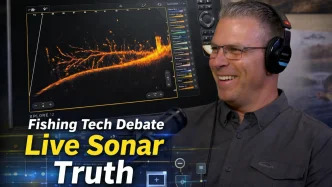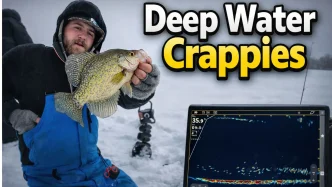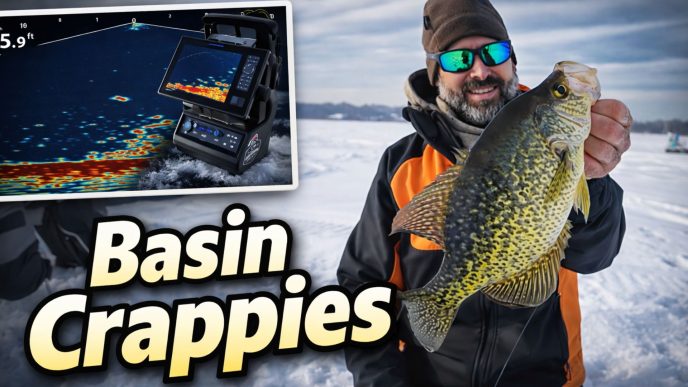


Early ice is one of the most exciting and most revealing times of the ice fishing season. Fish are still holding in predictable locations, pressure is lighter than mid-winter, and anglers have a unique opportunity to learn how a lake really sets up before snow cover and heavy traffic change everything. In this video, the conversation centers on early ice walleyes, how modern anglers are combining technology and fundamentals, and why tools like onX Fish are helping shorten the learning curve when choosing where to fish.
Rather than chasing trends, the discussion focuses on practical, repeatable decisions that consistently put fish on the ice.
Why Early Ice Is All About Weeds
One of the biggest takeaways is just how important weeds are during early ice. Many anglers think of weeds as a fall-only pattern, but walleyes, especially bigger ones, often stay related to vegetation far longer than people expect.
During early ice, walleyes are frequently found shallow, often in 10–15 feet of water, tucked into or cruising along cabbage and coontail beds. These areas offer everything fish need:
- Vertical cover
- Concentrated forage
- Defined travel routes
What surprises many anglers is that this isn’t just a numbers pattern. Large walleyes routinely hold in weeds, using them as ambush cover throughout the year when conditions allow.
The key isn’t just “fishing weeds,” but finding weed edges, pockets, and holes where fish can move easily while still staying concealed.
How the Pattern Changes as Winter Progresses
As winter advances, snow accumulation and reduced light begin to affect weed growth. When vegetation starts to thin or die back, walleyes gradually shift away from shallow weed beds and reposition along:
- Secondary points
- Breaklines
- Humps and edges adjacent to former weed flats
This is also when bite windows become more pronounced. Some lakes may still produce fish throughout the day early in the season, but others, like heavily pressured systems, can shrink down to short evening or morning feeding windows.
Understanding this progression helps anglers stay ahead of the fish instead of reacting after the bite slows.
Using Forward-Facing Sonar to Read Weed Structure
Modern electronics play a major role in how anglers approach early ice today. Forward-facing sonar allows anglers to:
- Identify weed edges without drilling excessive holes
- See holes and thinner patches within the coontail
- Detect fish movement before committing to a spot
Instead of guessing what’s under the ice, anglers can now confirm whether they’re fishing cabbage, coontail, or sparse grass simply by reading the sonar return. While underwater cameras still have value, especially for learning, many anglers rely almost entirely on sonar once they’ve trained their eyes.
The result is efficiency: less time drilling empty water and more time fishing productive areas.
Spreading the Net: Tip-Ups and Jig Rods Together
A simple yet highly effective early ice strategy is to cover multiple depths at once. Rather than committing to a single zone, anglers often:
- Jig one depth
- Set tip-ups shallower or deeper along the same edge
This approach serves two purposes. First, it increases catch potential by targeting cruising fish. Second, it provides information. Tip-ups act as indicators that show where active fish are traveling.
When a set line fires consistently, it’s a strong signal to adjust jigging depth or reposition the spread.
Minnow Selection: Small Details, Big Impact
Bait choice comes up repeatedly, and while the conversation isn’t overly complicated, one thing is clear: size matters.
Golden shiners in the 3.5–4 inch range are a consistent favorite. Too large and fish hesitate; too small and you lose profile and presence. Many experienced anglers quietly pay close attention to minnow size because it can make a noticeable difference, especially on pressured fish.
Hook choice also plays a role. Smaller treble hooks often provide better hookup percentages without overpowering the bait.
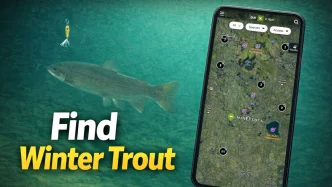
Finding Better Lakes With onX Fish
A major part of the discussion centers on lake selection, and onX Fish plays a critical role in this process. Anglers are using it to:
- Review survey data and species presence
- Narrow down overlooked or lesser-known lakes
- Reduce wasted time on low-potential water
However, no app guarantees success. onX Fish helps you choose where to look, but conditions, timing, and execution still determine results. Some lakes fish better on certain days despite similar data, and experience still matters.
The Biggest Takeaway: Mobility Wins
If there’s one lesson repeated throughout the conversation, it’s this: mobility matters.
Early ice rewards anglers who are willing to:
- Move frequently
- Try new lakes
- Test multiple structures
- Adjust quickly based on feedback
Rather than waiting for fish to come to you, successful early ice anglers go find them. Combining mobility with research, using tools like onX Fish and modern sonar, creates a powerful advantage.
Early ice fishing sits at the intersection of old-school instincts and modern technology. Today’s anglers have incredible tools at their fingertips, but success still comes down to understanding fish behavior, staying flexible, and making smart decisions on the ice.