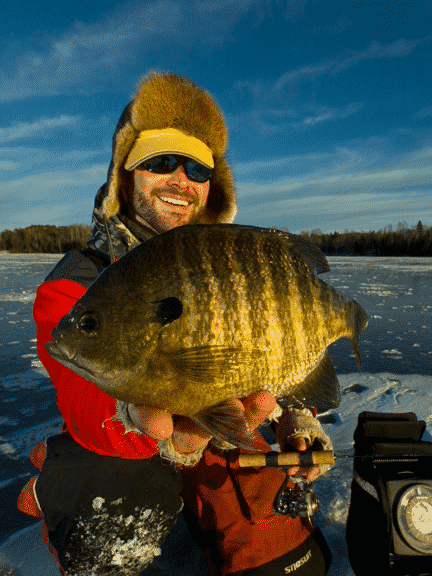
Ice Fishing Bluegills In Basins
Catching bluegills through the ice is pretty easy. However, catching big bluegills through the ice is a completely different story. Big bluegills are tough to find and tougher to trick into biting. In this article we will look at some ice fishing tactics you can use to when ice fishing bluegills in basins.
Using OnX Fish To Find Bluegill Lakes
If you want to catch big bluegills you have to go to the lakes that have them. Not all lakes contain the right habitat and fertility to grow big bluegills. One of the best ways to find lakes that have big bluegills is with the OnX Fish App. Open up the app and click on fish species button on the bottom tab. Select bluegill and then select the trophy potential lakes. This will highlight lakes in your area that have large bluegills present.
If you select a lake you will be able to examine Minnesota’s DNR survey data on that particular body of water. It will break down the size structure of the fish population. The OnX Fish app is a great tool for planning your next fishing adventure.
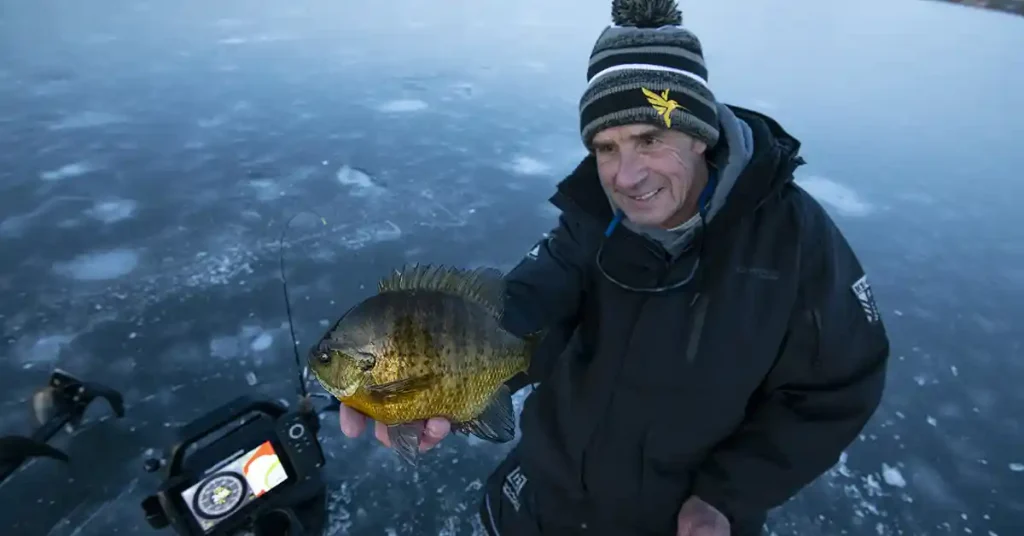
Locating Winter Bluegills In Basins
Depending on the lake you are fishing there are really three key spots to find winter bluegills. The three best spots to find wintering bluegills is muddy basins, weed beds, and flats.
Basins
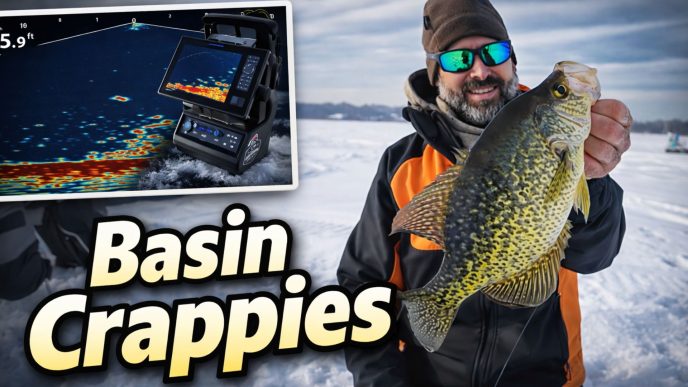
Soft bottom basins are one of the best spots to find wintering panfish. Big bluegills are attracted to the basins, because the muddy bottoms contain lots of invertebrates that the bluegills feed on. These fish will cruise around in large schools. If you plan on fishing the basins for bluegills target depths between twenty and twenty-five feet of water for the best success.
Weed Beds
Weed beds are another great spot to find winter bluegills. They will use the weed beds as cover and can be found in and around weeds at any depth. If the lake you are fishing has a lot of weeds try to find a spot where there is standing green weeds with deep water access. You should also look for irregularities in the weed bed like points, high spots, or depressions. These are places that will concentrate schools of bluegills.
Flats
Another great place to find bluegills is moderate depth flats between fifteen and twenty feet of water. These types of areas are often overlooked, but can hold large numbers of big bluegills. Look for flats located between the shallow weed beds and the deep water basins.
2 Pronged Approach For Ice Fishing Bluegills In Basins
When targeting winter bluegills you need to have at least two different types of presentations. A bluegill’s mood will change depending on the weather, time of day, and location. When the fish are aggressive, actively searching for food it’s beneficial to have a larger presentation like a spoon. When the bluegill’s mood shifts to a more lethargic, negative mood, it pays to have a smaller presentation with some live bait. The following baits are a great one-two punch when ice fishing bluegills in basins.

VMC Bull Spoon
When the bluegills are aggressive a spoon is one of the best options ice anglers can use. Spoons can be fished fast and have a larger profile that really appeals to big bluegills. There are a ton of great ice fishing spoons that work great for bluegills, however the VMC Bull Spoon was specially designed for big bull bluegills.
The VMC Bull spoon has an erratic, wounded baitfish action and is paired with an ultra-sharp VMC treble hook. Tip the treble hook with a few wax worms and you’ve got a compact package that is deadly for big bluegills. The VMC Bull Spoon is fairly dense which allows it to sink fast. Its subtle design gets to the fish quickly and triggers aggressive strikes. It can be fished both in the basins and in the weed beds. It is available in a wide variety of colors including UV for maximum visibility and ultra glow pigments for low-light conditions.

Northland Fishing Tackle Tungsten Gill-Getter
When the big bluegills get in a lethargic mood the best way to target them is with a small presentations like tungsten jigs. The Northland Fishing Tackle Tungsten Gill-Getter is a deadly ice jig for big bluegills.
Its compact tungsten body punches through slush and gets into the strike zone quickly. The flat belly shape creates a smooth, natural-looking gliding motion and reads great on a sonar. It’s avaibale in a 1/28-ounce and 1/16-ounce. Choose any of the super-glo or natural looking color patterns, pair it with some livebait, and you’ll have a presentation no bluegill can refuse.
Jigging For Winter Bluegills
No matter what bait you choose to use having the right jigging cadence is crucial. The key to triggering strikes is to not overwork your lure. Oftentimes bluegills will reject a presentationIf you are moving your bait too much. Slow down your jigging cadence. As the bluegill approaches you can slowly lift your bait to entice a strike.
Minnesota’s Quality Sunfish Initiative
Over the past few decades the average size of bluegills has declined in lakes all across the state of Minnesota. In 2022 the Minnesota DNR fisheries managers responded by created the Quality Sunfish Initiative.
The Quality Sunfish Initiative uses proven daily limits of five or ten sunfish to protect and improve sunfish quality and size on select lakes with both biological potential to produce large sunfish and strong public support. The Quality Sunfish Initiative and its limits affect bluegill, pumpkinseed, green sunfish, orange-spotted sunfish, longear sunfish, warmouth and their hybrids.
Current over 200 lakes have been selected and have special regulations in place. Over the past four years the average bluegill size on those selected lakes has increased about 3/4 of an inch which is great progress.
Angler Impact On Bluegill Size
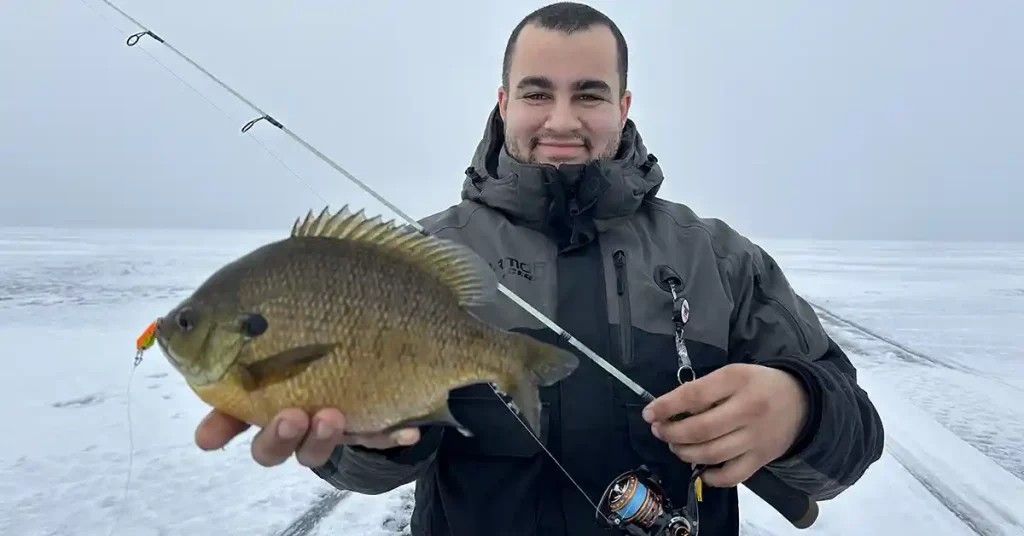
Anglers can have a big impact on bluegill size and populations. Bluegills are typically found in schools making them susceptible to over harvest. When ice fishing for bluegills please practice selective harvest. Do your best to let the larger male bluegills go and keep a batch of smaller fish. This will help ensure the bluegill population and size structure stays healthy.
FAQ’s
What is the best eating sized bluegills?
Most anglers prefer bluegills between six and eight inches. These fish
Do you need livebait to catch bluegills in winter?
In most cases yes. Livebait can make all the difference when targeting bluegills. Ice anglers can tip their jigs or spoons with livebait.
What lakes are best for big bluegills?
The best bluegill lakes are moderately shallow, fertile, and have a good diversity in aquatic vegetation.
What is the best livebait for catching bluegills in winter?
Wax worms and euro larvae are the best livebait for winter bluegills. Both can be found at local bait shops.
Conclusion
While winter bluegills can be difficult to find they can be caught. Each winter many anglers tangle with bluegills exceeding a pound in weight. By choosing the right lakes, understanding their seasonal movements and utilizing a couple of different presentations you can have a great day on the ice chasing big bull bluegills.