
Pickled Pike Start to Finish
In this article we are going to cover pickled pike start to finish. We will dive into strategies for finding and catching northern pike through the ice. We will also touch on which size of pike is best for the pickling process and how to clean them. Then we will go through the step by step process on pickled pike start to finish. Afterwards we will cover a little history on pickling fish and some answer a couple of frequently asked questions.
Locating Lakes For Pickled Pike Start To Finish
In order to start this pickling pike recipe you need to catch some northern pike and locating them is going to be the first step. The goal is to find a lake with a healthy population of smaller northern pike.
This pickled pike recipe calls for a lot of small northern pike. The best way to locate lakes with a high abundance of the right sized northern pike for pickling is with the OnX Fish app. Pick up your phone and open up the app. Click on fish species button on the bottom tab. Select northern pike and then choose the high abundance tab.
Once you do this the app will highlight all the lakes in your area that have lots of northern pike in them. You will be able to see the size range of northern pike and the CPUE data allowing you to determine which lakes you should fish.

Finding Northern Pike In Winter
Northern pike are ambush predators that utilize cover to strike. It’s a safe bet that you will be able to find numbers of northern pike on weedy flats and weed beds during the winter months. Often the best weed beds are somewhere between five and eighteen feet of water, and are located near deep water. Large shallow bays and areas near creek mouths are also good places to find northern pike.
During the winter months finding green, standing weed beds is key. As the snow piles up on the ice the weed beds will begin to die off. As some of the weed beds die off more fish will be attracted to the weeds that are still alive, green, and standing tall.

Catching Northern Pike Through The Ice
Northern pike are aggressive predators that can be caught on both live and artificial baits. Live baits like sucker minnows or shiners are a popular choice for anglers. Many ice anglers using live bait to target northern pike using tip-ups.
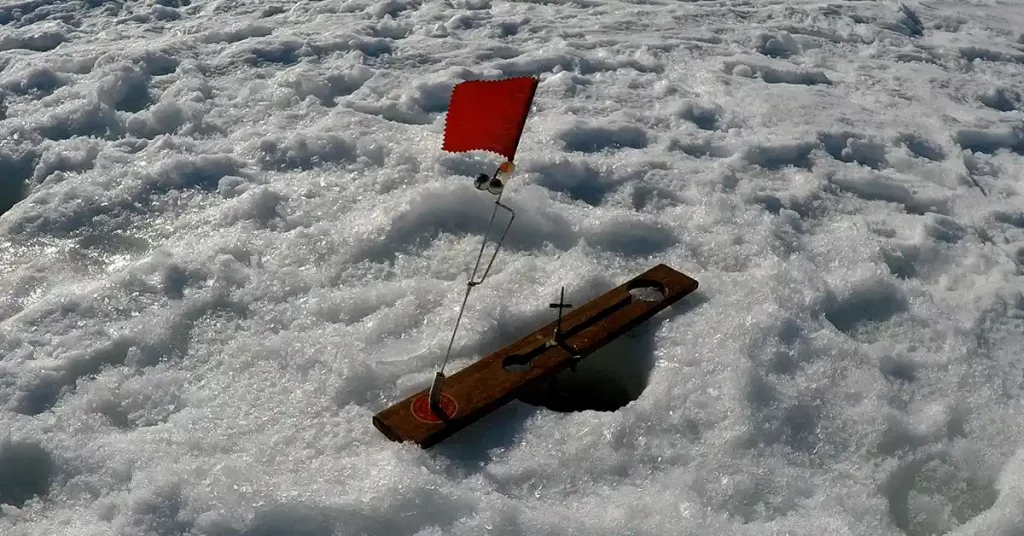
Tip-ups allow anglers to fish multiple holes at once without having to constantly monitor each one. A tip-up consists of a spool of fishing line, a flag, and a trigger that holds the line in place until a fish strikes. Once the fish strikes the bait the line can free spool setting off the trigger and popping the flag up.
Tip-ups can be set with live minnows like suckers or golden shiners, as well as dead bait like frozen mackerel. When setting your tip-ups for northern pike you will want to place the bait a foot or two above the bottom. This will prevent a live minnow from swimming into any weeds and gives the northern pike the opportunity to see your bait from a distance away.
Northern pike can also be caught on jigging presentations. Pike are active hunters commonly biting tubes, spoons, rattlebaits, and other ice fishing lures. If you plan on jigging for northern pike it can be incredibly beneficial to tip your bait with a small minnow or minnow head. This will add some additional flash and scent which can make the difference during a tough bite. Most anglers have success working their jigging presentations a few feet off the bottom; allowing the northern pike to see your bait from a distance.
Having the right line is crucial when fishing for northern pike in winter. Whether you’re using tip-ups or jigging for northern pike it’s important to use a strong leader. A wire or heavy fluorocarbon leader will help prevent bite-offs. Most anglers will use fluorocarbon leaders in a twenty pound test range sometimes going even heavier.
Best Keeping Sized Northerns for Pickled Pike
Northern pike come in a wide range of sizes. While that can reach massive sizes many lakes in the Upper Midwest are plagued with stunted northern pike populations. These lakes tend to produce large numbers of small northern pike.
The best size range for pickled northern pike is any pike that is twenty-two inches or smaller. This size range of northern pike is plentiful, easy to catch, and easy to fillet making them the best sized for pickled pike start to finish.
Cleaning Northern Pike for Pickled Pike
Cleaning northern pike for pickled pike is very simple and easy. Due to the pickling process you don’t have to worry about removing the bones. They will be dissolved by the vinegar as you pickle your pike.
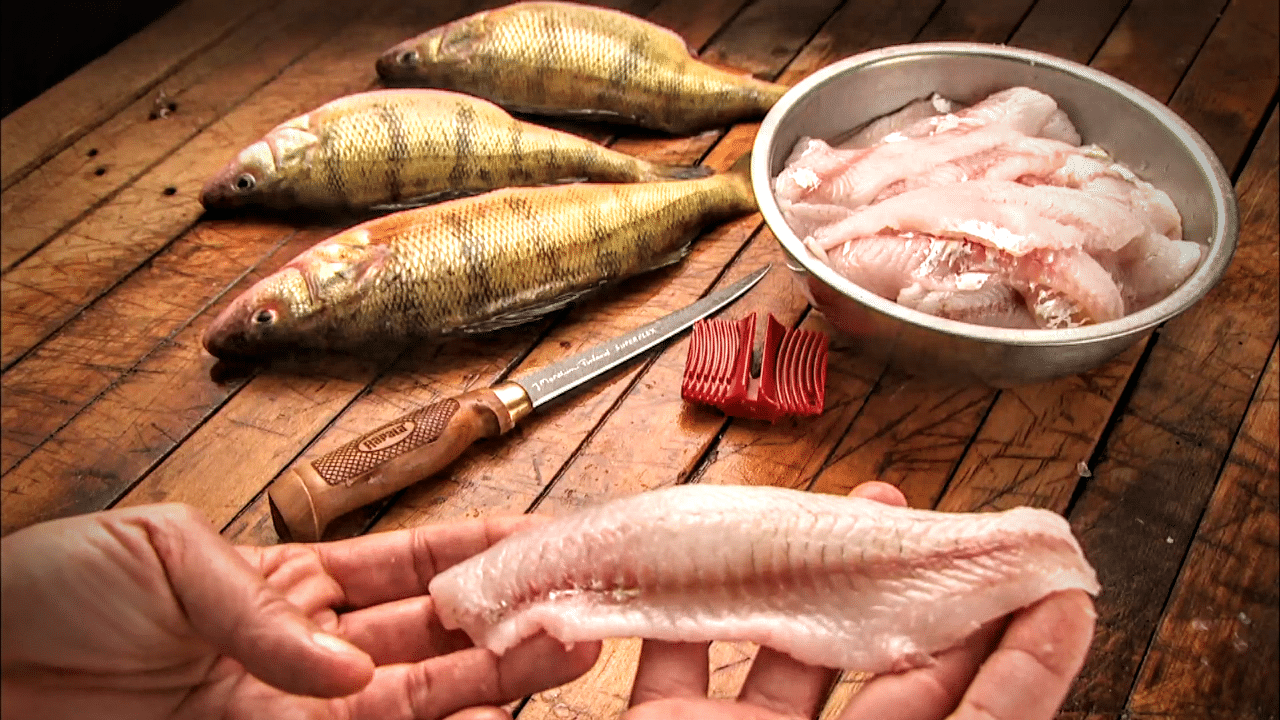
To clean a northern for pickled pike simply make a cut directly behind the head of the fish down to the backbone. Once you hit the backbone turn the knife and carefully cut along the backbone, working your way down the length of the fish, separating the fillet from the backbone. Remove the fillet and then flip the fish over and repeat this process on the other side.
Remove the skin from the fillet by starting at the tail and working your knife at a downward angle towards the top of the fillet. Repeat this process on the other side. Once you’ve done this you can cut the fillet up into bite sized chunks to prepare them for the pickling process. Just remember that you don’t have to remove the bones from the fillets, making it a quick and easy process.
For those interested in how to properly remove northern pike bones, here’s a great step-by-step video.
Schoepke’s Pickled Fish Recipe: Pickled Pike Start To Finish
In this recipe we are going cover pickled pike start to finish. It should be noted that you will need quart sized mason jars to placed the finished pickled pike in. With this amount of fish roughly 8 quart sized mason jars will be used.
Ingredients for The Best Pickled Pike Start to Finish
- 5-pounds of northern pike fillets
- pickling salt
- water
- 2 red onions
- cinnamon sticks
- white vinegar
- 30 whole allspice
- 30 whole cloves
- 10 bay leaves
- Quart sized mason jars
Making Pickled Pike Start To Finish
To start the pickling process take your 5-pounds of northern pike fillets and cut them into bite sized chunks. Place them into a glass bowl.
Mix 2 cups of pickling salt and 2 quarts of water. Pour over the fish, making sure all the fish is covered with the solution. Cover with plastic wrap and leave it in the refrigerator for 48 hours.
Take the fish out of the pickling salt, rinse it in a colander with cold water three or four times and drain. Place the fish into a clean glass bowl. Cover the fish with white vinegar and leave it in the refrigerator for another 48 hours.
Take fish out of the vinegar and rinse it in a colander with cold water.
Once you’ve completed this it is time to mix the brine together.
Mix Brine:
- 5 cups white vinegar
- 5 cups sugar
- 30 whole allspice
- 30 whole cloves
- 10 bay leaves
Combine the ingredients in a pot. Bring it to a boil and then let it cool.
While it is cooling you can slice your red onion into bite sized pieces. Layer the drained fish with slices of onions in a clean glass bowl and then cover with the cold brine. Do not remove any of the spices. Refrigerate for two days.
Place fish and onions into quart sized mason jars. Add 1 cinnamon stick per jar. Cover with the brine making sure all the spices are added as well. Keep it in the refrigerator after it has been packed into the individual jars.
Place the individual quart jars in the fridge for about five days. Once they have sat for five days the pickled pike is finished and ready to be enjoyed!
It should be noted that pickled pike will stay good in the refrigerator for about four to six weeks.
How to Serve Pickled Pike
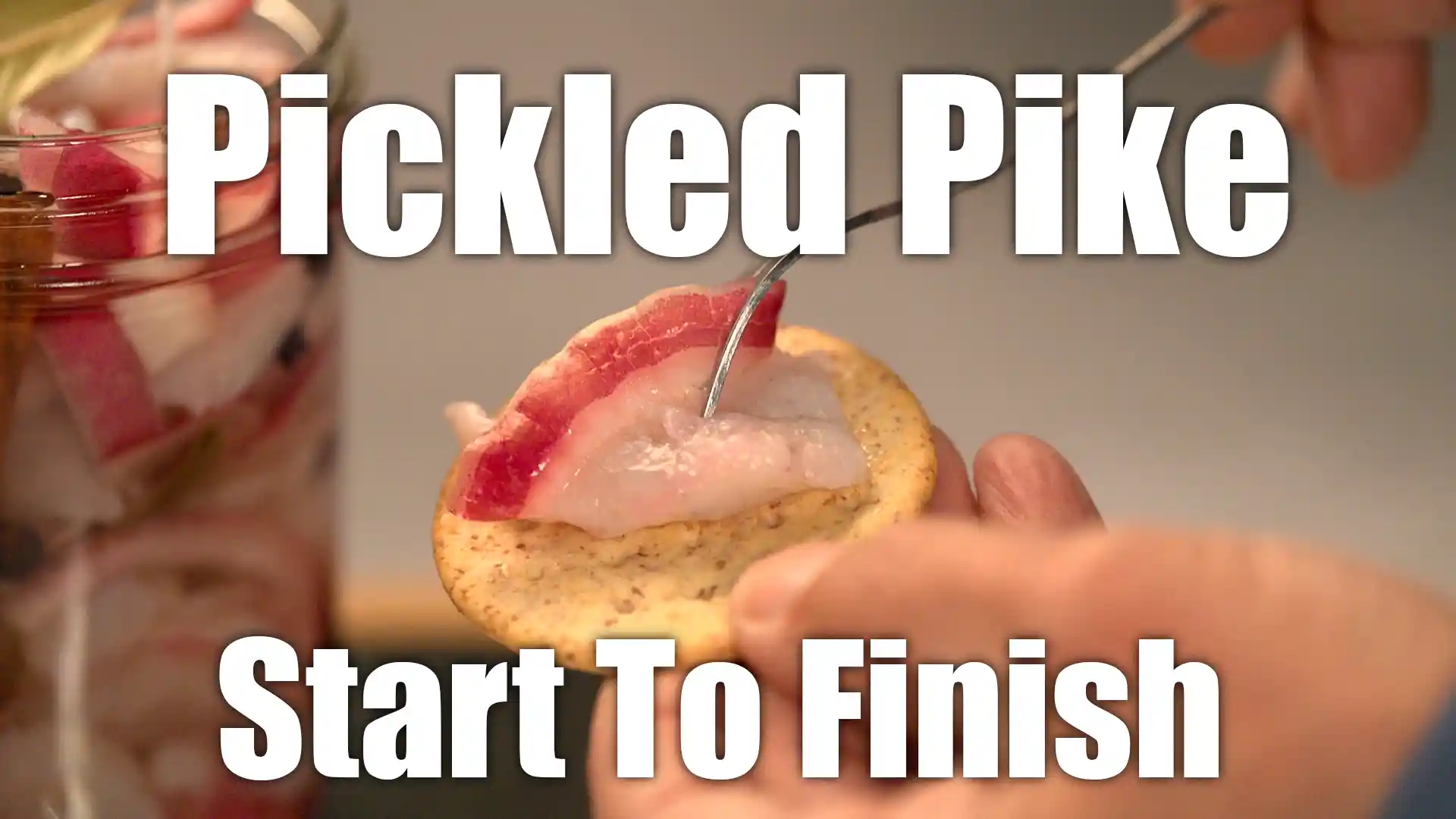
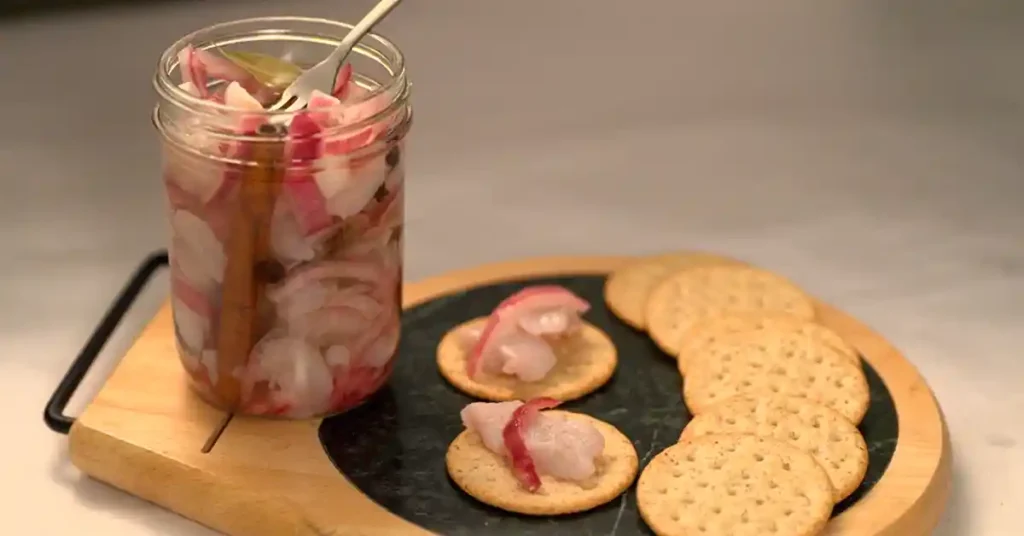
Pickled pike can be served in various ways. It can be eaten as an appetizer or snack by itself. It can be paired with crackers, bread, or cheese. It also works well as a topping for salads or incorporated into sandwiches. In some European cultures pickled pike is served as part of a smorgasbord, accompanied by rye bread, pickled vegetables, and sour cream.
History Of Pickled Fish
Pickled fish has a rich history with multiple origins around the world. Many communities enjoyed pickled fish as a common food source. It dates back to the 17th century with pickled herrings being a staple in Northern Europe since medieval times. Pickling was a way to store and transport fish, especially during meatless periods like Lent.
About Northern Pike
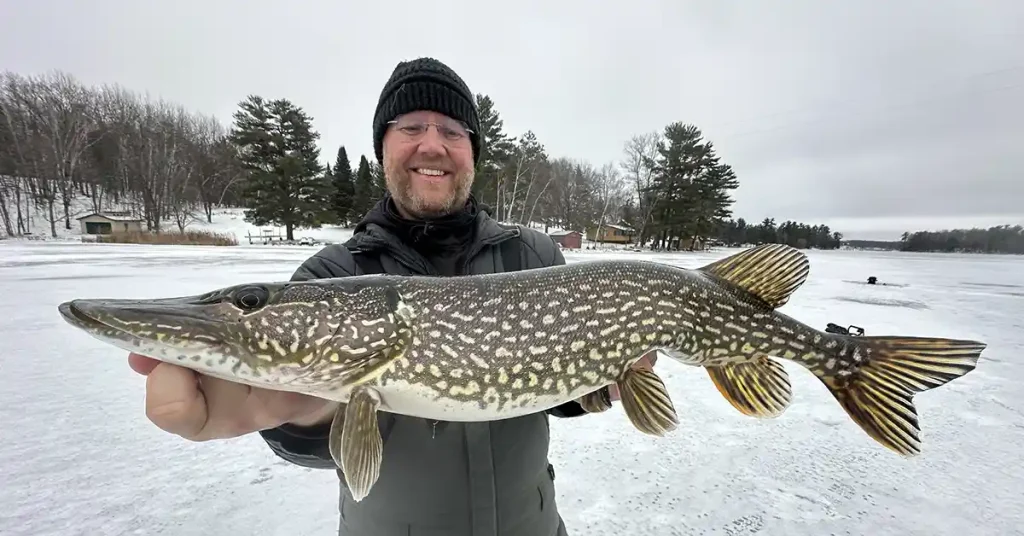
The northern pike is a species of carnivorous fish of the genus Esox. These toothy predators are widely distributed across the northern portion of the Untied States, throughout Canada and across Northern Europe and Russia. Northern pike can reach sizable weights often exceeding twenty pounds with the world record weight reaching just over fifty-five pounds.
Northern pike commonly feed on perch, ciscos, shiners, roach, and other smaller fish species. They inhabit all different types of water including lakes, rivers, and reservoirs. Northern pike are incredibly well adapted and their range is still increasing.
FAQ’s
What kind of fish are commonly pickled?
Good fish to pickle are herring, northern pike, suckers, whitefish, and carp.
How long is pickled fish good for?
If prepared correctly and kept in a refrigerator pickled fish is good for about four to six weeks.
What is the best fish to pickle?
Northern pike and herring are two of the best fish to pickle due to their meaty fillets, bony skeleton structure, and abundance.
Can you pickle fish anytime of year?
Yes, however most anglers choose to pickle fish throughout the winter months.
Conclusion
Pickled pike is a beloved dish that has been enjoyed for centuries. It’s perfect for the holidays and is a great food to enjoy with others. With the abundance of small northern pike in many of our lakes it’s a great recipe to try. Pickled Pike start to finish is simple, easy, and taste great.