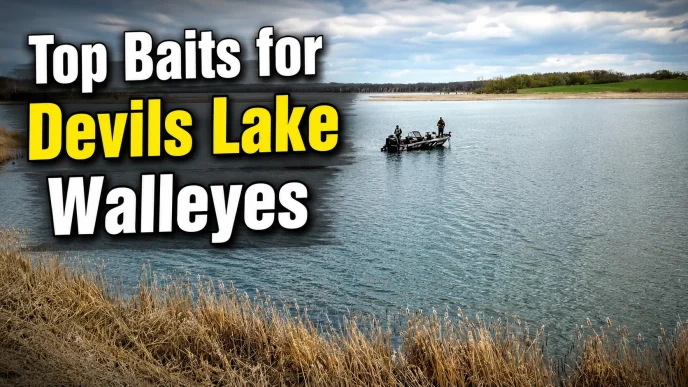
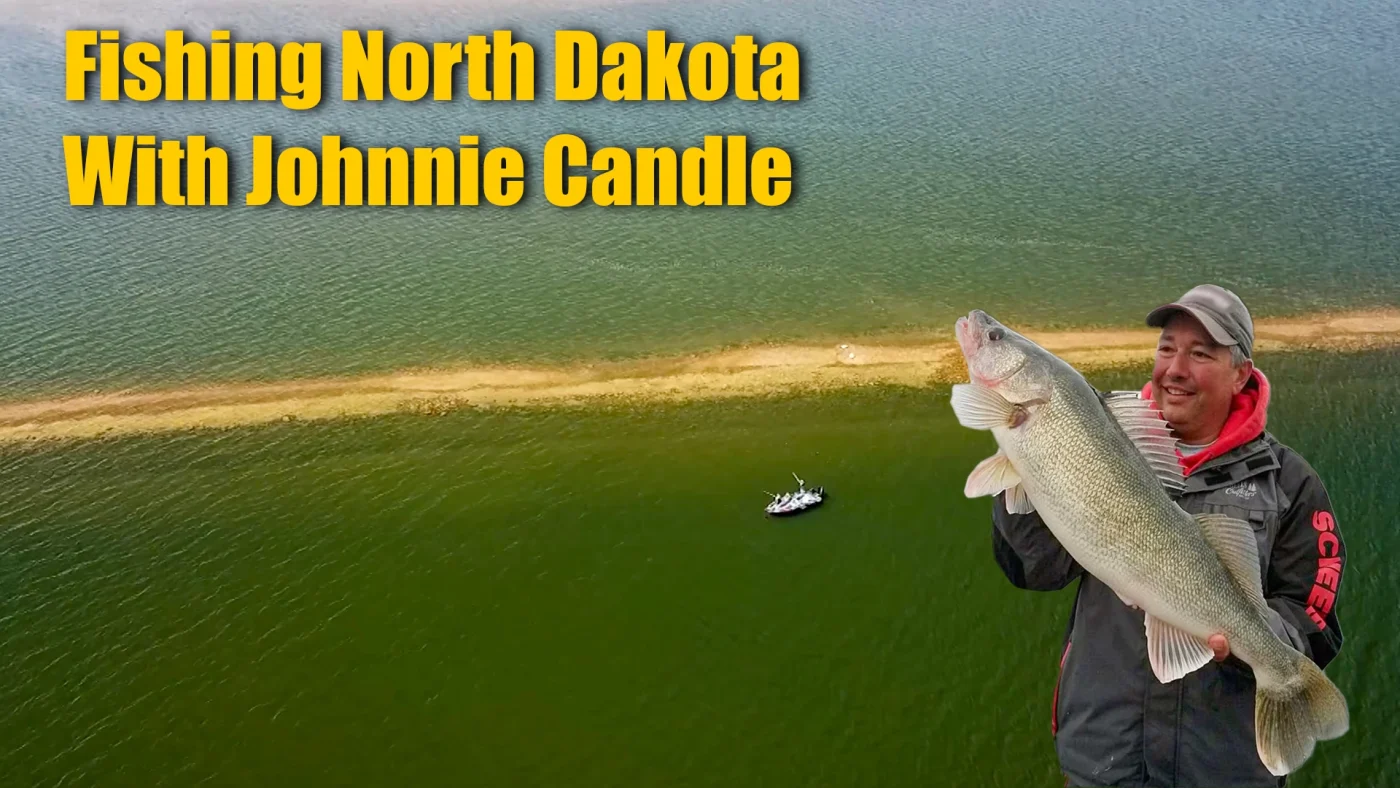

Devils Lake, North Dakota, is one of the most unique and productive walleye fisheries in the Midwest. Covering approximately 160,000 acres, the lake features flooded roads, submerged timber, cattail-lined bays, expansive mud flats and scattered rock structure. For anglers visiting for the first time, that much water can feel overwhelming.
Veteran tournament angler and fishing guide Johnnie Candle recommends simplifying the lake rather than trying to understand all of it at once. His approach to Devils Lake walleye fishing centers on choosing one section of the lake, using the wind to locate active fish and matching presentations to the available habitat.
Break Devils Lake Into Smaller Sections
Candle describes Devils Lake as several individual lakes connected together. Areas such as Pelican Lake, the Minnewaukan Flats, Mission Bay, East Bay and the main basin each contain resident fish, shallow spawning habitat, vegetation, timber and deeper water.
Instead of attempting to cover the entire lake during a short trip, Candle recommends choosing the basin closest to where you are staying and learning that section. Pelican Lake alone covers roughly 18,000 acres, giving anglers more than enough water to explore during a multi-day fishing trip.
The onX Fish App can help anglers study lake contours, identify access points and organize potential fishing areas before arriving at the lake.
Use the Wind to Find Shallow Walleyes
Wind is a major part of fishing in North Dakota. Instead of avoiding it, Candle uses it to locate feeding walleyes.
Wind pushes baitfish toward shorelines, weed edges, points and pockets. Walleyes follow that food and can move surprisingly shallow, especially in Devils Lake’s stained water. During summer, Candle may find walleyes in only two or three feet of water when waves are crashing into the shoreline.
The best locations often include irregularities that concentrate current and baitfish. Look for points, small cuts, transitions between rock and vegetation, culverts, washed-out road sections and isolated pieces of hard bottom.
When the main lake becomes too rough to fish safely, Candle looks for “the windy side of the least windy spot.” That may mean moving into a protected bay while still fishing the shoreline receiving the most manageable wind.
Best Spring Lures for Devils Lake Walleyes
During the early spring, walleyes move into shallow coulees and warmer bays. Candle commonly uses jigs weighing from 1/8 to 3/8 ounce, depending on depth, wind and current.
White three-inch grubs, paddle tails and straight-tail plastics are all productive options. White is Candle’s primary color, followed by perch patterns and variations of firetiger.
As fish spread across shallow flats, hair jigs become especially effective. One of Candle’s preferred options is the VMC Moon Tail Jig. He fishes it by making two or three sharp hops before allowing it to return to the bottom. Consistent bottom contact is an important part of the presentation.
The Rapala Rippin’ Rap Crankbait is another strong option when walleyes are scattered across shallow flats. Candle discusses using larger sizes because the available forage during early spring consists of baitfish that survived the winter rather than newly hatched minnows.
Casting Crankbaits in Shallow Water
By the middle or end of May, the shallow crankbait bite becomes increasingly important.
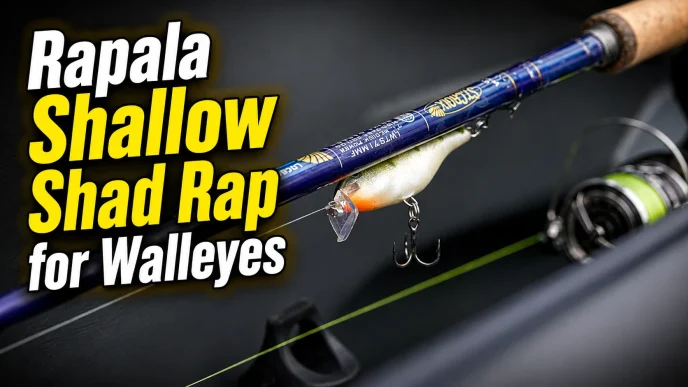
The Rapala Shallow Shad Rap is one of Candle’s most trusted cold-water crankbaits. Its balsa construction creates a subtle action, while its shallow-diving design allows anglers to cast directly toward shore and retrieve it above rocks and emerging vegetation.
It is also an easy lure to fish. Anglers don’t need to master a complicated cadence. Simply cast it out and reel it back steadily. Candle particularly likes the No. 7 profile because it resembles the young perch and white bass that Devils Lake walleyes commonly eat.
Suspending jerkbaits can also produce when walleyes are holding around shallow vegetation or windblown rock. The Rapala PXR Mavrik 110 Jerkbait can be worked with a twitch-twitch-pause cadence. The pause is often critical, especially in cold water when fish may need extra time to commit.
Use the Right Rod for Lightweight Crankbaits
Candle prefers a seven-foot, medium-power rod with a moderate action for casting lightweight crankbaits. A slower rod loads more effectively during the cast, helps keep small crankbaits from tumbling and absorbs sudden head shakes after a fish is hooked.
The St. Croix Legend Spinning Rod provides a premium option for anglers looking for a sensitive and versatile spinning setup. When selecting a rod for shallow crankbait fishing, prioritize a blank with enough flex to keep treble hooks pinned without pulling the lure away from striking fish.
Candle pairs his rod with a larger 3000- or 4000-size spinning reel, 10- to 15-pound braided line and a five- to seven-foot fluorocarbon leader. The larger reel improves line management and helps lightweight baits cast farther.
Find Something Different
Devils Lake contains long stretches of similar-looking mud, sand and flooded shoreline. The key is finding something different.
Use Side Imaging to locate isolated rocks, submerged farm equipment, culverts, road edges and transitions between vegetation and hard bottom. Candle recommends limiting the Side Imaging range to roughly 75 or 80 feet on each side so smaller details remain easier to identify.
Once you locate an irregularity, mark it with a waypoint and return when wind is pushing bait into that area.
Devils Lake may be enormous, but the basic fishing principles remain simple: choose one section, follow the wind, find unique structure, and keep your lure in productive water. With Johnnie Candle’s approach, anglers can turn an intimidating lake into a manageable and incredibly exciting walleye destination.