Walleye fishing in Minnesota is evolving faster than at any point in the last half-century. Between rapid advances in fishing technology, increased fishing pressure, and shifting angler values, managers and anglers alike are asking the same question: How do we protect the resource while preserving opportunity?
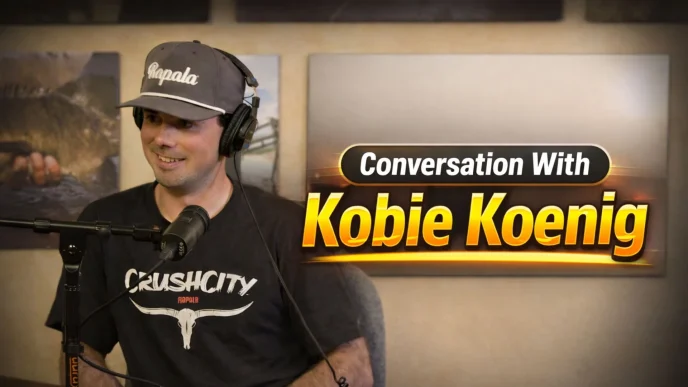
We sat down with leaders from the Walleye Alliance and the Minnesota Department of Natural Resources to dive deep into this exact issue. At the center of the conversation are new creel survey data from the Brainerd Lakes area, the growing role of forward-facing sonar, and widespread angler support for a proposed statewide 4-fish walleye limit.
What follows is a breakdown of the most important takeaways and why they matter for the future of Minnesota walleye fishing.
Why This Conversation Matters Right Now
Minnesota’s statewide walleye bag limit has remained largely unchanged since 1956, when a 6-fish limit was established. Today’s regulation still allows six walleyes, with only one fish over 20 inches.
But the fishing world of 2026 looks nothing like the fishing world of 1956.
- Fishing pressure is higher
- Anglers are more mobile and better informed
- Technology has transformed how fish are found and caught
- Angler values are shifting toward selective harvest and release
These changes are why the Minnesota DNR is considering a statewide reduction from six walleyes to four, and why stakeholder-driven data collection has become so important.
A Unique Partnership: Stakeholders, Science, and Students
When the Walleye Alliance was unable to participate in traditional stocking efforts in the Brainerd Lakes area, the organization shifted its focus to education and data.
The result was a collaborative creel survey effort involving:
- The Walleye Alliance
- Minnesota DNR Fisheries staff
- Central Lakes College natural resources students
This partnership allowed detailed creel surveys to be conducted on Gull Lake, Edward Lake, and South Long Lake. Waters that had seen increasing pressure but had limited recent data.
Just as importantly, it delivered high-quality information at a fraction of the cost of a full-scale statewide creel survey.
What Is a Creel Survey and Why Anglers Should Care
A creel survey collects real-world fishing data by interviewing anglers about:
- Time spent fishing
- Species targeted
- Fish caught and harvested
- Gear and technology used
- Opinions on regulations
For fisheries managers, creel surveys help balance the three pillars of management:
- The fish
- The habitat
- The people
That third pillar, people, is often overlooked, but it’s critical. Regulations only work if anglers understand, support, and comply with them.
Strong Angler Support for a 4-Fish Walleye Limit
One of the most striking findings from the surveys was the level of support for reducing the walleye bag limit from six to four fish.
Support by lake:
- Gull Lake: 79% in favor
- Edward Lake: 68% in favor
- South Long Lake: 88% in favor
Across all surveyed waters, roughly 70% or more of anglers supported the 4-fish limit.
That level of agreement is significant and challenges the notion that regulatory changes are always unpopular among anglers.
Forward-Facing Sonar: Who’s Using It and What It’s Doing
Adoption Rates
Forward-facing sonar (FFS) has become common, especially on destination fisheries:
- Edward & South Long: roughly 40–55% of walleye anglers using FFS
- Gull Lake: ~75% of walleye-targeting anglers using FFS
Catch Share
Even more eye-opening was how much of the total catch came from FFS users:
- Edward & South Long: ~80% of walleyes caught by FFS users
- Gull Lake: ~88% of walleyes caught with FFS
In other words, about half to three-quarters of anglers were catching the vast majority of the fish.
Experience Matters: The Technology Learning Curve
The surveys also showed a clear trend: catch rates increase with experience using forward-facing sonar.
Anglers in their first year of using FFS did well. Anglers with multiple years of experience did significantly better. This reinforces what many anglers already know: the technology rewards time, practice, and understanding.
Catch vs. Harvest: The Trend That Changes Everything
Perhaps the most important takeaway from the discussion is this:
Anglers are releasing far more walleyes than they used to.
Release rates over time:
- Early 2000s (Edward & South Long): under 20% released
- 2025 surveys:
- Edward: ~55% released
- South Long: ~72% released
- Gull Lake: ~90% released
This shift reflects changing angler ethics, better education, and more consistent access to fish.
But Here’s the Catch
Even if release rates go up, higher catch rates can still increase total fish mortality.
If anglers catch twice as many fish, but release them at the same percentage, the total number of fish stressed, injured, or harvested can still rise. That’s why managers are paying close attention to how technology and regulations interact.
Why Gull, Edward, and South Long Matter
These lakes represent different “tiers” of fisheries:
- Gull Lake: high-profile destination fishery with heavy pressure
- Edward & South Long: smaller lakes seeing increasing localized pressure
Some of these waters hadn’t seen detailed creel surveys in over two decades. Without updated data, management decisions become guesswork. These surveys help fill that gap.
Technology Isn’t the Only Accelerator—Information Is
The discussion also highlighted the role of social media and instant information sharing. Hot bites spread faster than ever. Anglers can relocate in real time. When combined with forward-facing sonar, fishing pressure can intensify rapidly.
This doesn’t mean technology is “bad”, but it does mean management must adapt.
What This Means for Minnesota Walleye Fishing
A proposed 4-fish limit isn’t about punishment or restricting opportunity. It’s about:
- Spreading the harvest over more anglers
- Reducing pressure during peak bites
- Protecting future year classes
- Buying time while long-term trends become clearer
Both the DNR and Walleye Alliance emphasized the same point: this is about being proactive, not reactive.
How Anglers Can Get Involved
Minnesota anglers have a real opportunity to shape the future of walleye fishing.
- Submit a formal public comment on the proposed 4-fish limit
- Support organizations like the Walleye Alliance that fund real data collection
- Stay informed and keep the conversation respectful and data-driven
The public comment period for the proposed regulation runs through March 5, 2026.