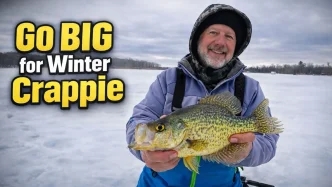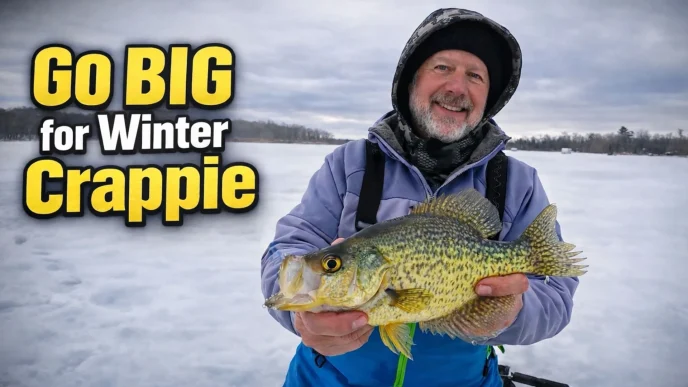

Ice fishing for crappies on big, deep lakes is a completely different game than fishing small, bowl-shaped waters. On shallow lakes, crappies often pile into one main basin and stay relatively predictable. On large, clear lakes with diverse structure, crappies spread out across weed lines, basins, and transition areas, sometimes all at the same time. Understanding this behavior is the key to consistently finding fish.
In this session, the focus is on deep, suspended-basin crappies and how modern ice-fishing tools enable anglers to locate roaming schools efficiently, catch fish quickly, and make smart harvest decisions.
Understanding Crappie Movement on Big Lakes
One of the biggest mistakes anglers make on large lakes is assuming all crappies behave the same way. In reality, different groups of fish may be using entirely different habitats at once.
Some crappies stay tight to deep weed lines, especially where vegetation extends into 20–25 feet of water. Others suspend over soft-bottom basins in 30–40 feet, while another group might slide into narrows, ditches, or subtle depth compressions nearby. These movements are often tied to seasonal transitions, light levels, and forage availability.
Rather than locking into one spot, successful anglers evaluate each area independently and adjust based on what the fish are actually doing that day.
Why Basin Edges and Transitions Matter
Suspended crappies rarely sit randomly in the middle of a basin. Instead, they often relate to subtle features, such as the edges of weed flats, the perimeter of a deeper hole, narrow funnels, or soft transitions between depths.
In this case, the fish were positioned along the edge of a massive weed flat, with weeds topping out around 22 feet before dropping into deeper water. Nearby basins reached over 40 feet, creating natural travel lanes where fish could move while staying close to feeding areas.
Recognizing these transition zones dramatically narrows the search area.
Using Forward-Facing Sonar to Find Suspended Schools
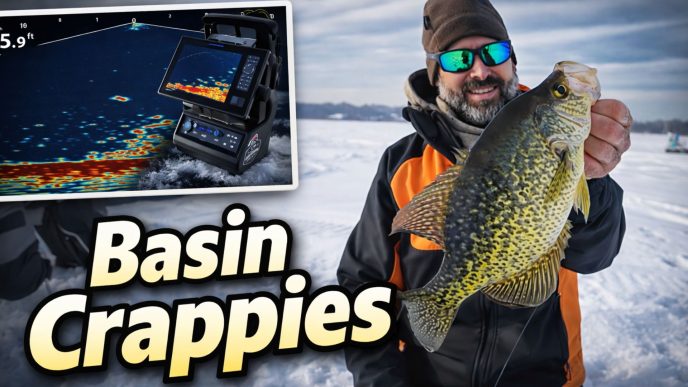
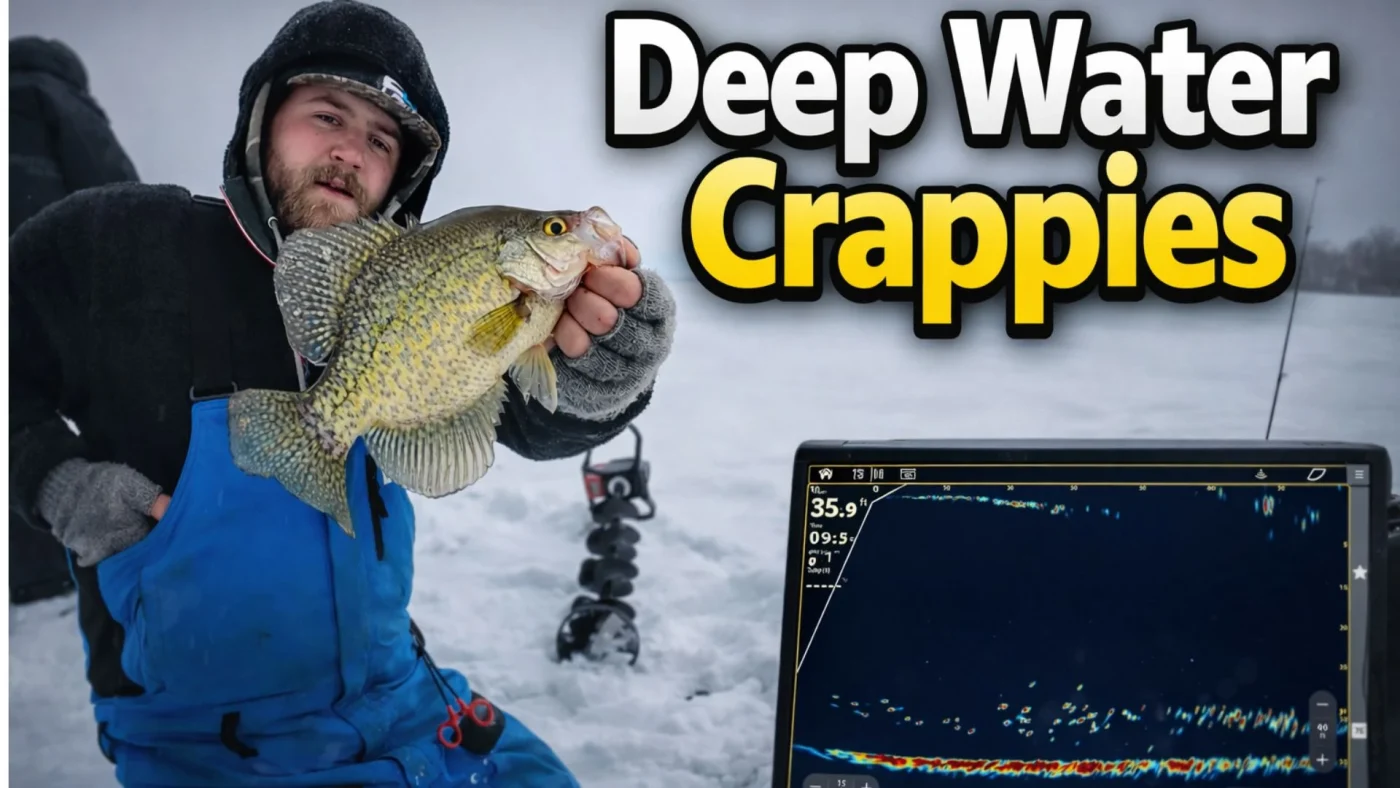
Forward-facing sonar completely changes how anglers search for basin crappies. Instead of drilling dozens of holes blindly, one hole can reveal an entire section of water.
By scanning up to 100 feet in multiple directions, anglers can identify:
- School size and density
- Depth range of suspended fish
- The direction the school is moving
- Whether fish are tight or spread out
This allows you to stay ahead of the fish, not behind them. As schools shift, sometimes 30 to 50 feet in minutes, you can follow their movement instead of waiting for them to return.
Mobility is the biggest advantage when fishing deep basin crappies.
Mobile Ice Strategy: Stay With the Fish
There are two main approaches to deep-water crappies:
- Stationary fishing, where anglers wait for roaming fish to pass through
- Mobile hunting, where anglers actively relocate schools
Both can work, but mobility shines early in the season or when pressure is low. Instead of setting up and hoping fish return, drilling strategically and moving with the school leads to faster success and fewer wasted hours.
A checkerboard drilling pattern combined with sonar confirmation allows anglers to quickly relocate fish when they move off a spot.
Best Lures for Deep Suspended Crappies
Efficiency is critical when fishing in 30–40 feet of water. The longer it takes your bait to reach fish, the fewer opportunities you get before the school moves.
Key lure characteristics include:
- Weight to reach depth quickly
- Compact size to match forage
- Vibration or sound to pull fish in
Heavy tungsten spoons excel for speed and visibility, while compact rattling baits add attraction when fish slide away from the hole. Jigging-style baits remain effective because they trigger reaction strikes and work even without live bait.
Some of our favorites include the VMC Tungsten Torpedo Spoon, VMC Rattle Spoon, and the Rapala Jigging Rap.
Bright, high-visibility colors dominate in deep water, helping fish locate the bait quickly in low light.
Managing Barotrauma and Harvest Decisions
One reality of deep-water crappie fishing is barotrauma. Fish pulled from deeper water may not survive release due to pressure changes, especially when their eyes bulge or they struggle to regain balance.
Because of this, anglers must be intentional:
- Target eater-size fish
- Limit unnecessary catch-and-release
- Know regulations and possession limits
Selective harvest is part of responsible deep-water fishing, ensuring the resource remains healthy while still bringing home great meals.
Finding Fish Is the Real Advantage
Catching crappies isn’t about luck. It’s about finding them efficiently. On big lakes, success comes from understanding fish behavior, identifying transition zones, and using modern tools to track roaming schools.
Today’s technology doesn’t replace skill. It amplifies it! When anglers combine seasonal knowledge with smart mobility and efficient lure choices, deep-water basin crappies become far more predictable… and far more fun to catch.
The biggest lesson is simple: find the fish, and everything else gets easier!