

Fishing has always been about more than just catching fish. It’s about time on the water, learning, sharing stories, and passing knowledge from one generation to the next. In today’s world, those traditions now intersect with rapidly advancing technology. Few people understand that intersection better than “Marathon Man,” Jeff Kolodzinski, a lifelong angler, world championship competitor, conservation advocate, and technology leader at Humminbird and Minn Kota.
In this conversation, Kolo shares how fishing took him from cane poles and live bait to the cutting edge of marine electronics, while also tackling one of the biggest topics in the sport today: the impact of live sonar, advanced mapping, and fully integrated boat control systems on modern angling.
From World Championships to the “Marathon Man”
Kolo’s fishing journey started early. Like many anglers, he fell in love with fishing as a kid, fueled by magazines, stories, and time on the water. That passion eventually led him to represent the United States in multiple freshwater world fishing championships. An experience that shaped both his competitive mindset and his respect for fisheries.
That sense of responsibility later gave rise to the Marathon Man initiative. By fishing nonstop for 24 hours to raise money for military families, Kolo set a Guinness World Record for most fish caught in a single day, over 2,100 fish, and later pushed that number even higher. The goal was never about numbers alone. It was about showing how fishing can be a powerful tool for community, healing, and giving back.
Interestingly, those marathon events relied on extremely simple gear: a cane pole, live bait, and fundamental techniques. That foundation still shapes how Kolo thinks about fishing today, even as his professional life revolves around advanced technology.
Why Technology Doesn’t Replace Fundamentals, It Builds on Them
One of the key messages from Kolo’s perspective is that fishing technology doesn’t replace skill or knowledge. It amplifies it! Understanding fish behavior, seasonal movements, and habitat remains critical. Electronics simply help anglers see what’s happening below the surface more clearly.
For beginners, fishing can feel intimidating. Technology helps shorten the learning curve by turning unknowns into visible information. For experienced anglers, it becomes a tool for efficiency, precision, and a deeper understanding.
Breaking Down Modern Sonar Technologies
To understand today’s technology debate, it helps to clearly define what each tool actually does.
2D Sonar remains a high-speed search tool. It shows depth, bottom composition, and fish directly under the boat, making it ideal for quickly scanning large areas.
Down Imaging refines that picture with high-frequency, razor-thin beams that reveal true structure, weed stalks, rocks, baitfish, and fish separation, rather than clutter.
Side Imaging extends that capability outward, allowing anglers to see structure, bottom transitions, and fish holding off to the sides of the boat. It’s one of the most powerful habitat-finding tools ever developed.
360 Imaging takes things a step further by showing a real-time, rotating view around the boat. This is especially valuable when stationary, helping anglers understand positioning, casting angles, and nearby structure.
Live Sonar: Seeing Where Fish Are Right Now
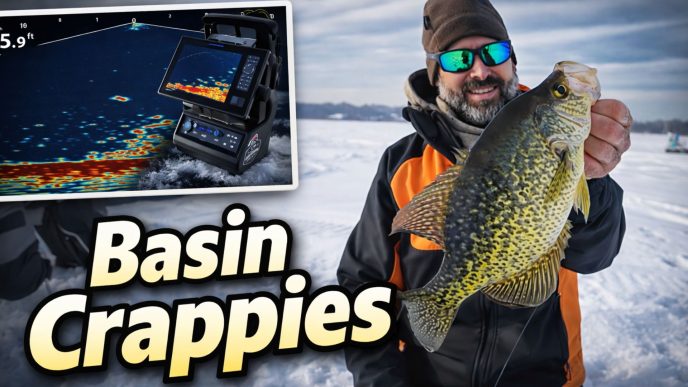
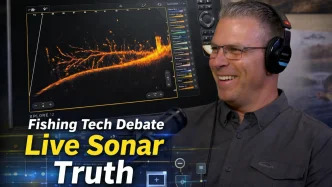
Live sonar, often called forward-facing sonar, represents a major shift. Traditional sonar shows where fish were as the boat passes over them. Live sonar shows where fish are in real time.
Anglers can watch fish move, react to lures, and respond to presentations instantly. This has fundamentally changed how people fish, learn, and adapt on the water.
Kolo emphasizes that live sonar is not just about catching more fish. It’s a learning tool. Watching fish ignore one lure and react to another teaches more in minutes than hours of trial and error.
The Technology Debate: Advantage vs Responsibility
With innovation comes controversy. Live sonar has sparked intense debate across the fishing community. Some anglers see it as an unfair advantage. Others see it as simply the next step in a long history of technological progress.
Kolo points out that every major advancement, mapping, side imaging, GPS, trolling motors with Spot-Lock, was controversial at first. Over time, anglers adapted, regulations evolved, and conservation ethics matured.
The real issue isn’t technology itself, but how it’s used. Advanced tools demand greater responsibility from anglers. Just because fish can be found doesn’t mean they should always be caught.
The One-Boat Network and XPLORE: Simplifying Power
One of the biggest challenges with advanced electronics has always been complexity. That’s where Humminbird’s XPLORE units and the One-Boat Network come into play.
XPLORE units focus on simplifying the user experience with touchscreen controls, intuitive menus, brighter screens, and faster waypoint management. The goal is to reduce friction so anglers spend more time fishing and less time navigating menus.
The One-Boat Network connects Humminbird electronics with Minn Kota trolling motors and LakeMaster mapping. Together, they handle tasks like contour following, waypoint navigation, Spot-Lock positioning, and automated boat control. Instead of managing multiple systems, anglers can focus on presentation and decision-making.
Conservation, Advocacy, and the Role of ASA
Technology also intersects with policy and conservation. Kolo is deeply involved with the American Sportfishing Association (ASA), which advocates for anglers, fisheries, and access at the legislative level.
From excise taxes that fund conservation to debates around electronics, lead tackle, and access, ASA works to ensure decisions are based on data, science, and real-world angling impacts, not emotion alone.
The fishing industry has a vested interest in healthy fisheries. Without fish, there is no sport… and no industry.
Fishing Is More Than Catching Fish
At its core, fishing remains about experience. Technology can enhance learning, efficiency, and success, but it doesn’t replace the joy of time on the water, shared moments, and respect for the resource.
Kolo’s journey, from cane poles to world championships to cutting-edge marine electronics, shows that fishing’s past and future are deeply connected. The challenge ahead isn’t choosing between tradition and technology, but learning how to balance both responsibly.