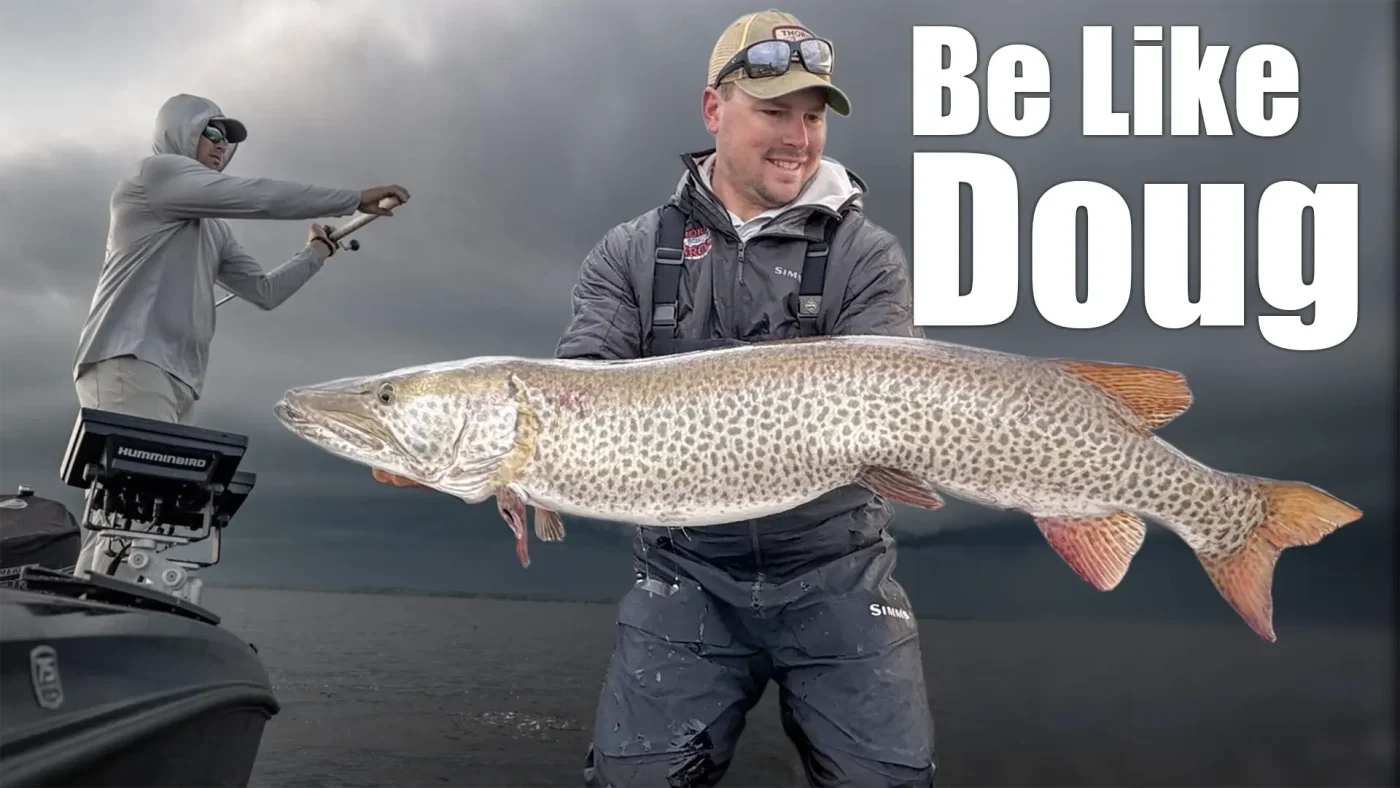

Following the Season of Professional Muskie Angler Doug Wegner
When it comes to muskie fishing, few anglers have the breadth of experience that Doug Wegner does. A respected guide and content creator, Doug shares not just a passion for chasing muskies across North America, but a well-honed system of moving through regions and seasons to stay on the bite. From Green Bay to Minnesota to the vast and rugged waters of northwestern Ontario, his season offers a blueprint for serious muskie anglers looking to broaden their horizons.
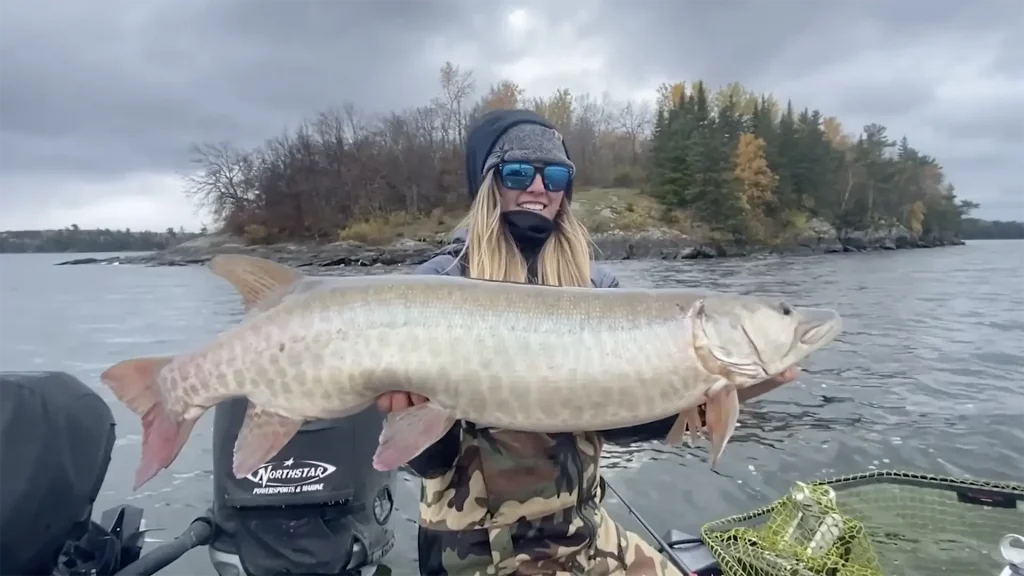
Doug begins his season on Green Bay, his home waters, starting around Memorial Day. This early-season fishery provides about a two-week window depending on spring water temperatures. From there, he shifts to Minnesota, fishing for a week or two before moving into Canada for the muskie opener, typically running from late June through August. After the Canadian peak, Doug returns to Green Bay for August and September—what he considers the peak summer window for Green Bay muskies. By mid- to late September, his guiding season wraps up, but the fishing continues on a personal level as he heads back north to Lake of the Woods. There, he fishes until ice-up, bouncing around other lakes like Eagle Lake and exploring new waters across northwestern Ontario.
For Doug, this migratory pattern isn’t just about following fish—it’s about keeping things fresh, both for himself and his clients.
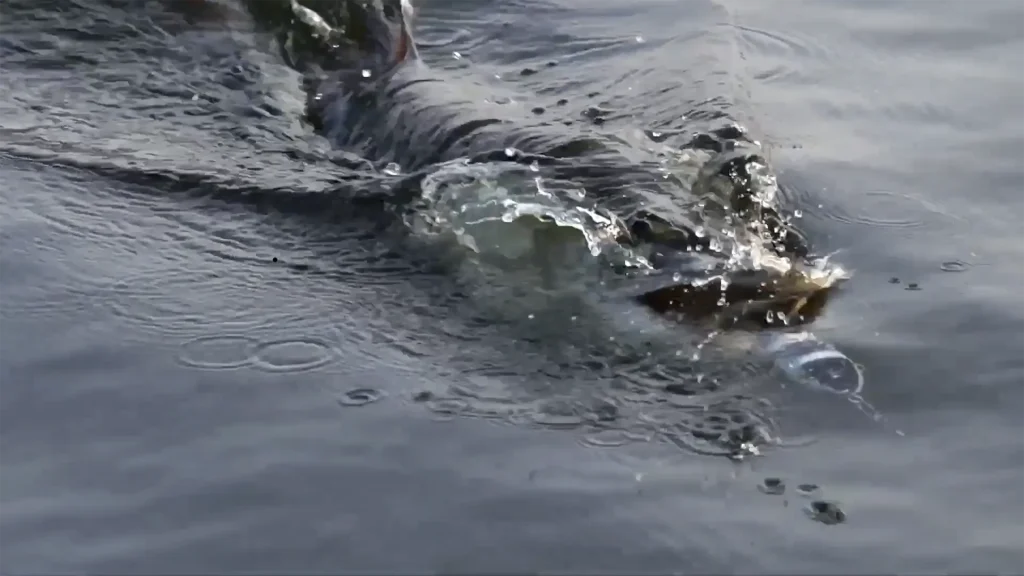
Regional Nuances in Muskie Behavior
One of the key insights Doug shares is that while muskies share many behaviors across their range, there are definite regional nuances. Strain differences—such as Great Lakes muskies, Leech Lake strain, and naturally reproducing populations in northwestern Ontario—all carry unique tendencies. Even within northwestern Ontario, no two lakes fish quite the same.
Lakes like Lake of the Woods, Eagle Lake, and Lac Seul each present their own character. Factors like water clarity, depth structures, current flow, and the presence of trout water versus shallower, stained basins all play into how and where muskies relate to structure. Doug describes these waters as being almost like “different lakes within a lake,” where each basin can feel like its own ecosystem.
The complexity of these systems is part of the draw. Doug emphasizes the thrill of exploration—spending a day fishing nothing but new water, hopping from spot to spot, island to island. “You can’t fish all of Lake of the Woods in a lifetime,” Doug points out, a fact both daunting and inspiring to muskie anglers looking for new challenges.
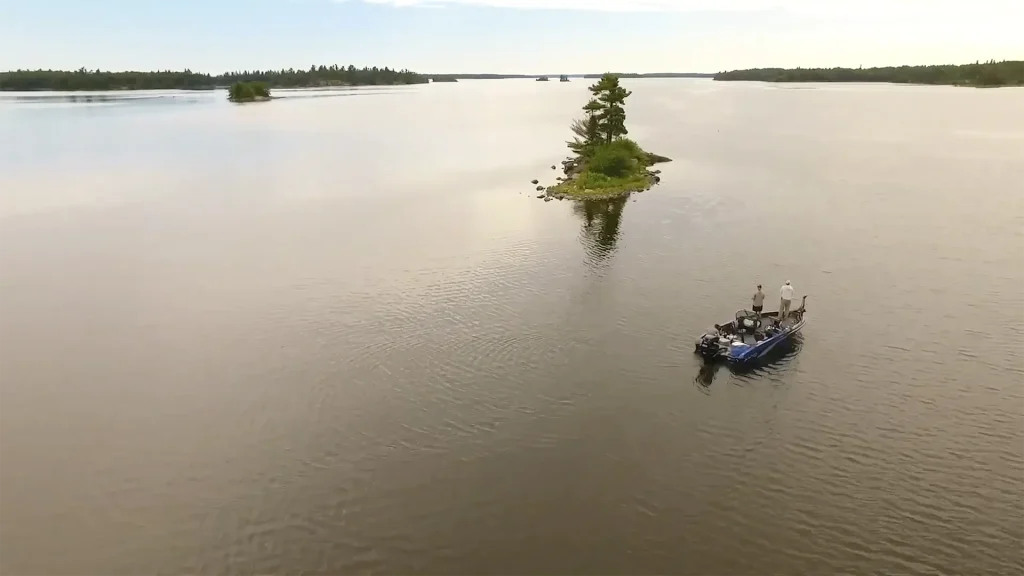
Developing Confidence and Strategy in Shield Water
Fishing large Canadian shield lakes can be overwhelming for newcomers. Doug acknowledges that early in his career, he’d gravitate toward community spots or well-known high-percentage areas. But over time, experience taught him the importance of exploring beyond those go-to locations.
He recommends that anglers focus on finding “hot basins” or productive sections of the lake rather than individual spots. This idea of a basin doesn’t necessarily refer to deep open water—Doug explains it as a mental map, dividing massive lakes into manageable chunks based on depth, water color, island structures, and wind patterns.
Interestingly, Doug emphasizes water color as a more critical factor than depth alone. Finding sections of the lake that set up better under particular wind directions, or where the water has a distinct look, can be key indicators of where muskies might be active. Sometimes, when the bite slows in one area, it pays off to make a big move, dedicating time to exploring an entirely new section of the lake rather than trying to grind it out in unproductive water.
For anglers limited to a week-long trip, balancing exploration with confidence in known spots is crucial. Doug recommends making calculated moves—fishing three or four key areas in one basin before deciding whether it’s time to explore further afield.
Big Baits and Modern Muskie Tactics
As the conversation shifts to gear and bait selection, Doug’s approach stands out. Unlike many anglers who downsize their presentations in early season or under tough conditions, Doug often leans on oversized lures year-round. This mindset contrasts with traditional thinking in muskie fishing, where smaller bucktails and gliders dominate the early season.
Doug’s preference for large baits ties back to his philosophy of efficiency and effectiveness—covering water, moving fish, and targeting the biggest specimens possible. It’s a mindset reflective of his broader approach: blending time-tested knowledge with a willingness to push boundaries, whether that’s in choosing gear or finding new spots.
—
Fine-Tuning Bait Selection and Boat Strategy for Muskies
While Doug Wagner is known for his methodical approach to choosing fishing locations, his bait selection and how he organizes anglers in his boat reflect the same level of careful consideration. One theme that stood out during our conversation was the importance of adapting bait size and type to the fishery—recognizing both regional tendencies and prevailing conditions.
Big Versus Small: The Regional Bait Size Mentality
Doug pointed out a stark difference in muskie behavior between places like Green Bay, Minnesota, and northwestern Ontario when it comes to bait size. In Green Bay’s spring fishery, for instance, he often downsizes to smaller baits such as single number seven bucktails. This is especially effective in spawning bays and tributaries where muskies are feeding on smaller forage like perch and shad.
In contrast, Minnesota muskies—particularly the Leech Lake strain—tend to favor larger presentations. Doug observed that these fish show less hesitation around oversized lures. The reason? Increased fishing pressure and the need to stand out from other anglers. In Minnesota waters, where many anglers stick with smaller springtime baits, throwing something big can be a deliberate way to trigger a response from heavily pressured fish.
Canada fits somewhere in between. According to Doug, Canadian muskies, particularly those in northwestern Ontario, behave similarly to Wisconsin’s inland muskies. They’re more sensitive to cold fronts, and in general, he leans toward smaller lures, especially during the spring and summer periods. While Doug always keeps a variety of lure sizes in his arsenal, his lead bait choice in Canada is often something more modest in profile compared to the larger baits he throws in Minnesota.
Organizing the Boat: Building a Logical Lure System
Doug’s guiding strategy involves more than just picking the right lure for himself—it’s about setting up three anglers in a way that maximizes coverage and minimizes inefficiency. His system is both thoughtful and tested:
- Lead Angler (One Hole): Always throwing a bucktail. As Doug puts it: “A muskie’s favorite food is a bucktail.” Bucktails offer the highest hook-up percentage because of their steady, consistent retrieve and straight-line movement. They catch the hottest, most aggressive fish in the system.
- Second Angler (Two Hole): Either throwing a crankbait or rubber bait. Crankbaits that allow some bottom contact or erratic action work well here, as does rubber, provided the angler understands the risk of snags on shield lakes. Dive-and-rise lures like Suicks or Bar Fighters can also fit this role.
- Third Angler (Back of the Boat): Often Doug himself or a third guest. This position is best suited for topwater or rubber lures. Topwater is ideal at the back because of its slower retrieve speed, which won’t interfere with other anglers. Rubber is also effective but comes with the lowest hook-up percentage due to its soft body and slow, falling action.
Doug emphasizes that each bait serves a purpose. Bucktails target the aggressive fish first, crankbaits or dive-and-rise lures can trigger less active fish with erratic motion, and rubber or topwater provides an alternative look and depth range for any muskies that are holding back.
Managing Boat Efficiency and Avoiding Common Pitfalls
Doug’s system isn’t just about catching fish—it’s also about maintaining flow and efficiency in the boat. Certain baits, such as Suicks, are notably discouraged in the lead position. According to Doug, Suicks have a unique ability to make muskies show themselves without committing, which can be frustrating for the angler following behind with a bucktail. “If you want to find a muskie, a Suick is great,” Doug says. “But to fish a bucktail behind a Suick—good luck.”
The same goes for managing bait speeds and distances. For example, when someone in the front of the boat is throwing topwater, they need to be far enough ahead so they don’t interfere with the casting rhythm of anglers behind them.
Doug also brings attention to the importance of hook-up percentage when choosing baits. Bucktails offer the cleanest, most consistent connection, while rubber and topwater require more patience and skill to convert follows into landed fish.
—
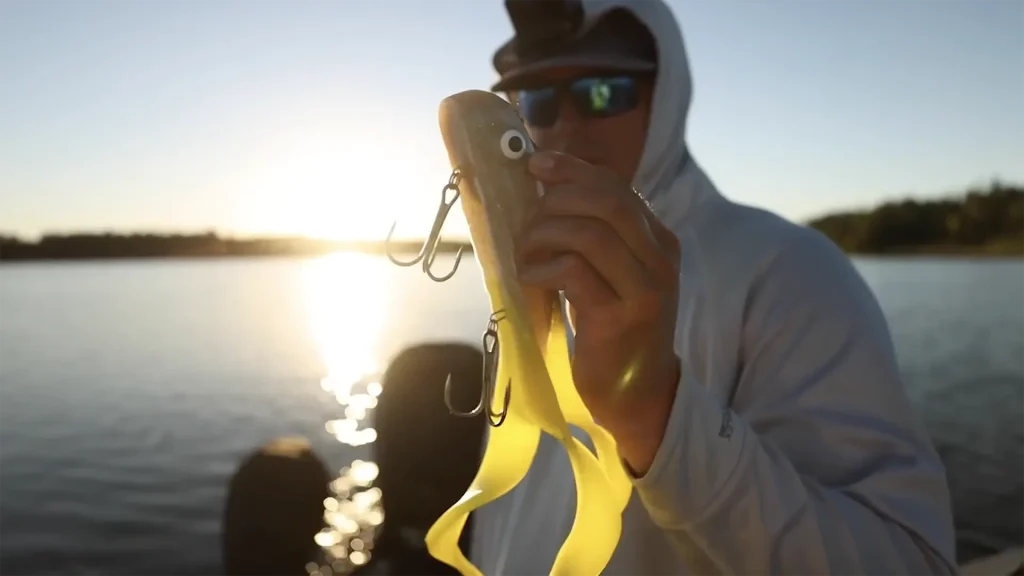
Building a Smart Muskie Program: Swim Baits, Crankbaits, and Trolling Strategies
As our conversation with Doug Wagner moved deeper into bait selection, one thing became clear: Doug approaches muskie fishing with a deliberate and highly organized mindset, not only when casting but also when trolling, especially on big water like Green Bay.
The Role of Swim Baits: Straight Retrieve vs. Pull-Pause
While Doug’s boat setup often revolves around bucktails, crankbaits, and rubber, he makes a key distinction when it comes to swim baits. He splits them into two categories based on how they’re fished:
- Straight Retrieve Swim Baits: Baits like Swimming Dogs fished as a “rubber bucktail”—cast out, reel in—are excellent for anglers positioned in the two-hole, directly behind the bucktail angler. Doug prefers the shallower, round-bodied versions for this application, favoring that subtle belly roll and soft tail action.
- Pull-Pause Swim Baits: When fished with a pull-pause cadence, swim baits behave more like traditional rubber baits. Doug emphasizes adding weight—using Chaos Tackle chin weights or Musky Innovations heavy heads—to get the proper tail roll on the fall, a key triggering action.
The difference in tail softness is an important detail. Softer-tailed baits provide action on the fall without requiring excessive added weight, creating a more natural presentation that can make a big difference on neutral fish.
Crankbaits: Minnow Baits and the Importance of Lip Shape
When it comes to crankbaits, Doug’s preferences lean heavily toward minnow-style baits. His core lineup includes:
Each crankbait serves a specific purpose. Doug prefers round-lipped crankbaits for most situations, especially because they figure-eight better. Square-lipped baits, like the 9-inch Shell Raider, can blow out in the corners during a figure-eight, but they move more water—an advantage when fishing in big waves or on windy days.
Doug’s breakdown:
- Grandma Minnows: Ideal for twitching and walking. Excellent figure-eight performance.
- Triple D/Rachel: Great dive curve with a suspending factor that works as a trigger.
- Shallow Raider: High water-pushing power for rough water, square lip sacrifices figure-eight control but makes up for it in other situations.
Doug also mentioned emerging new baits, such as Kramer baits, that incorporate features like swing-back tails and rounded lips—again, reinforcing his attention to figure-eight performance as a key muskie-catching factor.
Trolling on Green Bay: High-Rod-Count Precision
When shifting focus back to Green Bay, Doug highlighted the unique trolling opportunities afforded by Wisconsin’s generous rod allowances. Anglers can legally run up to three lines per person, which quickly multiplies rod counts when guiding.
In practice, this means Doug often runs:
- 6 rods with two anglers
- 9 rods with three anglers
- Up to 12 or even 15 rods in certain scenarios
Managing this volume of lines in a relatively small boat requires a methodical system. Doug’s primary trolling bait is the Super Shad Rap, prized for its consistency across the entire trolling spread.
By standardizing baits on one side of the boat, he maintains a balance in action and depth, ensuring boards and lines work uniformly without tangling or interference.
Doug emphasized that this kind of high-rod-count trolling is far from the stereotype of muskie trolling as a slow, passive game. It’s an active, precise approach that demands constant attention to detail—everything from board placement to lure action is fine-tuned to maximize success.
Dialing in Green Bay Trolling Spreads: Precision, Equipment, and Execution
Doug Wagner’s explanation of Green Bay trolling strategy reveals a meticulous, system-driven approach that emphasizes both simplicity and repeatability—two things that aren’t always easy to combine in big-water muskie fishing.
Why Small Boards and Uniform Baits Matter
One key aspect of Doug’s Green Bay trolling program is his reliance on small offshore planer boards rather than large mast systems. While Great Lakes trollers on lakes like St. Clair often use big boards and mast setups that allow varied baits and distances, Doug prefers the control afforded by smaller boards with consistent baits—most commonly, Super Shad Raps.
By running the same lure style and size across all rods, he ensures that each board pulls evenly. This uniformity prevents issues like staggered boards and tangled lines, especially important when running spreads of 6, 9, or even up to 15 rods from a single boat. Doug emphasized that for his program, differences as minor as three feet of line length—from, say, 22 to 25 feet back from the board—can be the difference between a single muskie or a banner day with multiple fish.
Establishing the Daily Pattern: Fine-Tuning Distance and Color
Doug starts each trolling session with a structured spread: five different lead lengths, typically something like 10, 15, 20, 25, and 30 feet back from the board. Combined with alternating bait colors like Fire Tiger and Perch, this setup allows him to quickly identify productive zones.
Once a rod fires, he watches for a second bite before adjusting all rods accordingly. According to Doug, line length often matters more than lure color. That subtle difference in lead—just five feet—can affect bait depth by as little as six inches on a Super Shad, yet still have a measurable impact on results.
This level of attention to detail isn’t arbitrary; it’s based on hundreds of days on the water. Doug points out that Green Bay muskies have very small strike zones. Even with multiple boards set just 15–20 feet apart, some fish will only respond if the bait runs directly over them.
Boat and Gear Setup: Boards, Clips, and Lines
Doug’s trolling system relies on Offshore Planer Boards with upgraded clips—specifically, the heavy-duty black clips with pins to prevent accidental releases. He double wraps both the front and back clips for added security and to let the board handle most of the bait’s drag.
- Line Choice: Doug runs 100% braid, bucking the trend of many Great Lakes trollers who prefer mono. For Doug, eliminating stretch ensures faster rod load-up and better hook sets—especially important when running up to six boards per side with outside boards potentially 250 feet from the boat. He offsets the lack of stretch with fluorocarbon leaders to add a small amount of shock absorption.
- Why Not Mast Boards? Doug believes mast boards add too much pressure when a fish hooks up, increasing the risk of tearing hooks out of muskies’ mouths. Smaller boards provide sufficient control without overwhelming the fish, particularly given Green Bay muskies’ tendency to nip at baits rather than fully engulf them.
Practical Tips for Setting a Spread
For anglers new to running a trolling spread, Doug offers a clear, step-by-step method. When setting three lines per side, he always starts with the outside board and works inward:
- Outside Rod (Furthest Forward in Rod Holder): Highest bait, shortest lead length (e.g., 10 feet back from the board).
- Middle Rod: Mid-depth bait, middle lead length (e.g., 20 feet back).
- Inside Rod (Closest to the Stern): Deepest bait, longest lead length (e.g., 30 feet back).
Doug notes that his “zero point” for measuring line is when he clips the bait off the hook keeper on the rod—not including the leader length—just to keep things simple and consistent. While the actual distance from the boat may be slightly longer than what the clicker says, that reference point allows him to replicate productive setups without confusion.
Technical Details of Green Bay Trolling: Execution, Equipment, and Weed Management
As Doug Wagner dives deeper into the nuances of muskie trolling on Green Bay, it becomes clear that success isn’t just about putting baits in the water—it’s about fine-tuning every element, from rod positioning to weed management, with precision.
Rod Positioning and Spread Setup
When setting up his trolling spread, Doug recommends a systematic approach, especially for those managing multiple lines:
- Standard Practice: Start with the outside rod and work inward. For example, set the outside board 10 feet back from the planer board to the bait, followed by 20 feet for the middle rod, and 30 feet for the inside rod.
- When in a Hurry: If there’s a feeding window happening (sunrise, moon phase, weather change), Doug isn’t afraid to flip the process—starting with the inside rod first to get baits in the water faster.
For bucktail trolling, which takes longer to set due to careful feathering and keeping baits just above weeds, Doug always starts with the inside rod to maximize efficiency. He notes this technique is better suited for experienced trollers, as starting inside increases the risk of tangles.
Managing Line Twist and Weed Kits
Doug emphasizes the importance of keeping baits clean of floating debris—especially on Green Bay, where wind and current constantly move floating weeds. His solution involves two types of weed kits made in collaboration with Leaders and Lures:
- Inline Weed Kits: Installed directly in front of the lure. These feature four wire prongs designed to catch debris before it reaches the bait.
- Snap-On Weed Kits: Positioned approximately five feet behind the planer board. This setup catches floating weeds before they slide down to the lure, helping maintain precise bait depth.
Doug stresses that while most people prioritize inline weed kits, the snap-on style is actually more critical for maintaining depth consistency. A clump of weeds five feet in front of your lure can lift the bait out of the strike zone—something as small as six inches can make or break a bite window.
The only downside to weed kits is occasional line twist, especially when large debris catches on one side of the grapple system and starts spinning. Even with swivels built into the system, it’s an inevitable trade-off that Doug accepts because of the benefits these weed catchers provide.
Rod Holders, Clip Systems, and Line Choices
Doug uses offshore planer boards equipped with upgraded front clips that lock onto the line securely. He double wraps the line in both the front and back clips and ensures there’s a pin in the back clip to avoid accidentally dropping boards.
For line, Doug strictly runs braid, differing from many other Great Lakes trollers who favor mono for its stretch. His reasoning is tied to Green Bay’s trolling style:
- Braid: Offers zero stretch, quick rod load-up, and consistent depth control—critical when running spreads up to 12 rods wide.
- Leaders: Always fluorocarbon, providing a small amount of stretch and shock absorption while maintaining strength and invisibility.
Doug acknowledges that in systems using larger boards, such as on Lake St. Clair, mono may provide advantages because the board itself contributes significantly to setting the hook. However, with smaller boards and his precise style of trolling, braid is his preference.
The Labor-Intensive Side of Trolling
Doug makes it clear that trolling is not a passive activity. When fishing in weedy conditions, managing multiple lines becomes a constant process of checking and resetting. “You’re not sitting down at all,” he says. As soon as the ninth rod is checked, it’s time to start over.
For Doug, trolling is far more labor-intensive than casting—especially when you’re acting as captain, first mate, net man, and entertainment all in one.
Why Leech Lake Holds a Special Place
As the discussion shifted back to Minnesota waters, Doug explained his connection to the Leech Lake area. While his professional focus includes Green Bay and Canada, Doug is particularly drawn to Leech for its naturally reproducing muskie population.
Leech Lake and the Mississippi River system are considered the core of Minnesota’s wild muskie population. Doug values the higher numbers of fish and the fact that Leech Lake strain muskies grow large across a wide variety of lakes, not just isolated trophy fisheries.
In contrast to Wisconsin, where Green Bay is the clear big-fish destination, Minnesota’s muskie opportunities are more spread out. That flexibility, combined with the strain’s growth potential, makes the Leech Lake region a favorite for both guiding and personal fishing.
Bucktails, Custom Modifications, and Year-Round Effectiveness
As Doug Wagner and his host dug deeper into muskie tactics, the discussion naturally circled back to one of the most reliable tools in a muskie angler’s arsenal: the bucktail. While many muskie anglers recognize the bucktail as a foundational bait, Doug emphasizes that there’s far more to it than simply choosing blade size or color.
Beyond Basics: Bucktail Variables That Matter
Doug credits much of his bucktail knowledge to mentors like Luke Ronestrand and Kurt, both known for their fine-tuned understanding of spinner baits. According to Doug, there are several overlooked components that play a role in a bucktail’s effectiveness beyond the typical color and blade size decisions. These include:
- Wire Gauge: Thinner wire (like .018″ or 325 lb wire) produces a more lively, high-pitched action, while heavier wire (like .072″) dampens vibration, creating a lower-pitched thump. Green Bay muskies, for example, show a preference for heavier gauge wire in summer but lighter wire in spring.
- Blade Thickness: Standard muskie blades are usually .025 or .040. Thinner blades spin more easily and create more lift; thicker blades create a slower, heavier thump.
- Clevis Size and Style: Smaller clevises spin blades faster and affect the bait’s vibration profile. Doug likes using size #6 clevises for faster spin, especially when building lighter, more responsive bucktails.
- Other Hardware: Elements such as tinsel choice, shaft length, and even what sits below the clevis can subtly alter a bait’s presentation and effectiveness.
Doug stressed that while there are standard sizes and styles—like a typical 8/9 stagger—subtle changes often make the difference in triggering bites, especially on pressured waters.
Custom Tying Versus Off-the-Shelf Baits
Doug prefers custom-tied bucktails for much of his fishing. Whether tying them himself or modifying store-bought versions, he emphasizes small adjustments. For instance, changing clevis size or swapping out thinner blades can help dial in the action muskies want on a given day.
He also keeps both heavy and light setups in his rotation. For example:
- Green Bay Summer: Heavy gauge wire, thicker blades, and more substantial builds.
- Green Bay Spring: Thin wire, thin blades, smaller single-bladed bucktails.
- Lake of the Woods and Northwestern Ontario: Generally sticking with 8/9 staggers but testing different setups constantly, adjusting clevis size, wire gauge, and blade thickness as needed.
The Myth of the Bucktail Season
A common misconception among muskie anglers is that bucktails are strictly a warm-water, summer presentation. Doug pushed back against this idea, crediting Luke Ronestrand with encouraging him to throw bucktails well into October—and even beyond.
Doug noted that even as water temperatures fall into the low 50s, large, slow-rolled bucktails like 12s or 13s remain incredibly effective. The key is adjusting retrieve speed and using heavier setups that allow the bait to stay deep while moving slowly. This extends the productive window for bucktails much later into the season than many anglers assume.
One of Doug’s favorite guiding maxims—borrowed from Kurt—is: “They’ll always bite a bucktail. You just have to find the right one.” Whether that means changing wire gauge, clevis size, blade thickness, or color, there’s almost always a bucktail configuration that will trigger fish if conditions allow.
Personal Anecdotes and Lessons Learned
The segment wrapped up with a lighthearted story about a big white muskie caught (and nearly lost) on Eagle Lake during mid-50s water temperatures. It reinforced both the effectiveness of bucktails in cooler conditions and the reality that even experienced anglers like Doug get caught up in the excitement of a big fish—sometimes leading to a botched net job.
That balance of technical precision and real-world humility is what makes Doug’s insights both valuable and relatable. Whether you’re running a trolling spread on Green Bay or casting bucktails on Leech Lake, Doug’s message is consistent: pay attention to the details, keep experimenting, and never assume there’s only one “right” way to catch muskies.
—
Tactics for Bucktails, Big Spinnerbaits, and Handling Fishing Pressure
Bucktails: Fishing Deeper in the Water Column
Doug Wagner emphasizes a key concept often overlooked by many muskie anglers: bucktails don’t have to be fished just under the surface. By adding distributed weight—rather than weighting just the back end—anglers can keep the bait running flat while getting it down to depths of 4, 6, or even 8 feet.
Doug’s tip isn’t just theoretical. He encourages slow rolling bucktails deeper in the water column, especially later in the season, when muskies may not be willing to rise for high-riding baits. That’s where spinnerbaits also come into play, offering a heavier, deeper-running option while maintaining that flash and thump muskies respond to.
Big Spinnerbaits: Technical Setup and Gear Considerations
The conversation shifts to heavy spinnerbaits like the Blue Water baits Doug’s crew uses. These oversized spinnerbaits, often sporting 12, 14, or even larger blades, create massive resistance in the water—so much so that standard reels and rods aren’t up to the task.
Doug’s gear adjustments for throwing “gong show” spinnerbaits include:
- Rod Length: Custom 11-foot rods from Thorne Brothers give anglers the mechanical advantage needed to launch these heavy baits long distances while handling their pull during retrieves and figure-eights.
- Reel Gear Ratio: Low gear ratio reels—typically 5.3:1—are essential. Trying to throw these baits with an 8:1 reel would leave even the strongest angler worn out after just a few casts.
- Line and Power: The longer rods combined with stout reels help not just with casting distance but also with keeping big spinnerbaits moving smoothly during figure-eights, a crucial part of any muskie retrieve.
Doug’s advice is clear: if you’re going to invest in big muskie gear, don’t cut corners. Quality rods and reels might cost a little more up front, but they dramatically improve your experience on the water—and you’ll end up upgrading eventually if you skimp the first time.
Managing Fishing Pressure: Mental Approach and Tactical Adjustments
Fishing pressure is an unavoidable reality in places like Green Bay, Lake of the Woods, and Minnesota muskie lakes. Doug divides his approach into two parts: mental focus and on-the-water tactics.
Mental Focus: Put on the Blinders
On Green Bay, where muskie pressure is extremely high, Doug emphasizes staying mentally locked in. He instructs clients not to worry about boats around them, even if another angler hooks up nearby. “If you’re saying things like, ‘That guy just caught one,’ you’re not focused on what you’re doing,” Doug explains. His philosophy: control what you can control—your bait choice, cast placement, and boat position—and trust the process.
Tactical Adjustments: When to Blend In and When to Be Different
Doug recognizes that different fisheries require different pressure responses:
- Green Bay: Stick to what’s proven. Green Bay muskies respond to specific colors, lure types, and presentations. Straying too far from the norm might mean missing your narrow bite window.
- Minnesota and Northwestern Ontario: That’s where being different pays off. In places like Leech Lake or smaller Minnesota waters, where the boat traffic may seem heavy by local standards but is lighter than Green Bay, Doug likes to break from the crowd. That might mean upsizing, downsizing, or changing bait style to show pressured fish something they haven’t seen all day.
Doug’s main takeaway is recognizing the difference between these two scenarios. In one place, staying within the pattern wins; in the other, breaking from the pattern does. But in both, staying mentally focused on your own boat’s game plan is key.
—
Mental Toughness, Multi-Species Insight, and Closing Thoughts with Doug Wagner
As the conversation wrapped up, Doug Wagner left off with two important themes for serious muskie anglers: managing mental fatigue in pressured fisheries and the value of becoming a multi-species angler.
Handling Fishing Pressure: Three Regional Approaches
Doug made a clear distinction between how he approaches fishing pressure in Green Bay, Minnesota, and Northwestern Ontario:
- Green Bay: Focus exclusively on proven lures, colors, and presentations. Doug emphasized not deviating when fishing Green Bay’s heavily pressured waters. He tells his clients plainly: “You might throw this bucktail for eight hours straight—trust me, it’s the right one.” Staying mentally locked in and ignoring distractions from surrounding boats is critical to success.
- Minnesota Lakes: While there’s noticeable pressure, Doug recommends leveraging creativity. Using slightly different bucktails, trying dive-and-rise baits, or fishing secondary spots can turn a tough bite into an opportunity. Minnesota’s fish respond more readily to doing something “off-script.”
- Lake of the Woods/Northwestern Ontario: Although the region is experiencing more traffic, Doug sees Canadian pressure as lighter in comparison. Here, subtle bait modifications, alternative lure styles, and exploring secondary structures off the beaten path help stand out from other anglers. Doug specifically mentioned hunting for muskies on spots that don’t look obvious—small sand cups, overlooked rock points, or deep humps near community holes.
Trusting Proven Lures and Staying Committed
Doug highlighted a simple truth for both new and experienced muskie anglers: consistency often beats constant experimentation. Whether it’s a black-and-nickel bucktail or another confidence bait, he stressed the importance of throwing the right lure with dedication—sometimes all day.
One memorable line summed it up:
“If you’ve never caught a muskie and you want to get one, just pick up a good bucktail and throw it a lot.”
That advice holds especially true in places like Green Bay, where muskie fishing is as much about mental toughness as technical skill.
Green Bay’s Mental Challenge Compared to St. Clair
Doug shared candid thoughts about how mentally taxing Green Bay can be. While he considers St. Clair even more exhausting due to its sheer size and structureless flats, Green Bay’s intense boat traffic, narrow bite windows, and high-pressure atmosphere make it a unique challenge.
That said, Doug credits his time on Green Bay with making him a sharper angler everywhere else he fishes. Handling big fish under constant pressure forces an angler to refine both tactics and mindset.
The Multi-Species Advantage
Doug also touched on how pursuing other species sharpens muskie skills. Spending spring fishing for smallmouth, walleyes, and lake trout helps him better understand seasonal patterns, forage movements, and ecosystem dynamics—all knowledge that translates to more effective muskie fishing.
His view is clear:
“Guys who can catch fish across multiple species are much better anglers overall.”
Where to Learn More from Doug Wagner
For those interested in learning directly from Doug, he invited anglers to check out:
- Doug Wagner Fishing: Available on social platforms, particularly YouTube.
- YouTube Membership Platform: Weekly muskie-specific videos every Wednesday, aimed at both new and seasoned muskie anglers.