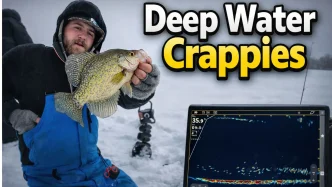
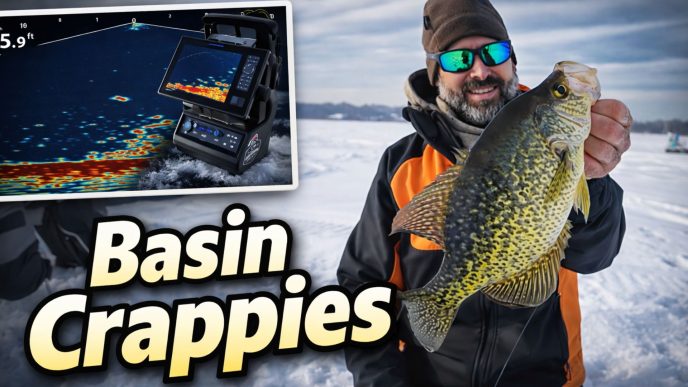
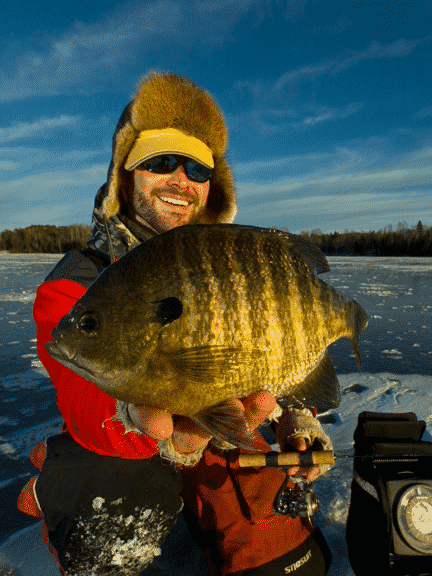
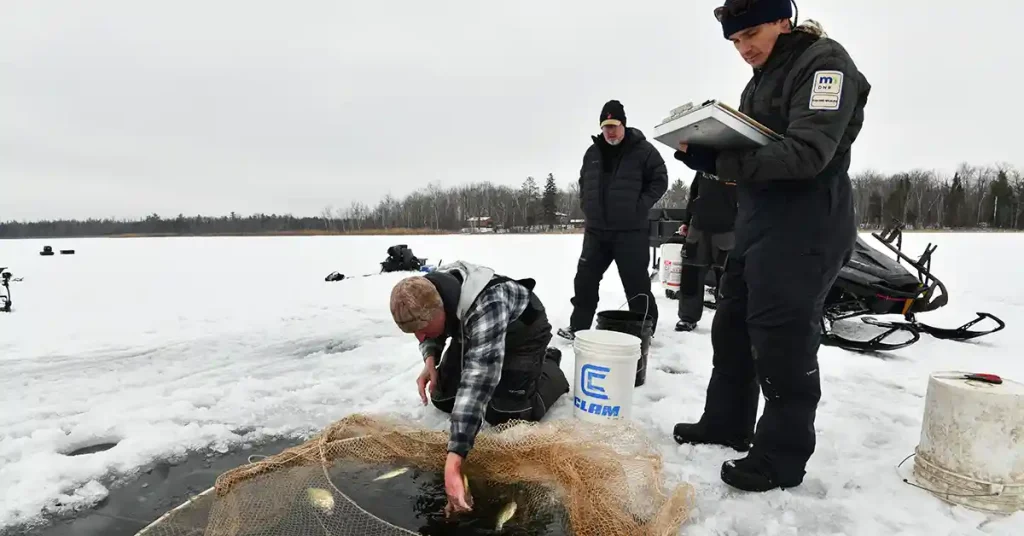
The Minnesota DNR does a follow up of their pilot project to study on the effects of barotrauma on crappies caught in deep water. The intent of the DNR Barotrauma study and this video is to educate anglers about the possible negative effects of catching and releasing crappies from deep water.
DNR Barotrauma Study (Part 2)
Mortality of crappies being caught from deep water is not a new concern. The reality is that the compounding factors of advancements in technology, including Forward Facing Sonar (FFS), make the process of finding and catching crappies in deep water easier than ever before.
Lindner Media is not opposed to using FFS — we use it every time we are on the water.
We are not in favor of banning FFS, nor is the Minnesota DNR.
A top concern is to continue into the future with healthy and quality fisheries for all to enjoy. The information gleaned from this DNR Barotrauma study will be used to refine research on the barotrauma issue.

What is Barotrauma?
Barotrauma is tissue damage caused by pressure changes in the body. It can occur in the ears, sinuses, lungs, and other organs.
Barotrauma related injury occurs through two pathways governed by either Boyle’s or Henry’s gas laws. Boyle’s law – related injuries are due to the expansion of free gas in body cavities and Henry’s law -related injuries are caused by dissolved gases escaping solution to form bubbles in body tissues and fluid vessels.
In fish, barotrauma is due initially to the overstretching of organs that contain air filled cavities (Boyle’s law) such as the gas bladder and digestive tract. Over-expansion of the gas bladder can impair mobility, buoyancy control and cause disorientation.
Henry’s law – related injuries have several consequences including cardiovascular and organ failure and sensory impairment. Individual or combined injuries from barotrauma may result in impairment of a fish’s normal behavior such as escaping from predators or finding enough forage to survive.
Barotrauma is relevant to freshwater anglers targeting fish in both deep waters and relatively shallow waters (at or greater than 25 to 30 feet of water). At the depth of 30 feet or more, gases are under an additional atmosphere of pressure and their volume is ½ of what it would be at the surface. Fish brought to the surface from these depths have been documented to experience moderate or even severe barotrauma.
In the recent DNR Barotrauma study the physical effects of barotrauma can be seen on many of the crappies caught in deep water. Many fish exhibited bulging eyeballs, busted capillaries near the gills and mouth, and an enlarged swim bladder.
DNR Barotrauma Study: Respecting The Resource
As anglers we have a moral responsibility and duty to protect our resources for future generations to come. If you plan on targeting crappies in deep water it is best to harvest your catch. It’s not necessarily the time to practice selective harvest, because many of those fish might experience negative effects from barotrauma. If want to target deepwater crappies, fish until you have caught the amount you want to harvest, and then move into shallower water in search of other schools of fish.
FAQ’s
What depth of water do signs of barotrauma begin?
Some fish can shows signs of barotrauma when caught between twenty-five to thirty feet of water.
What are some signs of barotrauma in crappies?
Bulging eyeballs, busted capillaries near the gills and mouth, and an enlarged swim bladder are a few visible signs of barotrauma in crappies.
Can you eat fish with barotrauma?
Yes. Fish experiencing barotrauma are safe to eat and it does not affect the taste or quality of the fillet.