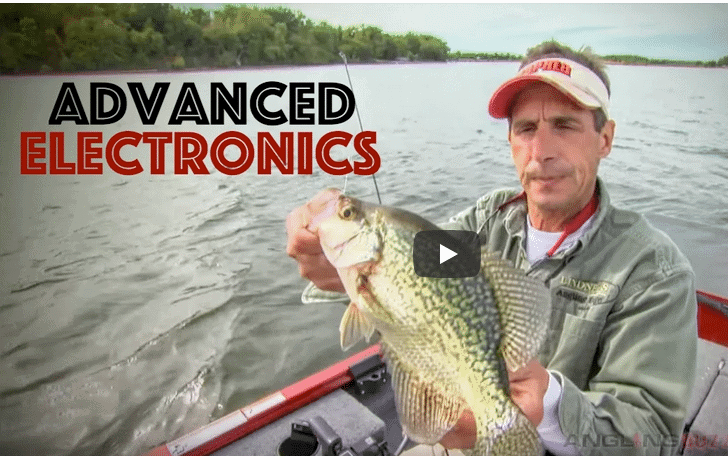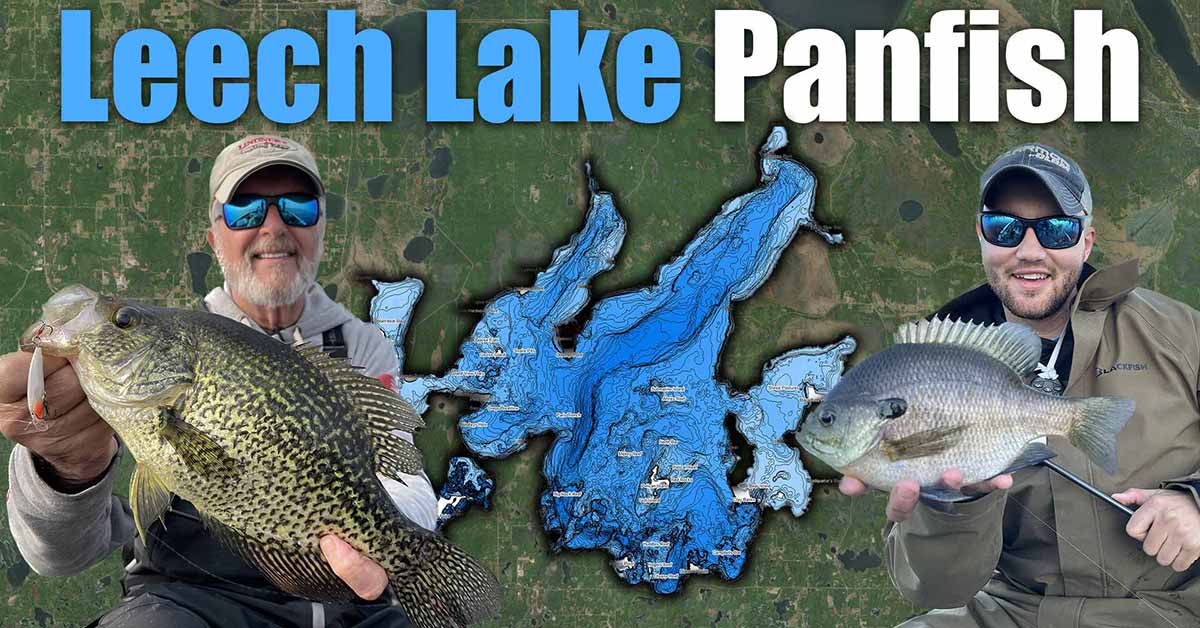

Jeremy Smith of Lindner’s Angling Edge and Doug Schultz of the Minnesota DNR share some of the fantastic Leech Lake spring crappie opportunities.
Leech Lake Spring Crappies
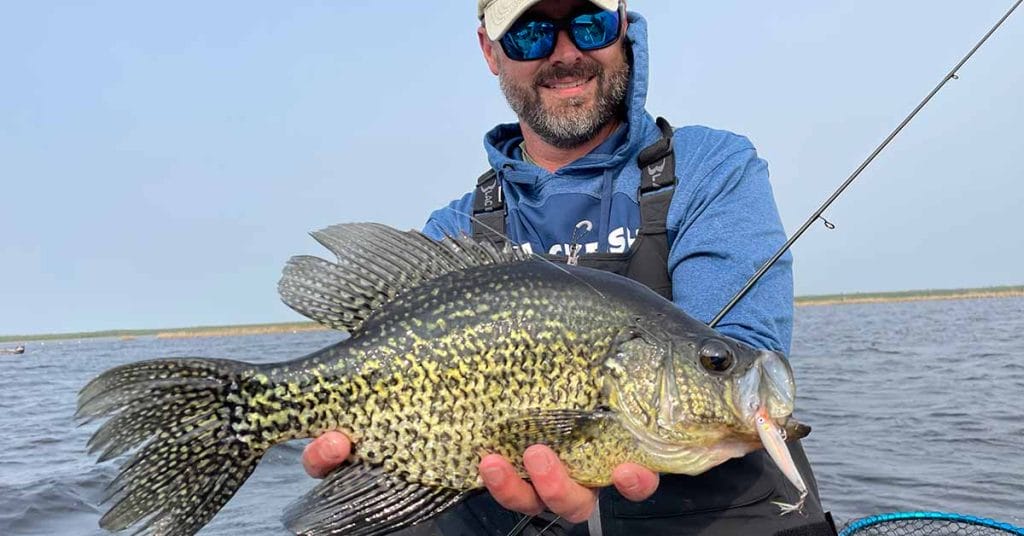
Covering over 100,000 acres Leech Lake in Walker, Minnesota is a world famous fishery known for musky, walleye, smallmouth bass and jumbo perch. One species that deserves some more attention on Leech Lake is the black crappie. Leech Lake has quietly been one of the best panfish lakes in the state of Minnesota commonly producing black crappies exceeding fifteen inches, with some fish surpassing the sixteen-inch mark.
Habitat on Leech Lake
Leech Lake is unique in the fact that roughly half of its 100,000 acres is less than fifteen feet deep. The shallow water is ideal for growing large panfish and provides excellent habitat for crappies and bluegills. The weed beds attract food sources like invertebrates and smaller baitfish while also offering cover from larger predatory fish. Due to its layout and structure Leech Lake has great size quality and good yearly growth rates in both bluegills and crappies.
Special Panfish Regulations on Leech Lake
Due to a combination of technological advancements and angling pressure in 2020 the Minnesota DNR fisheries managers responded with a Quality Sunfish Initiative. The Quality Sunfish Initiative uses proven daily limits of five or ten panfish to protect and improve panfish quality on select lakes. Lakes that were selected had both biological potential to produce large panfish and strong public support.
Leech Lake was chosen for the special fishing regulations that differ from statewide or border water regulations for crappies and sunfish. Implemented in 2021 as part of a statewide Quality Sunfish Initiative anglers are now allowed to keep five bluegills and five crappies when fishing Leech Lake. The Quality Sunfish Initiative has helped increase the size and maintain the large size structure that Leech Lake produces in both bluegills and crappies.
Popular Leech Lake Spring Crappies Baits
Leech Lake spring crappies can be caught on a number of different baits and presentations. Hair jigs, jigs and plastics, micro crankbaits, and livebait can produce numbers of big crappies and bluegills. If I was planning a trip to catch leech lake spring crappies these are the baits I’d make sure I didn’t leave home without.
- Rapala X-Rap in a size 04 or 06
- Northland Fishing Tackle Crappie King in a 1/16-ounce paired with a float.
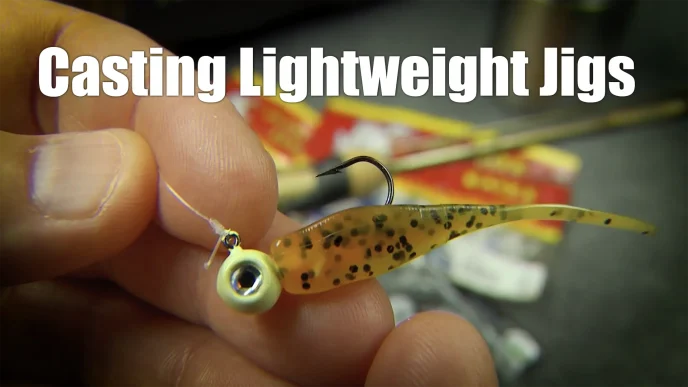
- A pack of Big Bite Baits 1.75″ Crappie Tube in a Pink/Pearl color with a couple 1/32 and 1/16-ounce jigs
- Lindner Panfish Special in the Wildcat/Chartreuse color
All of these baits shine in shallow water situations and are incredibly effective for springtime panfish.

FAQ’s
1. Where should I fish for Leech Lake spring crappies?
Focus on shallow, dark-bottomed bays with emerging weed beds. Also focus on areas with cover that have the warmest water temperature.
2. What are the best plastics colors for spring crappies?
Pink, red, white, orange and chartreuse are some of the best colors for spring crappies.
3. What is the best pound line test for springtime crappies?
Most anglers use a line test between three to six pounds.
4. Does water temperature affect spring crappie location?
Yes. After ice out crappies will search for the warmest water which is commonly found in shallow dark-bottomed bays.
5. What water temperature do crappies spawn?
Crappies spawn when water temperatures are around sixty degrees.
Conclusion
Spring is one of the best times of the year to catch crappies and Leech Lake in Walker, Minnesota is one of the best places to do it. Leech Lake spring crappies are willing biters and can often be found in large schools. With the special regulations in place anglers will have a legitimate shot at catching crappies exceeding fifteen inches for years to come.