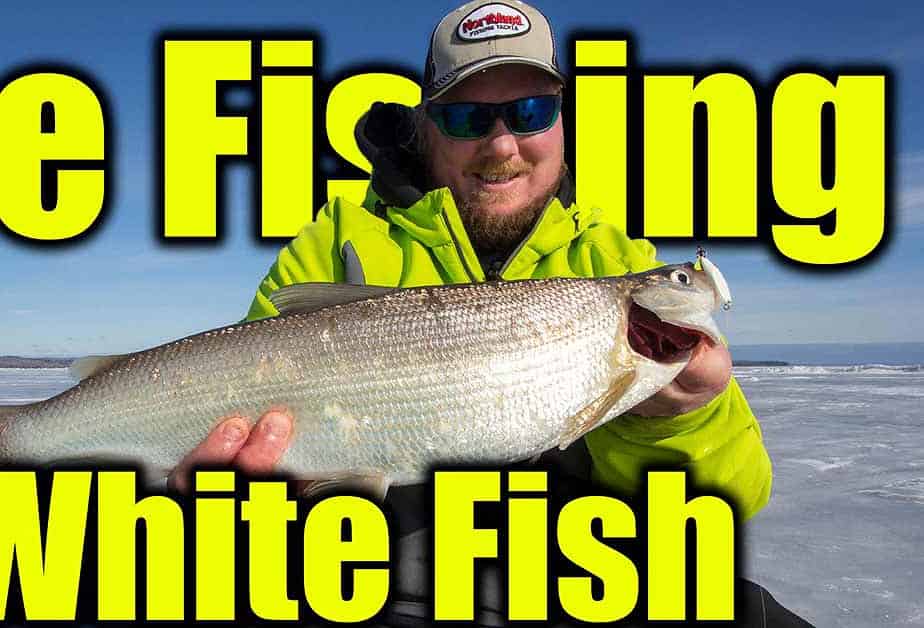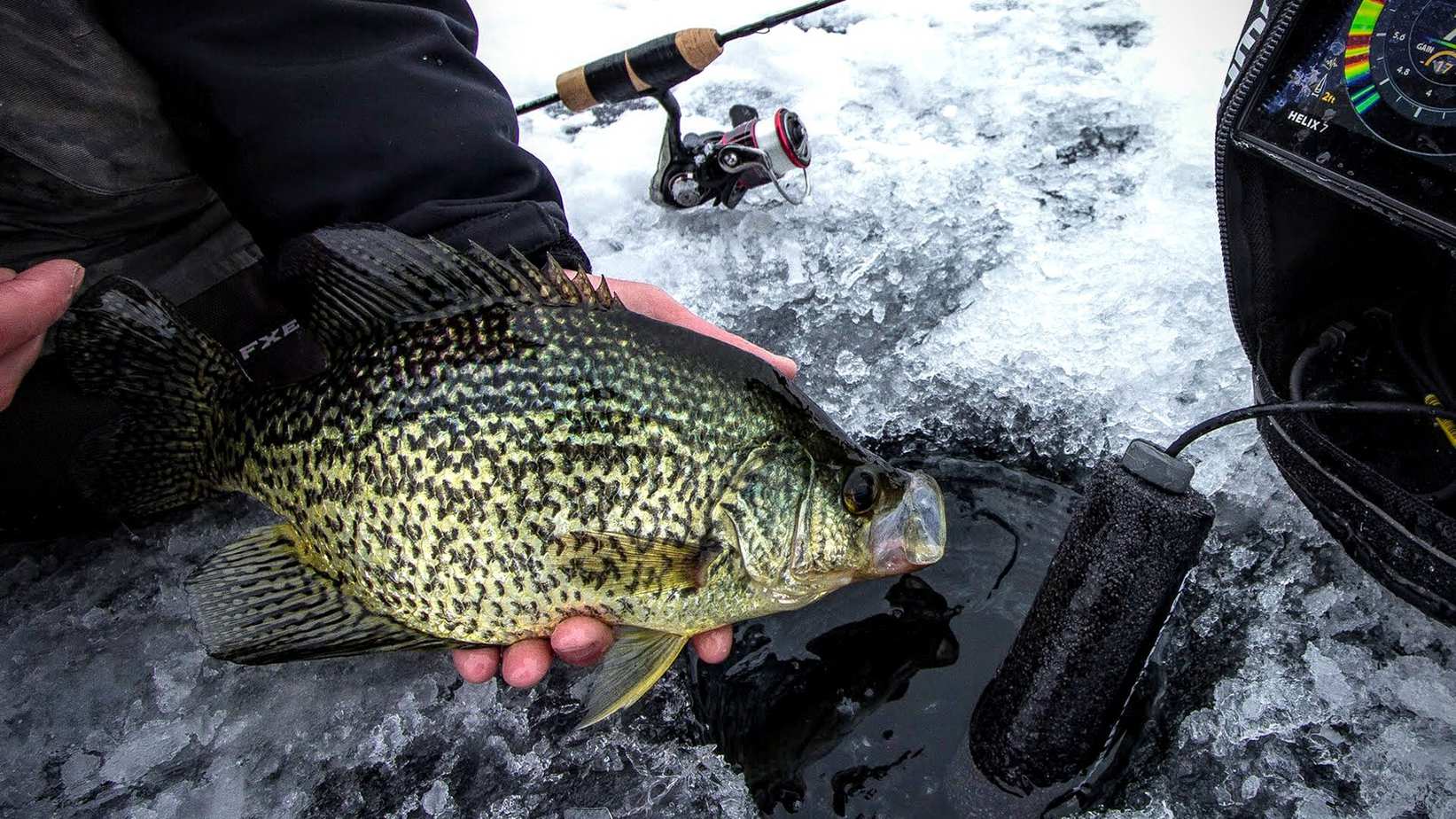

Jeremy Smith and Mike Hehner track down and catch a load of late ice panfish while offering up a few tips and tricks along the way.
Late Ice Panfish
Towards the end of the ice season, bluegills and crappies begin the move out of the basins and head towards the shallows.
During this time, you can often find giant schools and fish that are hungry and aggressive.
When looking for these late season panfish, one of the first places you should start is at any green weed beds. If you can find standing green weeds, you can almost guarantee that panfish will be close by. We like to use the Aqua Vu Mirco Revolution 5.0 Pro to find and locate fish.
We aren’t dropping a line down until we have located the school.
Once you have the school located, utilize small jigs with plastic or small hard baits like the Rapala Slab Rap to target the biggest fish in the school.
Late ice fishing can be a great time to target crappie and bluegill. In this article, we will discuss some tips and techniques for catching these fish during this time of year.
The Importance of Letting Go
When fishing for bluegill on a lake, it is important to let go of the larger male fish. By releasing these bigger males, you can help maintain the size structure of the fish population in the lake. The size of the fish that should be released may vary depending on the specific lake, but generally, it is recommended to release the larger males and keep the smaller females for spawning.
Fish Movement
During late ice fishing, fish tend to move around a lot. They are not stationary and can be found moving from point A to point B. To increase your chances of success, it is a good idea to cut multiple holes in an area where you have located fish. By having several holes close together, you can easily move from hole to hole throughout the day, increasing your chances of catching fish. It’s important to keep in mind that fish can disappear from one hole and appear in another just a few feet away. So, drilling multiple holes in close proximity can help you stay on top of the fish and maximize your catch.
Targeting Crappies and Bluegills
Late season fishing for crappies and bluegills can be very productive. While fishing in shallow water, it’s common to find crappies and bluegills suspended just a few feet below the ice. These fish tend to be more active and aggressive during this time of year. To target them, keep your bait higher up in the water column, even if you’re fishing in deeper water. This can help you select for more aggressive fish, including crappies and larger bluegills.
Tackle and Techniques
When targeting panfish during late ice fishing, using plastic baits can be very effective. Plastic baits, such as the tungsten probe jig, can help keep smaller fish off your line and allow you to play keep-away with the more desirable species. Additionally, plastics save you time by not having to constantly rebait your hook.
Tungsten jigs are also a popular choice for late ice fishing. Tungsten is denser than lead, which allows it to punch through slush and provide better feel when fishing. It also shows up well on depth finders, making it easier to locate fish.
When it comes to rods and reels, a 750 size reel is a great option for panfish. The larger spool size allows for better line handling, especially when using mono or fluorocarbon lines. Pairing it with a balanced panfish rod, such as the St. Croix ice rod, can provide excellent sensitivity and help you detect even the slightest bites.
Location is Key
Finding the right location is crucial when targeting late season panfish. Look for weed flats adjacent to depress ions or basins. These areas often hold a lot of fish, especially as the season progresses. Fish tend to move from deeper basins to the vertical cover of weed beds as the water starts running through the holes. Green weeds are also a good indicator of fish presence.
Using a depth finder can be helpful in identifying these areas. Look for depressions or changes in depth near weed flats. These areas are likely to hold fish, especially if there is green vegetation present. By understanding the underwater topography, you can increase your chances of finding and catching fish.
Late Ice Fishing Techniques
Late ice fishing requires a different approach compared to earlier in the season. As the day progresses and the temperature cools off, crappies tend to become more active. This is the time when the big crappies start to bite. Switching up your tackle and techniques can help you target these larger fish.
One effective technique is hole hopping. Instead of staying in one spot, move from hole to hole, covering a lot of water. Crappies are constantly on the move, so it’s important to keep up with them. Look for active fish and if nothing hits within 30 seconds to a minute, move on to the next hole. This allows you to cover more ground and increase your chances of finding fish.
When it comes to tackle, using a longer rod, such as a 48-inch St. Croix rod, can be beneficial. Pair it with a spring bobber for better sensitivity and tight line fishing. Plastic baits tipped on tungsten jigs are a great option for late ice fishing. They save time by not requiring constant rebaiting and can be just as effective, if not more, than live bait.
Conclusion
Late ice fishing can be a rewarding experience, especially when targeting crappies and bluegills. By understanding fish movement, using the right tackle and techniques, and finding the right location, you can increase your chances of success.